Opens in a new tab

Topic

Africa and the great powers

China, Russia, the US, the EU and the Gulf in Africa

Rows of white server racks line an aisle inside the Pi Data Centers facility in Amaravati, India.

Technology

India’s digital infrastructure offer tests control of public systems

Indian digital public infrastructure such as MOSIP offers modular, open-source components for identity, payments and data exchange. Whether African governments keep practical control depends on procurement, code access, hosting, local engineering capacity and data-protection law, not on where the template originated.

By Kiraithe Daniel Mutemi · · 2 min read

Latest in Africa and the great powers

Smoking chimneys and buildings of the steel mill at Vanderbijlpark, South Africa, beyond open grassland

Economics

Europe’s carbon border levy leaves a gap in clean-power incentives

The EU's carbon border adjustment mechanism is defensible in principle but unequal in its incidence. It reaches African exporters through contracts, not tax law, and ignores purchased power for steel and aluminium, so the fight that matters is over its annexes.

McDike Dimpka ·

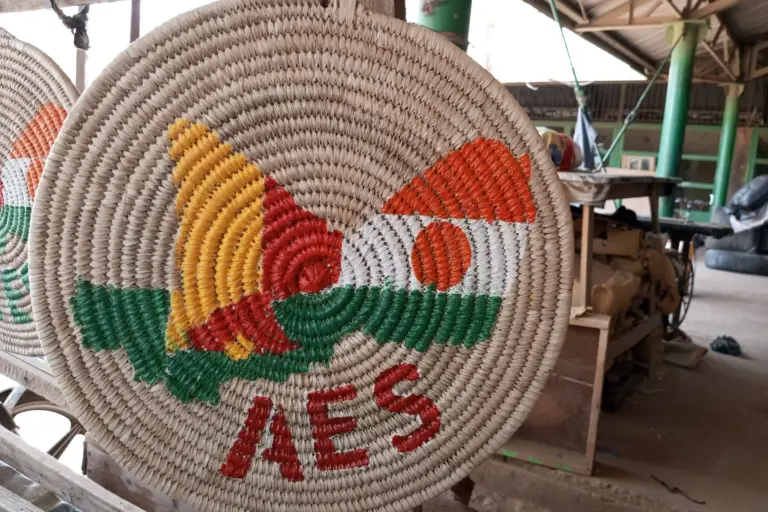
Woven basket bearing the emblem and initials of the Alliance of Sahel States, hanging at a craft market

News · Analysis

What McGovern’s Sahel sanctions letter asks Washington to do

Representative James McGovern's 12 August letter asks the State Department to sanction rights violators in Mali, Burkina Faso and Niger and to explain the February 2026 delisting of three Wagner-linked Malian officials. It is a request, not a designation, and Washington's leverage over the three military governments has weakened.

Michael Chisamba ·

An Africa World Airlines jet stands on the apron at Roberts International Airport in Liberia, with ground staff, a baggage cart and the terminal sign behind it.

News · Analysis

A diverted deportation flight tests third-country safeguards

Liberia has agreed to accept up to 1,200 third-country nationals from the United States over twelve months. When five passengers on the first flight refused to disembark and were flown on to Malabo, the case showed that protection depends on individual safeguards, not on bilateral destination deals.

McDike Dimpka ·

A baker arranges stacks of fresh flatbread on a rack in an Egyptian bakery.

News · Analysis

Egypt’s Black Sea wheat dependence leaves private millers exposed

Egypt sourced more than 82 per cent of its wheat imports from Russia and Ukraine in the first half of 2026. A strong local harvest and state stocks protect subsidised bread, but private millers with thinner cover carry the exposure, and households pay through unsubsidised flour products.

Michael Chisamba ·

Terraced walls of the vast Palabora open pit mine at Phalaborwa, South Africa

Economics · Analysis

Public finance helps advance African rare-earth projects

The US International Development Finance Corporation's $50 million equity support for the Phalaborwa rare-earth project puts public capital in at the feasibility stage, when processing and offtake terms are drafted. Host governments have the most leverage before a project becomes bankable, not at the construction decision.

Adedoyin Shittu ·

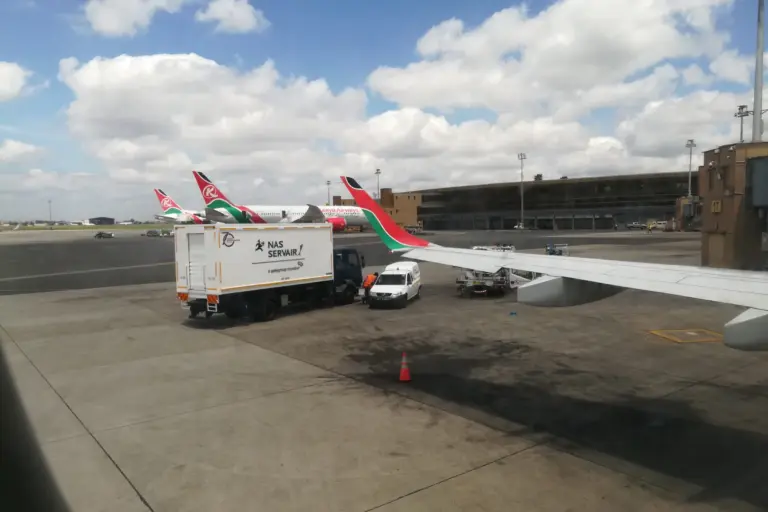
Kenya Airways aircraft stand at the terminal of Jomo Kenyatta International Airport in Nairobi, seen past a plane's wing.

News · Analysis

Kenya’s recruitment cases expose the risks in overseas job promises

Kenya has reported 289 citizens recruited into the Russian military, with at least 69 dead or missing, and its choice to press Moscow rather than prosecute deceived recruits shifts attention to recruitment oversight, consular assistance and information for families.

Adedoyin Shittu ·

The United States Embassy compound in Nairobi seen from above among trees

World

US visa rules make African mobility more conditional

US entry rules in 2026 did not ban Africans as a class but layered a full suspension, partial restrictions and visa bonds into a regime Washington can adjust at will, as the World Cup bond waiver showed. Contesting it needs a mobility evidence base African governments have yet to build.

McDike Dimpka ·

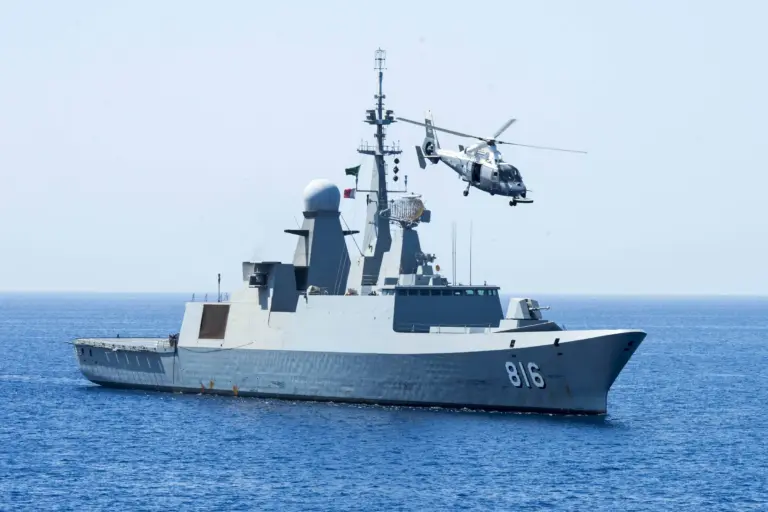
The Royal Saudi Navy frigate Al Dammam, hull number 816, at sea with a naval helicopter flying alongside.

News · Analysis

A Saudi-led Red Sea coalition puts African command rights to the test

The Saudi-led maritime coalition announced in Riyadh on 30 July 2026 relies on African coastal states for ports and territory, but their membership becomes leverage only if founding rules on tasking, port access and refusal give them real authority.

Ebenezer Makinde ·

Earlier in Africa and the great powers

Europe’s Sudanese gold ban depends on tracing trade beyond Sudan

The EU's 13 July 2026 ban on Sudanese-origin gold targets a major source of revenue for both of Sudan's belligerents, but because gold can be refined and mixed before reaching buyers, its effect depends on tracing origin through intermediaries and markets beyond Sudan.

Michael Chisamba

Mineral-for-security deals test African control over extraction

Mineral-for-security deals spreading from Congo to the Sahel fuse protection and extraction into one system designed by the buyer, and unless they commit partners to processing on African soil and keep forces under national command, they secure the least valuable link for the seller.

Victoria Akindele

Congo’s Washington agreements face questions about minerals and legal authority

The December 2025 Washington Accords came with a US agreement giving American investors first offer on Congolese mineral assets. Seven months on, UN experts say Rwandan forces remain, M23 holds Goma and Bukavu, and petitioners argue in Congo's Constitutional Court that the deal breaches the constitution.

Alao Abiodun

AGOA’s short extension leaves African exporters facing uncertainty

Washington is replacing AGOA's open-ended trade preference with tariffs and minerals-for-access deals that reward American supply chains, and African states negotiating one by one face the US from weakness unless they bargain as a bloc and insist on processing at home.

Kiraithe Daniel Mutemi

Gulf port investment puts concession terms under scrutiny

Gulf states are converting oil wealth into African ports, farmland and logistics corridors as patient, directed capital. Whether that is partnership or acquisition depends on concession terms, and on African governments negotiating from strategy rather than fiscal distress, with real reversion and revenue-sharing.

Adedoyin Shittu

Africa supplies peacekeepers but lacks a permanent Security Council seat

African states supply a large share of UN peacekeepers yet hold no permanent Security Council seat or veto, despite the 2005 Ezulwini Consensus. Reform stalls because a veto would give Africa real leverage, and African governments have never treated troop contributions as a bargaining instrument.

Ebenezer Makinde

Russia’s Africa Corps retains parts of Wagner’s security bargain

Russia's Africa Corps has inherited parts of Wagner's bargain: regimes in the Central African Republic, Mali and Burkina Faso buy survival with mining concessions, often in gold. The deal protects governments rather than citizens, and it persists because some leaders fear their own populations more than foreign patrons.

Victoria Akindele

Red Sea attacks expose African trade to maritime insecurity

Attacks on shipping near the Bab el-Mandeb strait by Iran-aligned forces show how much African trade depends on a chokepoint the continent neither controls nor helps defend. External navies provide protection, and the remedy lies in intra-African trade, diversified routing and a stake in maritime security.

Ebenezer Makinde

Africa’s monetary choices amid efforts to reduce dollar dependence

BRICS efforts to reduce reliance on the dollar give Africa an opening, but the risk is that de-dollarisation succeeds on terms Africa did not negotiate, swapping dollar dependence for yuan dependence. Expanding PAPSS, diversifying reserves and borrowing in local currency would build monetary sovereignty instead.

Adedoyin Shittu

Mali’s contested security routes test state control

Militant checkpoints across Mali and the withdrawal of Russian-linked forces from Kidal show that external security partnerships struggle to convert presence into lasting territorial control. Swapping French for Russian partners has not closed the gap, because sovereignty is measured by who governs the roads once foreign forces leave.

Victoria Akindele