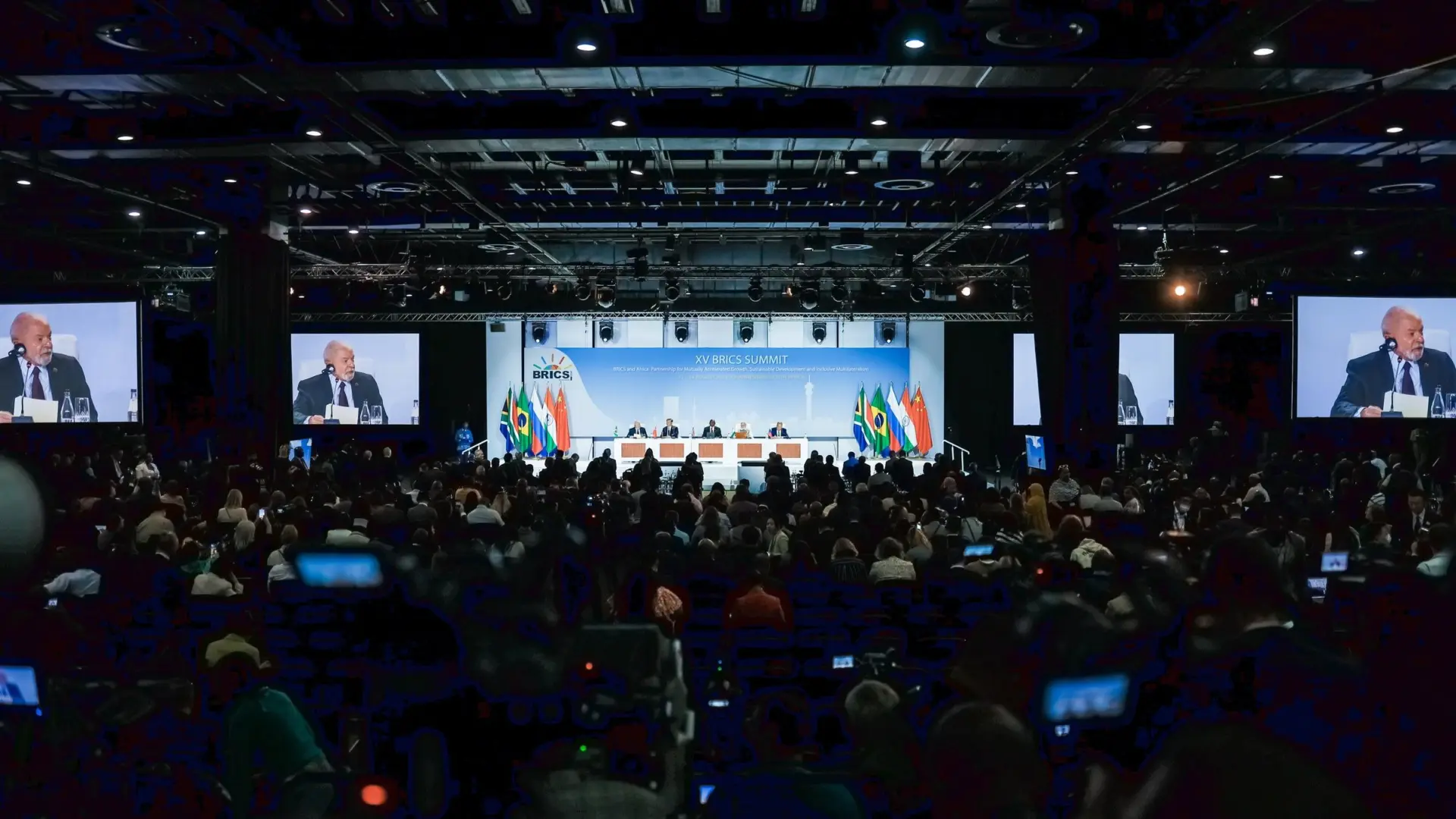
The original five BRICS members (Brazil, Russia, India, China and South Africa) have pursued efforts to reduce their reliance on the US dollar in international trade and finance, seeking protection from the geopolitical use of American financial infrastructure. For Africa, the shift is an opening, but it carries a risk. The danger is not that de-dollarisation fails. It is that it succeeds on terms Africa did not negotiate, and the continent swaps dependence on the dollar for dependence on the yuan. The way out runs through monetary infrastructure Africa builds and settles itself.
The costs of dollar dependence
The dollar’s dominance in global trade has imposed compounding costs on African economies for decades. Dollar-denominated debt exposes sovereign balance sheets to exchange rate swings that have no connection to domestic economic performance. A weaker domestic currency raises the local-currency value of dollar export receipts, but it also raises the local-currency cost of dollar debt and imports. Cross-border transactions between African countries that pass through correspondent banks in New York or London generate fees, delays and compliance friction that suppress the intra-African trade the African Continental Free Trade Area is designed to unlock. The dollar’s structural position in global finance is not merely an inconvenience. It is a tax on African economic sovereignty, collected daily, invisibly, at scale.
The dollar’s structural position in global finance is not merely an inconvenience for Africa. It is a tax on sovereignty, collected daily, invisibly, at scale.
The BRICS push for alternatives (bilateral local-currency settlement agreements, the New Development Bank’s expanding financing in non-dollar currencies and growing advocacy for reserve diversification) makes Africa’s own monetary architecture more consequential. The Pan-African Payments and Settlement System, which allows intra-African transactions in local currencies without dollar conversion, is already operational across participating central banks.
Africa’s monetary choices
If a yuan-dominated reserve architecture replaces dollar primacy before African states have built their own monetary infrastructure and settlement networks, the continent simply exchanges one external financial dependency for another. China’s bilateral currency swap agreements with several African central banks, while operationally useful, do not transfer monetary sovereignty. They transfer the counterparty. Africa’s interest in the current monetary transition is not to choose sides between dollar primacy and yuan alternatives. It is to build the regional monetary infrastructure that reduces dependence on either.
Priorities for payment and borrowing systems
Three structural moves define whether Africa becomes an architect or a spectator of the monetary transition. The first is faster PAPSS adoption: bringing more central banks into the local-currency settlement network, expanding the corridors it covers and deepening the liquidity pools that make local-currency transactions viable at scale. The second is coordinated reserve diversification, with African sovereign wealth funds and central bank reserve managers moving from passive dollar accumulation towards actively managed portfolios that include African Development Bank bonds, regional currency instruments and gold, reducing dollar exposure without simply transferring it to another foreign currency. The third is debt restructuring conditionality: using the current global attention on debt sustainability to insist that future sovereign borrowing include local-currency tranches wherever financing allows, weakening the channel through which global monetary conditions become domestic crises.
The dependence, not the currency
The lesson the dollar era should have taught is that the problem was never the particular currency. It was the dependence. A continent that prices its oil, settles its trade and denominates its debt in a money it does not issue is exposed to the monetary policy of a central bank that does not answer to it, and that exposure is the same whether the money is printed in Washington or Beijing. De-dollarisation that simply re-denominates the same dependence in yuan changes the flag on the vulnerability and nothing else. That is why PAPSS and a credible continental reserve mechanism are not technical footnotes to the BRICS story. For Africa, they are its whole point.
The monetary architecture of the coming decade is being designed now, in forums and bilateral negotiations where Africa’s presence ranges from partial to absent. The rules that have governed global finance for eighty years are genuinely in play. Africa’s central banks, its $3.4 trillion AfCFTA market and its position as a major holder of the critical minerals that competing industrial strategies depend on give the continent leverage it has historically undersold.
Using that leverage requires not solidarity rhetoric but coordinated monetary policy, unified negotiating positions at IMF and G20 tables, and the institutional commitment to build the financial infrastructure that makes African economic sovereignty operational rather than aspirational. The room is being rearranged. The open question is whether Africa arrives with its own furniture or sits in whatever chair is left.



