Opens in a new tab

Section

Technology

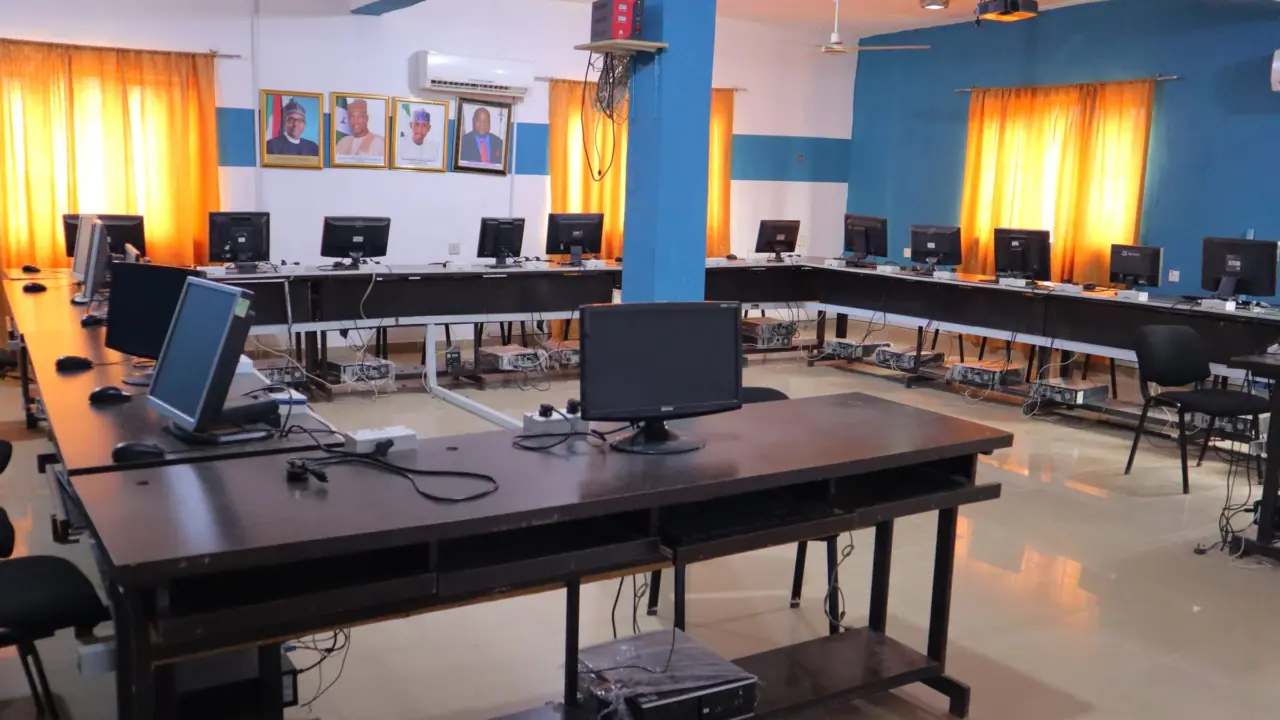
Rows of desktop computers on long desks in an empty e-learning centre at a Nigerian polytechnic.

Digital economy

Miva’s expansion raises questions about accreditation, access and graduate outcomes

Miva Open University, part of the edtech group uLesson, gained full accreditation for twelve programmes in 2025, part of a steady shift of Nigerian credential authority into private hands. Periodic accreditation cannot match continuous enrolment, and students carry the risk if employers discount the degrees.


By Alao Abiodun · · 6 min read

Latest in Technology

A Sterling Bank agent banking kiosk in Mojoda, Nigeria, with an advertisement reading "No need to waka go bank!".

Digital economy

Nigeria’s agent banking rule trades redundancy for traceability

Agent banking in Nigeria runs through more than two million agents and 5.9 million active terminals, yet the layer carries no systemic designation. The CBN's single-principal rule, in force since 1 April 2026, improved accountability but removed accidental redundancy, concentrating continuity risk in towns served by one agent.

Kiraithe Daniel Mutemi ·

A Badili staff member in a teal company shirt shows a boxed refurbished smartphone to a customer in a Badili store.

Digital economy · Explainer

Badili’s refurbishment model highlights the distinction between used phones and waste

Badili, founded in Kenya in 2022, refurbishes used phones and resells them with a verified condition rating. Consistent grading, repair and warranty turn an unpriceable second-hand device into a trustworthy one, and help separate legitimate reuse from e-waste shipped under the same customs description.

Kiraithe Daniel Mutemi ·

A large Chowdeck logo sign on a black plinth at an indoor event, lit by stage lights.

Digital economy · Explainer

Chowdeck’s growth puts delivery dispatch transparency on Nigeria’s agenda

Delivery platforms use algorithmic management to assign work, set pay and shape the cost of refusal. Chowdeck, which reports more than 22,000 riders, does not publish how its dispatch works, and Nigeria has no platform-work law. Transparency is a demand regulators can act on before classification is settled.

Victoria Akindele ·

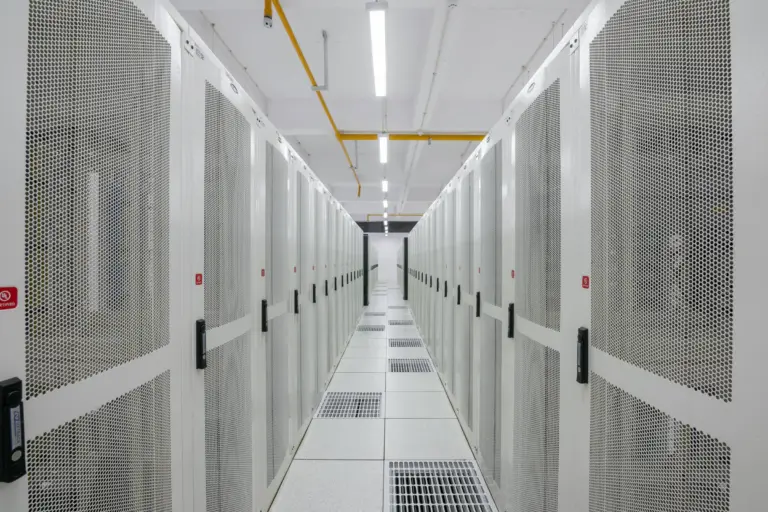
Rows of white server racks line an aisle inside the Pi Data Centers facility in Amaravati, India.

Africa and the great powers

India’s digital infrastructure offer tests control of public systems

Indian digital public infrastructure such as MOSIP offers modular, open-source components for identity, payments and data exchange. Whether African governments keep practical control depends on procurement, code access, hosting, local engineering capacity and data-protection law, not on where the template originated.

Kiraithe Daniel Mutemi ·

Pretoria’s city centre with the dark South African Reserve Bank tower on the right, carrying a banner for new banknotes.

Digital economy

Stitch’s Efficacy acquisition expands access to South African card acquiring

Stitch's July 2025 purchase of Efficacy Payments brought a designated clearing-system participant into the group, one of very few non-banks able to clear directly on South Africa's payment rails. Where market entry depends on a permission, competition can shift from products to acquiring companies already inside.

Kiraithe Daniel Mutemi ·

An aerial view of central Johannesburg's towers and rail yards under scattered cloud.

Digital and data sovereignty

Lelapa’s 400-million-parameter model puts African-language data first

Lelapa AI's InkubaLM, a 400-million-parameter model trained on about 2.4 billion tokens across five African languages plus English and French, shows a small model can target scarce-data languages. Its released corpora may outlast the model, making their licensing a public-infrastructure question.

Victoria Akindele ·

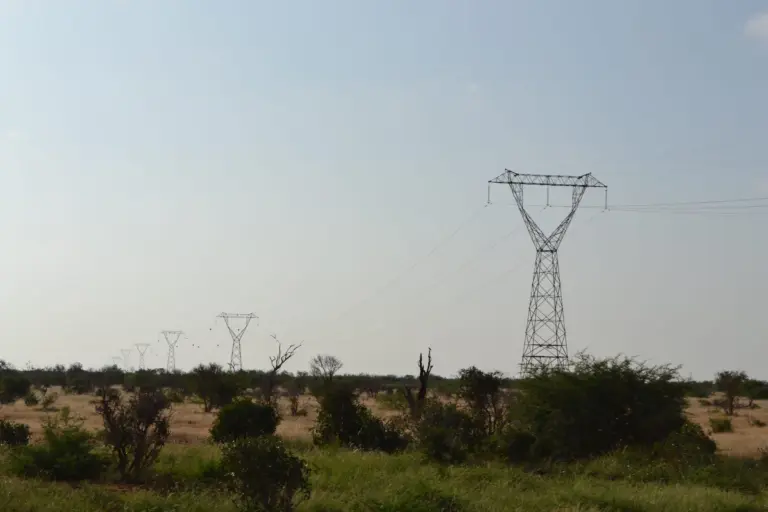
High-voltage electricity transmission line running across dry bush country in Tsavo East National Park, Kenya

Digital and data sovereignty

Grid connection decisions shape Africa’s data-centre expansion

Africa has about 360 megawatts of active data-centre capacity and 656 megawatts planned, and power has overtaken connectivity as the main constraint. The decisive choices, interconnection queue order, firm capacity and curtailment ranking, are unpublished, and utilities and regulators should disclose them.

Kiraithe Daniel Mutemi ·

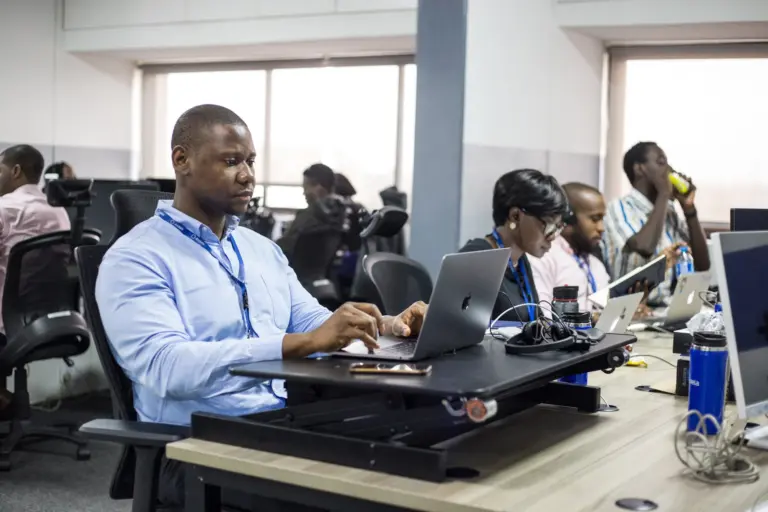
Software developers work on laptops at shared desks in the Andela office in Lagos, Nigeria.

Digital and data sovereignty

Fifteen African startups building payments, logistics and data services

Sorted by the layer of the economy they occupy rather than money raised, fifteen African startups from Moniepoint to Lelapa AI show that payments, medicine, freight, retail credit and data infrastructure is being built cheaply, often outside the Big Four, and may not stay African-owned.

Kiraithe Daniel Mutemi ·

Earlier in Technology

Logidoo’s freight platform highlights the practical work of trade integration

AfCFTA implementation depends on freight interoperability as much as tariff schedules, and in West Africa venture-funded platforms such as Logidoo are building carrier visibility, customs data exchange and return-load matching, so states must set corridor standards before private specifications harden.

Kiraithe Daniel Mutemi

Amini’s environmental data raises questions about risk pricing and access

Thin environmental observation across Africa is a priced uncertainty paid by farmers, insurers, borrowers and states, and as venture-backed firms such as Amini close that gap, African states should treat ground-truth data as strategic infrastructure with public access.

Kiraithe Daniel Mutemi

Pharmacy finance gives Remedial Health influence beyond medicine delivery

Remedial Health's inventory finance is turning a Nigerian pharmacy-ordering platform into an underwriter whose credit decisions increasingly shape which outlets and medicines are stocked, a health function that sits between medicines regulators and financial supervisors.

Daniel Whyte

Electricity supply constrains Africa’s data-centre plans

Kenya's suspension of a billion-dollar Microsoft and G42 data centre, which would have drawn roughly a third of national capacity, shows that African digital sovereignty depends first on electricity generation, and compute plans must follow power supply rather than precede it.

Victoria Akindele

Satellite internet tests Africa’s telecom licensing choices

African governments are licensing low-earth-orbit satellite internet in sharply different ways, from refusal to quick approval to partnerships with incumbents such as Airtel and Vodacom. Regulators keep leverage by treating market access as a negotiation over enforceable conditions on data, universal access and pricing.

Victoria Akindele

Africa’s cyber coordination needs technical capacity and accountable suppliers

Africa is assembling a continental cyber stack of response teams, Smart Africa coordination, the Malabo Convention and Interpol-backed operations, but the threat intelligence, security tools and cloud platforms behind it remain largely foreign. Cyber sovereignty depends on building African capability, not only coordinating institutions.

Kiraithe Daniel Mutemi

Kenya’s AI data workers bear costs that contracts can obscure

Kenyan data workers employed through outsourcing firms such as Sama have reviewed traumatic material to train AI systems for low pay and limited support. The AI developer captures most of the value, and Kenya has yet to use its leverage to set protections for hazardous digital work.

Kiraithe Daniel Mutemi

Africa’s AI strategy needs computing capacity and enforceable contracts

The African Union's Continental AI Strategy is undermined by the continent's small share of global compute. Sovereignty will be decided in the contracts African states sign with hyperscalers on data residency, lawful access and local capacity, and coordination can turn pooled demand into negotiating power.

Victoria Akindele