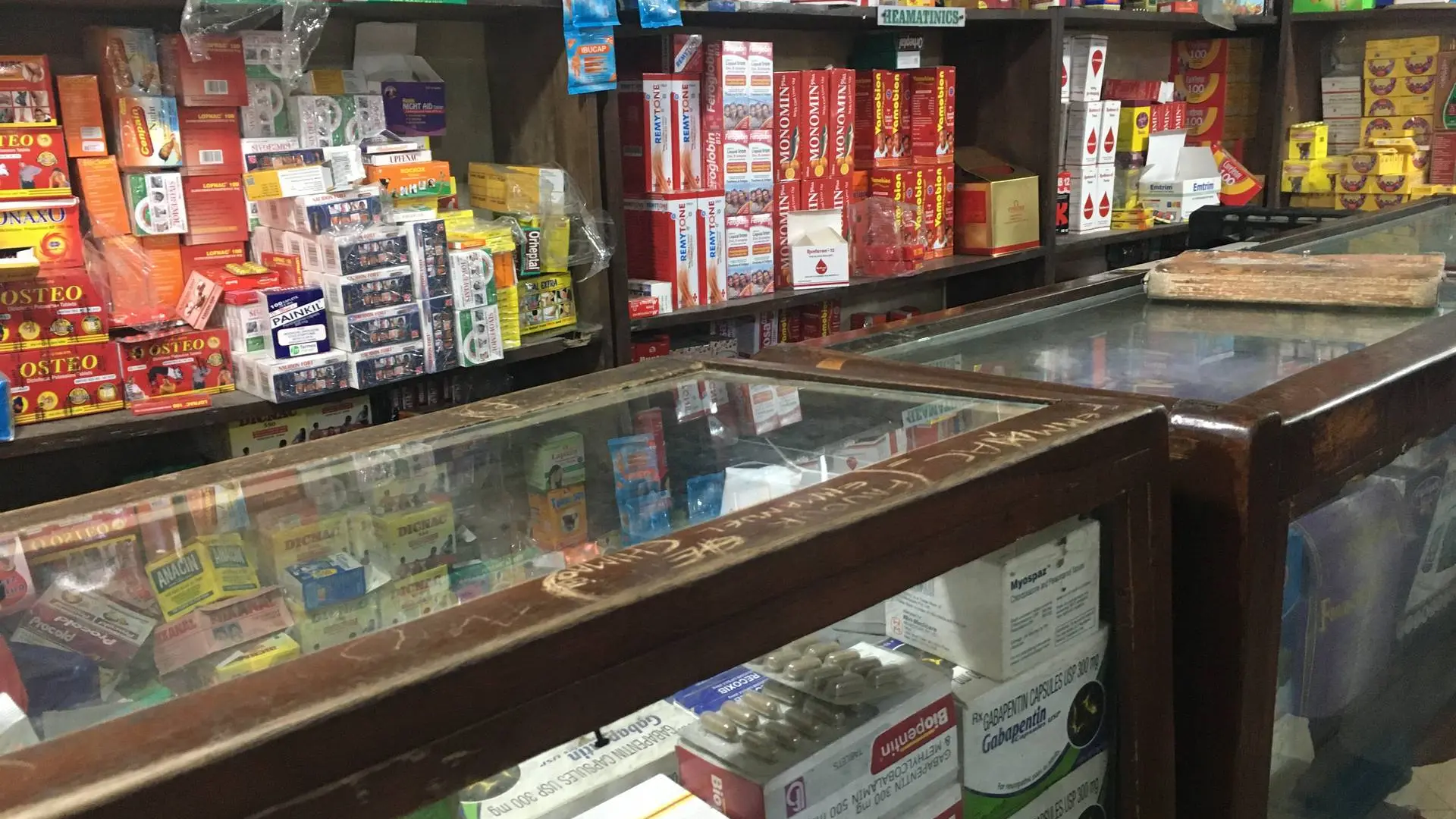
Working capital can be a binding constraint on a Nigerian pharmacy, alongside medicine availability, quality and logistics. It is the fortnight between paying a supplier and being paid by a patient. Stock arrives against money the owner does not yet have, released by a distributor who decides on judgement rather than on any written rate whether this particular shop is good for it. That decision has long been made in the informal middle of the chain, by people whose business is described as distribution and never as lending, and it determines what sits on the shelf when somebody walks in holding a prescription.
Remedial Health, founded in Nigeria in 2021, has built itself into precisely that gap. Pharmacies, patent medicine stores, hospitals and health maintenance organisations order through its platform, run inventory and administration through it, and increasingly finance their stock through it. This analysis argues that inventory finance is turning an ordering platform into an underwriter whose credit decisions increasingly shape which outlets, and which medicines, are stocked. That is a health function, and it sits between medicines regulators and financial supervisors.
The company says more than 10,000 such providers now use or trust the platform, a figure that is its own and has not been independently audited. Its 2023 funding announcement identifies twelve million dollars raised: $8 million in Series A equity and $4 million in debt. That split alone does not establish how the debt was used, but the company’s separate offer of inventory finance is the relevant evidence of its credit role. A private company answerable to its investors has assumed a decision that used to be scattered across hundreds of independent distributors: which outlets, in which neighbourhoods, are worth financing into stock.
The credit that was never called credit
Nigeria’s medicine supply chain is usually described in terms of its physical failures. Counterfeits enter through open drug markets. Cold chains break. Consignments are split and resold through intermediaries nobody has counted. All of that is real, and all of it sits alongside a financial fact that receives far less attention. The pharmacy at the end of the chain is a micro-enterprise buying inventory on terms it cannot negotiate and cannot price.
Working capital is the money tied up between paying a supplier for stock and being paid by the patients who eventually buy it. For a small pharmacy it is a binding constraint on what can be held on the shelf.
Trade credit filled that gap, and it was never neutral. A distributor extending stock on trust priced that trust by relationship, proximity, longevity and the reputational cost of default in a market where everyone knows everyone. Shops with the right connections could be financed generously. Shops without them bought smaller quantities more often, at worse unit prices, and ran out sooner. Availability on the shelf could depend on who could get credit from whom.
What the platform changes
What a platform changes is not the existence of that credit but its basis. Once ordering, inventory and repayment all run through a single interface, the platform can observe what no distributor ever could: exactly what this shop buys, at what frequency, with what seasonality, and how reliably it settles. That observation is the raw material of underwriting. It can supplement relationship-based judgement with transaction records.
For the pharmacy owner this may, in the immediate term, be a better deal. Transaction data can widen access or price credit more accurately, though it does not guarantee cheaper loans or inclusion, and those gains must be shown in actual lending outcomes. Nothing in the argument that follows requires pretending otherwise. The platform does what it says it does.
The ledger becomes the formulary
The question is what else the file becomes once it exists. A complete record of what a shop orders is an underwriting instrument on Monday and a merchandising instrument on Tuesday. The same system that decides how much credit a pharmacy can carry can also decide which products that credit may be drawn against, which manufacturers appear first in the ordering interface, and which slower-moving lines quietly stop being financeable at all.
None of that requires bad faith. It requires only that the platform behave as a lender, which is what it is. A lender manages its exposure. It prefers fast-moving stock with predictable margins over therapeutic categories that turn slowly, and it prefers outlets with dense, legible transaction histories over rural shops with thin ones. Every one of those preferences is commercially defensible. Aggregated across thousands of outlets, they compose a pattern of medicine availability that warrants scrutiny by health and financial authorities.
The distributor’s judgement of a shopkeeper’s face has been replaced by a file, and the file decides what the shelf is allowed to hold.
Nigeria has not privatised the decision about which medicines reach which citizens, because that decision was never in public hands to begin with. What has happened is that a diffuse, illegible, relationship-based allocation is being consolidated into a legible one held by a small number of well-capitalised companies. Consolidation of that kind is usually treated as progress, and in efficiency terms it is. In governance terms it means that a function which used to be impossible to supervise has become supervisable for the first time, which raises the question of how existing supervision applies.
Dar es Salaam runs the same architecture
If this were one Nigerian company it would be a business story. It is not. Dawa Mkononi, established in Tanzania in 2022 according to the investment firm SEAF, is building the same structure against the same problem: fragmented pharmaceutical procurement, poor inventory visibility and outlets that cannot finance the stock their patients need. In 2025 the Social Engagement Fund of Boehringer Ingelheim confirmed an investment in the company. Boehringer did not disclose the amount. Dawa Mkononi itself described it as one million dollars, and that figure should be read as the company’s own rather than the investor’s.
The Tanzanian operation is earlier and smaller, and that is what makes it useful. Two economies with different regulators, different currencies, different distribution histories and no common market have generated the same solution to the same constraint within a year of each other. That points to a structural condition rather than coincidence. In both countries the medicine layer is being rebuilt around credit by companies that describe themselves as logistics and technology businesses, because credit is where the constraint was.
It also clarifies what the manufacturers are watching. A pharmaceutical company selling into a fragmented market of tens of thousands of independent outlets has historically had no way of reaching them except through layers of distributors who obscure the end customer. A platform that underwrites those outlets sees them all. It becomes the counterparty a manufacturer must deal with, and potentially the counterparty that sets the terms of access to the shelf. Pricing power moves towards whoever holds the ledger.
The regulatory gap
The regulatory position is the loose end, and it is a large one. A company extending credit to thousands of retail health outlets is performing a financial activity. A company determining which medicines those outlets can afford to hold is performing a health function. In Nigeria and in Tanzania the medicines regulators supervise product quality and premises, while the financial regulators supervise licensed lenders, and the treatment of platform-extended trade credit depends on the lender, contract structure and applicable law. That gap is not a scandal. It is the ordinary lag between a mechanism appearing and anyone recognising it as one.
The honest verdict is that these companies aim to improve medicine availability while gaining commercial influence over procurement and financing, and that the second half of that sentence is not a reason to want less of the first. Somebody was always going to allocate credit at the end of this chain. For a long time it was distributors nobody could see, applying criteria nobody could examine. What is new is that the allocation is now legible, concentrated and therefore capable of being governed. The question is whether health ministries in Nigeria and Tanzania recognise the pharmacy ledger for what it has become before its architecture hardens. It is not a delivery system with a finance product attached. It is a financing system that happens to arrive in a van.



