Opens in a new tab

From every section

Insight

Insight from every Africa 360° section: analysis that connects events to wider patterns, tests explanations and makes its reasoning clear.

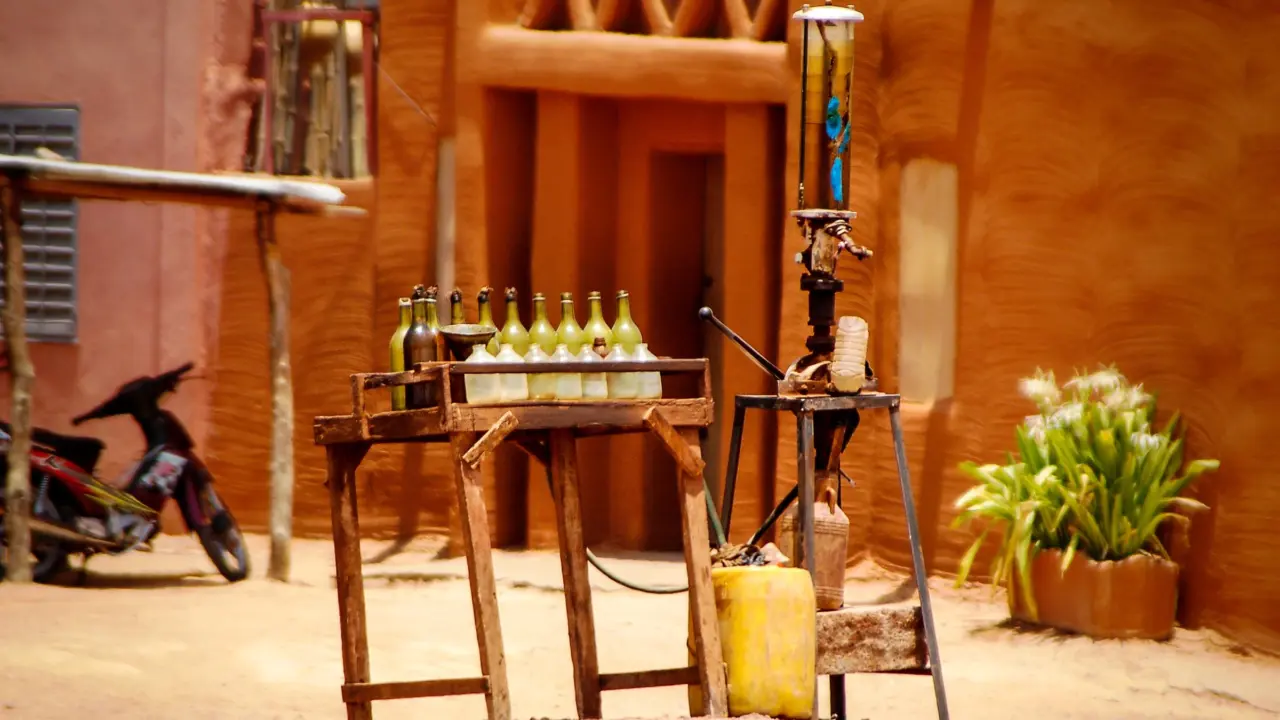
A roadside fuel stall near Ségou in Mali, with bottles of petrol on a wooden table and a hand pump beside a mud-rendered wall.

News

Mali’s fuel blockade shows the power of supply corridors

From 3 September 2025, JNIM attacks on fuel convoys forced rationing in Bamako without a siege. With roughly 95 per cent of Mali's fuel arriving on two highways from Côte d'Ivoire and Senegal, corridor interdiction has become a cheap form of coercion whose costs cross borders.
By Michael Chisamba · · 7 min read

Latest in Insight

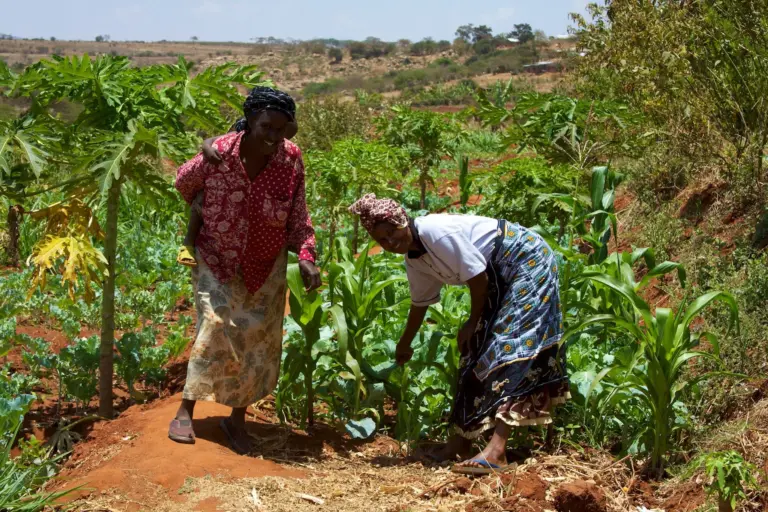
Two women smallholder farmers smile as they tend crops in a field in Kenya.

Economics

Land titling needs protections against dispossession

Land titling programmes promise African smallholders credit and tenure security, but registration favours those who can navigate a registry office and transferability exposes struggling households to distress sales, so reforms need protections such as co-titling from the outset.

Alao Abiodun ·

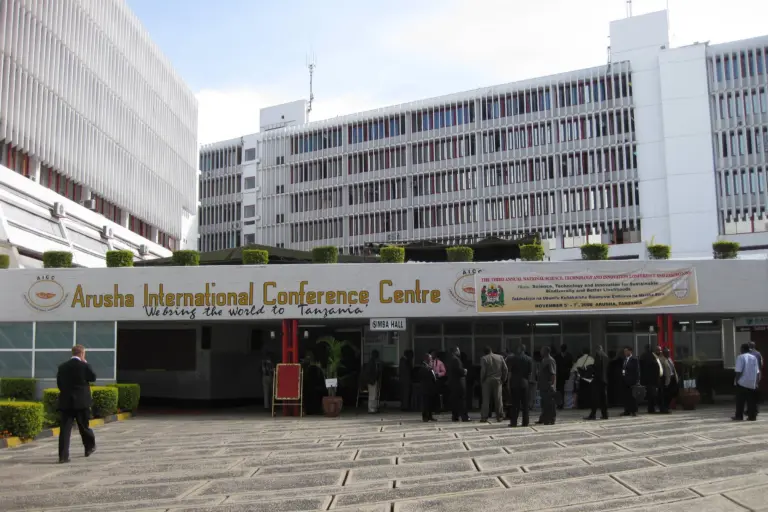
The Arusha International Conference Centre in Tanzania, with delegates gathered at the entrance.

News

African Court withdrawals restrict direct access to justice

Rwanda, Tanzania, Côte d'Ivoire and Benin each withdrew direct citizen access to the African Court on Human and Peoples' Rights after cases went against them, showing that a court built to bypass government goodwill still depends on the revocable consent of its defendants.

McDike Dimpka ·

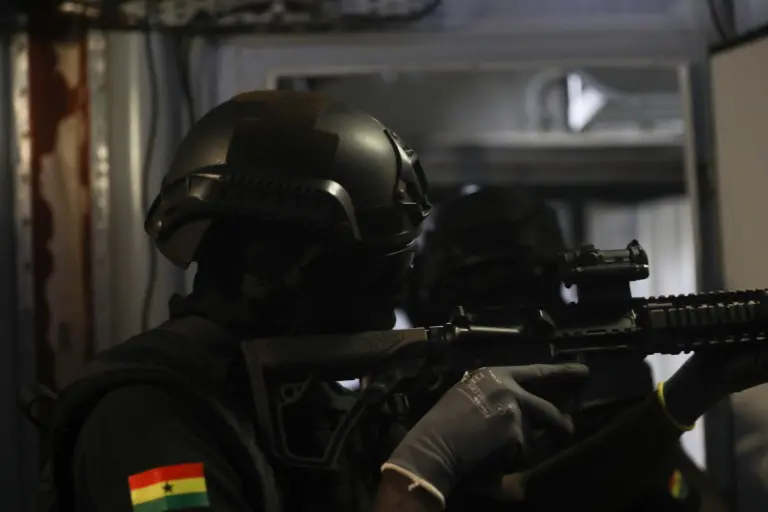
Ghanaian navy personnel aim rifles along a ship's passageway during a boarding exercise.

News

Private maritime security raises questions in the Gulf of Guinea

Shipowners in the Gulf of Guinea increasingly hire private armed escorts rather than rely on regional navies, and while hijackings have declined, states are licensing armed force they do not command and living with a capacity gap rather than closing it.

Ebenezer Makinde ·

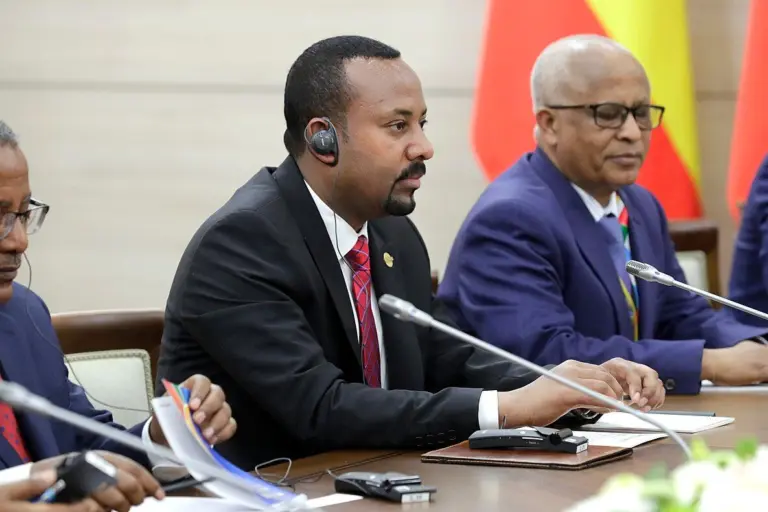
Abiy Ahmed attends a meeting in Sochi in October 2019.

News

Ethiopia’s election raises questions about participation and consent

Ethiopia's 2026 election is widely expected to return the Prosperity Party, but insecurity that blocks voting in conflict-affected regions and a tilted campaign field mean the result may confer the form of a mandate without the genuine consent of the regions that matter most for stability.

Daniel Whyte ·

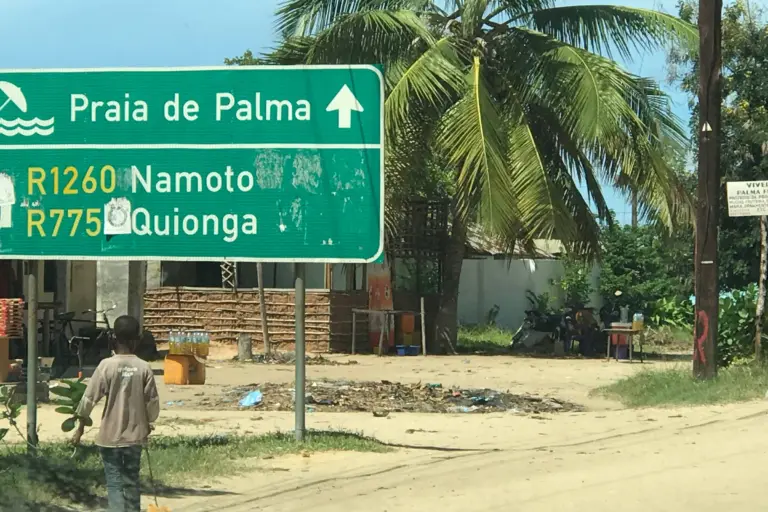
A road sign in Palma, Cabo Delgado, pointing to Praia de Palma, Namoto and Quionga.

News

Cabo Delgado’s gas restart and civilian security are different tests

As gas projects in Cabo Delgado move towards restarting, a perimeter secure enough for investors is being mistaken for recovery. The insurgency that began in 2017 has been contained rather than ended, and civilians outside the protected zones still live with attacks and repeated displacement.

Jamel Lahiani ·

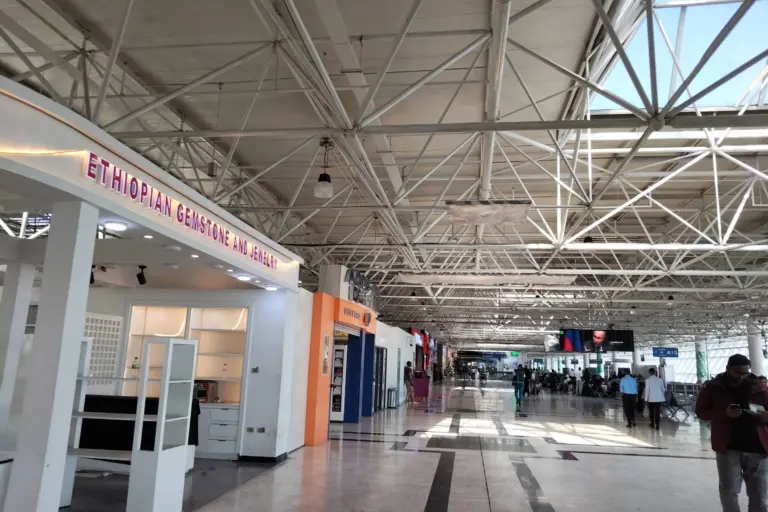
A concourse at Addis Ababa Bole International Airport.

World

Africa’s free movement protocol still faces a ratification gap

The African Union's 2018 free movement protocol remains short of the fifteen ratifications it needs to enter into force, held back by migration, visa revenue and security anxieties. ECOWAS has run a functional free movement regime since 1979, showing integration advancing faster at regional level.

Adedoyin Shittu ·

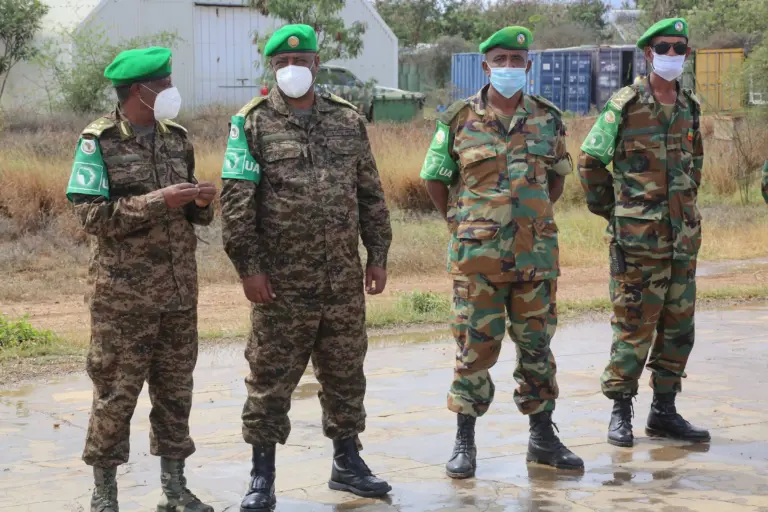
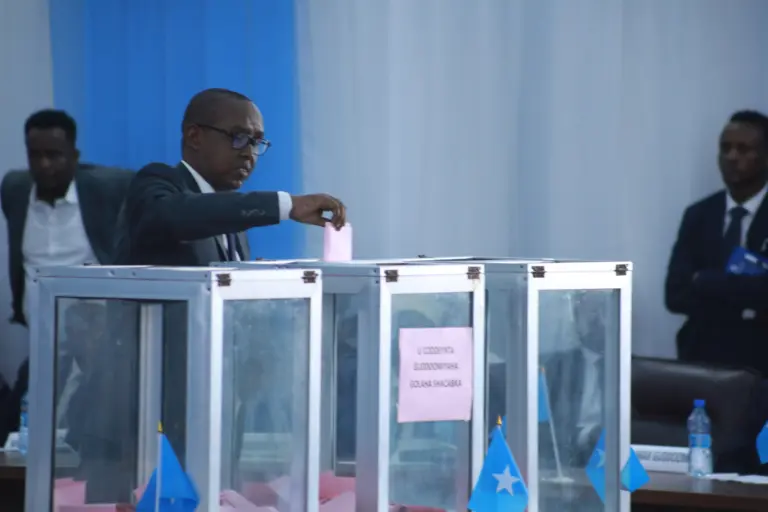
A member of Somalia’s federal parliament casts a ballot during the vote for Speaker of the House of the People in Mogadishu in April 2022.

News

Somalia’s political disputes test its institutions

Somalia's clashes in Mogadishu are symptoms of a provisional constitution and contested electoral rules that leave disputes to clan elders and armed factions. That layered crisis gives al-Shabaab room as the African Union security mission draws down, normalising force as the route to legitimacy.

Alao Abiodun ·

Earlier in Insight

South Africa’s coalition and watchdogs face an institutional test

South Africa's institutions are not failing as they did in the Zuma era, but they face quieter, cumulative pressure. Underfunding of the IEC, NPA and other watchdogs, and the compromises of coalition government since the ANC lost its majority in 2024, risk normalising lower institutional performance.

McDike Dimpka

Elections and political control can expand at the same time

Elections in Senegal and Ghana in 2024 produced real transfers of power, yet many incumbents are tightening control between elections. Term-limit amendments, media and NGO laws and economic dependency on the state produce a managed pluralism with more participation and less accountability.

Aderonke Ajibade

Governing coherence shapes Africa’s policy outcomes

IMF programmes in commodity-dependent states such as Ghana and Zambia follow the same technical script, but whether reform holds depends on governing coherence, the alignment of institutions behind a shared purpose, which is hardest to build where capturing the state is the main route to wealth.

Alao Abiodun

Extreme heat puts pressure on Africa’s health systems

Extreme heat kills an estimated 546,000 people worldwide each year, and Africa's outdoor workforce, informal housing and hospitals without reliable power leave it acutely exposed. Heat adaptation is the maintenance cost of productivity in a world warmed mainly by others, and a measurable loss-and-damage claim.

Alao Abiodun

The Great Green Wall’s progress tests Africa’s adaptation plans

The Great Green Wall's 8,000-kilometre vision is held back by finance more than ideas. Only a fraction of the roughly $33 billion needed by 2030 has reached communities, and restoration succeeds where local people own the work and can stay to maintain it.

Adedoyin Shittu

Carbon-sink pressures raise questions for Africa’s climate policy

Pressure on natural carbon sinks makes Africa's forests and savannas both a climate asset and a bargaining question. The continent holds about 25 per cent of remaining tropical forests, yet weak monitoring and unfavourable carbon market terms leave it undercompensated for the climate services it provides.

McDike Dimpka

Record global heat raises Africa’s adaptation challenge

The WMO estimates 2025 was 1.44°C above the 1850–1900 average, a single-year figure distinct from the Paris goal. For Africa, which contributed little to historical emissions, recent heat means altered planting seasons and water stress, demanding planning across every sector and better use of mineral leverage in climate finance.

Adedoyin Shittu

Climate displacement in the Sahel and the limits of legal protection

Climate displacement in the Sahel does not fit refugee frameworks built for political persecution, and climate effects alone do not generally establish refugee status. Until cross-border protection is recognised in law, the cost of drought driven by others' emissions stays with the displaced.

McDike Dimpka

Ending child marriage requires changes in law and household security

Child marriage in Africa persists because poverty turns a daughter's marriage into a source of resources for desperate households. In Nigeria, 58 per cent of girls from the poorest households marry before 18, against four per cent from the wealthiest, and Rwanda shows that schooling and enforced laws reduce it.

Victoria Akindele

Nigeria’s brain drain and the futures left behind

Nigeria's brain drain is a governance outcome, not a failure of ambition. More than 4,000 Nigerian-trained doctors registered with the UK General Medical Council between 2020 and 2023, and $20.9 billion in 2022 remittances cannot replace the specialists and institutions lost.

Daniel Whyte