The WMO estimates 2025 was 1.44°C above the 1850–1900 average, with uncertainty of ±0.13°C. A single year’s temperature is different from the long-term warming level used for the Paris Agreement’s 1.5°C goal, so recent heat does not establish 1.5°C as a permanent floor. It does sharpen Africa’s adaptation challenge. The continent contributed a relatively small share of historical emissions and bears a disproportionate share of the consequences.
The year 2025 ranked among the three hottest on record globally, even after a strong El Niño cycle faded, consistent with a long-term warming trend on which natural variability continues to act. For Africa’s diverse regions, from the Sahel’s fragile arid belt to Southern Africa’s agricultural heartlands, the practical meaning is not a technical abstraction. It is altered planting seasons, depleted aquifers, and ecosystems changing faster than the communities that depend on them can adapt. That reality demands a reconfiguration of planning in every sector, and a sharper use of the leverage Africa holds over the energy transition to secure the finance adaptation needs.
Water under stress
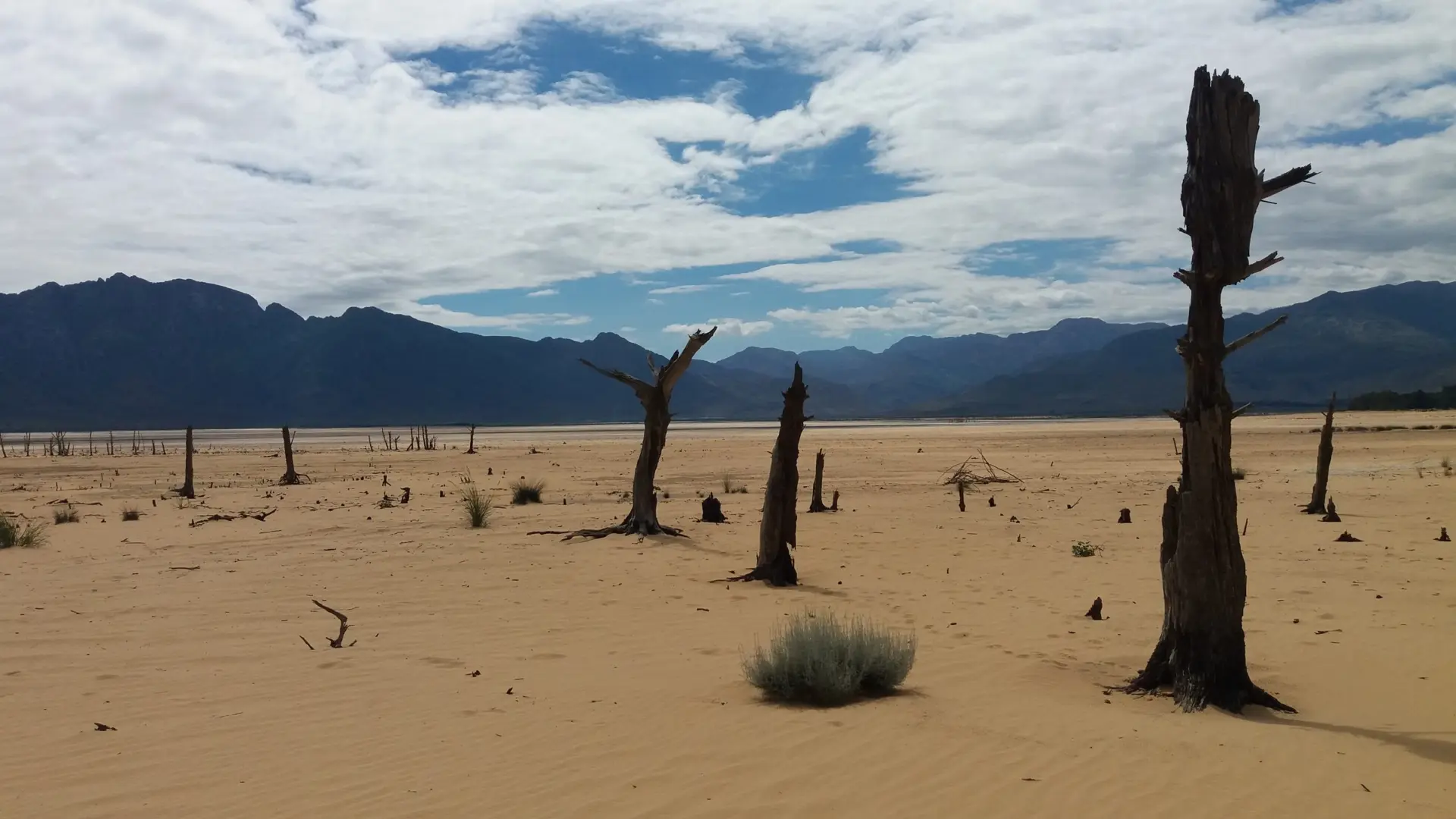
African water systems are among the first to register warming. Lake Chad, reduced to a fraction of its mid-twentieth-century size by a combination of regional warming, reduced rainfall and unsustainable extraction, is both a symptom and a symbol of what happens when climate stress compounds governance failure across generations. In the Nile basin, upstream dam construction and downstream population growth have sharpened competing sovereign claims over a shared resource. Southern Africa’s Zambezi system, central to several national energy and agricultural strategies, has experienced erratic flows that undermine hydropower generation. Water stress in Africa is not a future scenario. It is the operating condition under which states must now plan.
Africa bears substantial climate risks despite its relatively small historical contribution. But it will write the most consequential chapter of the human response to it, if its governments claim the authority to govern their own climate futures rather than wait for the architecture of that response to be designed elsewhere.
Mineral leverage and climate finance
The political economy of Africa’s climate position has shifted in a direction its negotiators have been slow to exploit. The continent’s critical mineral reserves, lithium, cobalt, manganese, copper and the rare earths that underpin net-zero technology pathways in every major emitting economy, give African states structural leverage over the transition that wealthier nations call urgent. That leverage has not been consistently converted into better climate finance terms, faster disbursement from adaptation funds or meaningful technology transfer. Africa remains a supplier of raw materials for a transition it does not control, in exchange for finance that arrives too slowly, on terms too expensive and in volumes too small to match its adaptation costs.
Planning for a warmer baseline
Continued warming requires African states to reset planning horizons across every sector. Agricultural policy built on historical rainfall averages is increasingly unreliable. Urban development standards designed for historical temperature ranges risk producing infrastructure unsuited to the climate it will operate in. Health system planning that does not account for the expanding range of vector-borne disease, more frequent heat stroke and the nutritional consequences of lower agricultural productivity is planning for the wrong emergency. Adaptation is not an addition to African development priorities. It is the context within which every other priority must now operate.
Africa did not choose its exposure to climate change. But it is well placed to understand what operating within it requires, not because suffering confers wisdom, but because its governments, communities and scientists have been adapting to climate variability for longer than wealthier states have been taking it seriously. The question is whether that adaptive knowledge, that mineral leverage and that moral authority in climate negotiations can be converted into genuine agency over Africa’s climate future. Each additional increment of warming increases risks. What happens next is still being decided, and Africa must be among those deciding it.



