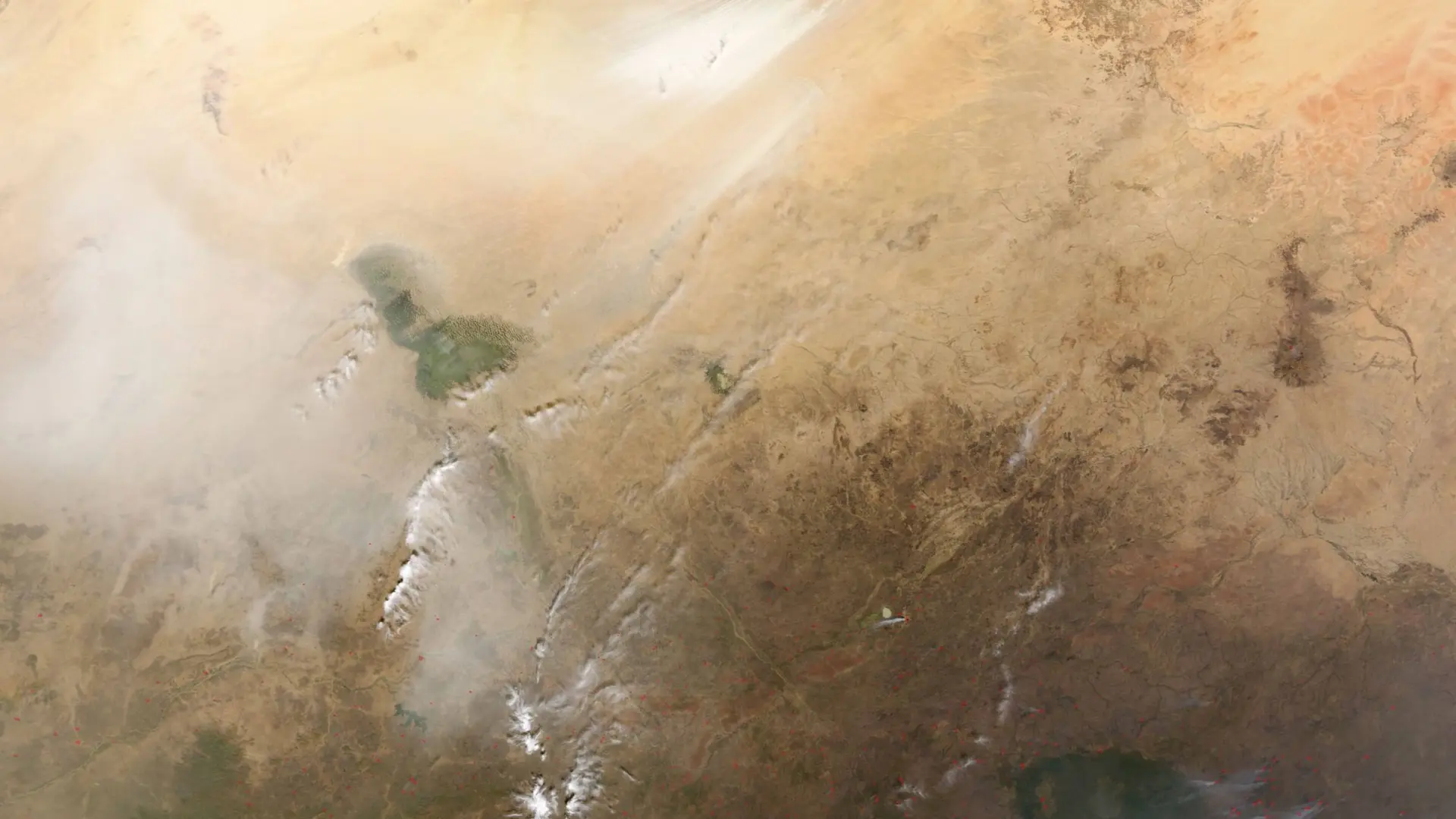
The Great Green Wall is among the most ambitious ecological projects post-independence Africa has produced. Spanning 8,000 kilometres from Senegal on the Atlantic coast to Djibouti on the Horn, it envisions a mosaic of restored land, reforested zones and sustainably managed landscapes that would halt land degradation along the Sahara’s southern edge, restore farming to depleted soils, create rural livelihoods and store carbon.
What holds it back is not the vision. It is money that arrives too slowly to reach communities, and the conditions those communities need to stay and maintain what they plant. Restoration lasts where local people own the work.
Measuring restoration progress
Estimates of the initiative’s progress require careful comparison. The area covered, the definition of restoration and the assessment year can differ, and a lower estimate is not necessarily a correction of a higher official one.
Reliable monitoring is therefore a governance requirement. Differences in measurement must be resolved before anyone draws conclusions about overreporting, because those figures shape funding decisions, programme design and the initiative’s credibility as a template for adaptation at scale. Progress that is recorded but not verified cannot be planned around.
The funding shortfall
Finance compounds the problem. Of the roughly $33 billion estimated as necessary to complete the Wall by 2030, only a fraction has been committed by donors and governments combined, and a smaller fraction still has been disbursed in the project-level, community-accessible form that land restoration requires.
The gap between pledged and disbursed adaptation finance is a failure of the international climate finance system, not a problem specific to the Great Green Wall. But the Wall’s high profile makes its shortfall particularly visible. Pledges at COP meetings, African Development Bank commitments and bilateral agreements together describe a funded initiative. Communities without seedlings, technical support or money for follow-up maintenance describe something far less certain.
Where local ownership matters
Where restoration has taken hold, local ownership is the common thread, often through community-led tree planting and traditional soil and water harvesting methods that predate international climate programmes by generations. Communities that understand the ecological goals, that helped design the interventions rather than receiving them as outside prescriptions, and that have a direct material stake in what they have planted tend to protect it. Communities handed trees without the agronomic support to establish them, or without incentives to keep them against competing uses of the land, tend not to.
The Wall also runs through the most insecure belt on the continent, and its fortunes are now bound up with the Sahel’s politics. Restoration requires presence, seasons of planting, guarding and maintenance, and presence is what jihadist insurgency, displacement and coup-driven aid suspensions deny. Several member states are now under military rule, and their relations with the Wall’s donors have ruptured, and land a state cannot secure becomes another casualty of the vacuum that feeds the insurgency. The ecological project and the security project are usually run by different ministries and funded by different instruments. On the ground they are the same project, because a tree needs what a citizen needs. It needs someone able to stay.
On the ground they are the same project, because a tree needs what a citizen needs.
The binding constraint
The lesson extends beyond the Sahel. Africa’s adaptation challenge is not primarily a technology problem. The practices needed to restore degraded land and build resilient food systems already exist, in indigenous farming systems, in the water harvesting traditions of dryland communities and in agroforestry. The binding constraint is the financial, institutional and governance capacity to apply that knowledge at the scale and pace the climate demands. Closing the gap between what the Wall promises and what it has achieved tests whether international adaptation commitments are genuine, and whether African governments have the institutional capacity to hold their partners to them.



