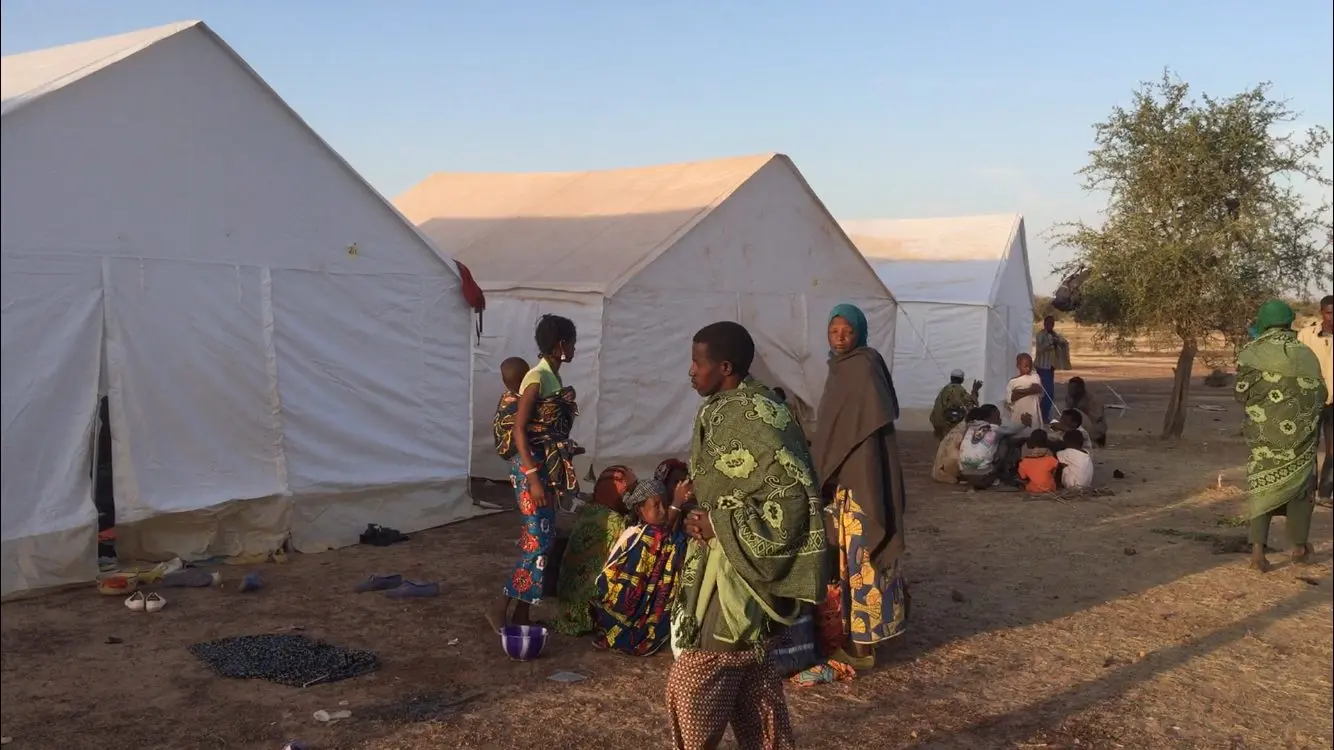
Across the Sahel, drought displaces people gradually, season after failed season, until leaving is no longer a choice. Those people do not fit refugee frameworks built for political persecution, and international law offers them little protection once they cross a border. This analysis argues that the gap is not merely definitional: leaving it unnamed spares the economies whose emissions drove the drought from any obligation.
Gaps in protection
The people leaving the Sahel move by the logic of survival rather than of legal categories. Failed rainy seasons, depleted grazing grounds and desertification push them out. They are not economic migrants in the conventional sense, because they did not leave for better wages in a more productive economy. They were expelled by changed conditions on land they depended on, changed by warming that originated overwhelmingly in emissions produced thousands of miles away.
People displaced by disasters within their own countries can fall within internal-displacement protections, including the Kampala Convention in states bound by it. Cross-border protection is more complex. Climate effects alone do not generally establish refugee status, though refugee and human rights law may apply in particular circumstances.
The gap between their condition and the categories available to protect them has practical consequences. It determines whether displaced communities receive international protection, whether their children can attend school in destination cities, and whether their displacement is recorded in the statistics that eventually prompt political responses.
What displacement disrupts
Climate displacement also disrupts identity. For pastoralist communities, including Fulani herders, seasonal movement with livestock is a way of life as well as a livelihood. When grazing land contracts and seasonal routes fail, the loss is cultural as well as geographic, and pressure on shared land with farming communities grows. The farmer who abandons a village her family has farmed for a century loses more than an income. She loses an anchor that the peri-urban settlements where displaced people typically arrive cannot replace.
Young people face a particular version of this calculation. They can stay in a village where farming prospects have diminished, or move to a city where informal settlement and precarious work are the realistic conditions on arrival. The resulting internal migration accelerates urbanisation that African cities are already unprepared to absorb, adding pressure on infrastructure, housing and municipal services. Displacement does not end when a family reaches the city. It becomes a different and equally hard adaptation.
Responsibility and protection
The response must work at national and international levels. Domestically, African governments need water infrastructure and alternative livelihood programmes in climate-stressed rural areas, not to prevent all migration, which is itself a rational adaptation, but to ensure that movement is chosen rather than compelled. Internationally, recognising climate displacement in law is under discussion in UN forums but moving slowly, and African governments need to press it with the same coordinated urgency they bring to other climate justice claims. These are communities displaced by the consequences of an industrial history they did not write. Naming that accurately is the first step towards protecting them.
The refusal to name is not an oversight; it is a decision with beneficiaries. A climate refugee, once the term carries legal force, is owed something: protection, resettlement, a share of the responsibility traced back to the emissions that produced the drought. So long as the displaced of the Sahel remain uncategorised, that bill is never issued, and the wealthy economies whose industrial history altered the rainfall can treat a humanitarian tragedy as misfortune rather than debt. This is why the contest over the word matters as much as the contest over the water. To call these people climate refugees is to convert a misfortune into a liability and a liability into a claim. Gaps in cross-border protection require political decisions as well as legal work, and Africa’s task is to make the silence more expensive to maintain than the recognition would be to grant.



