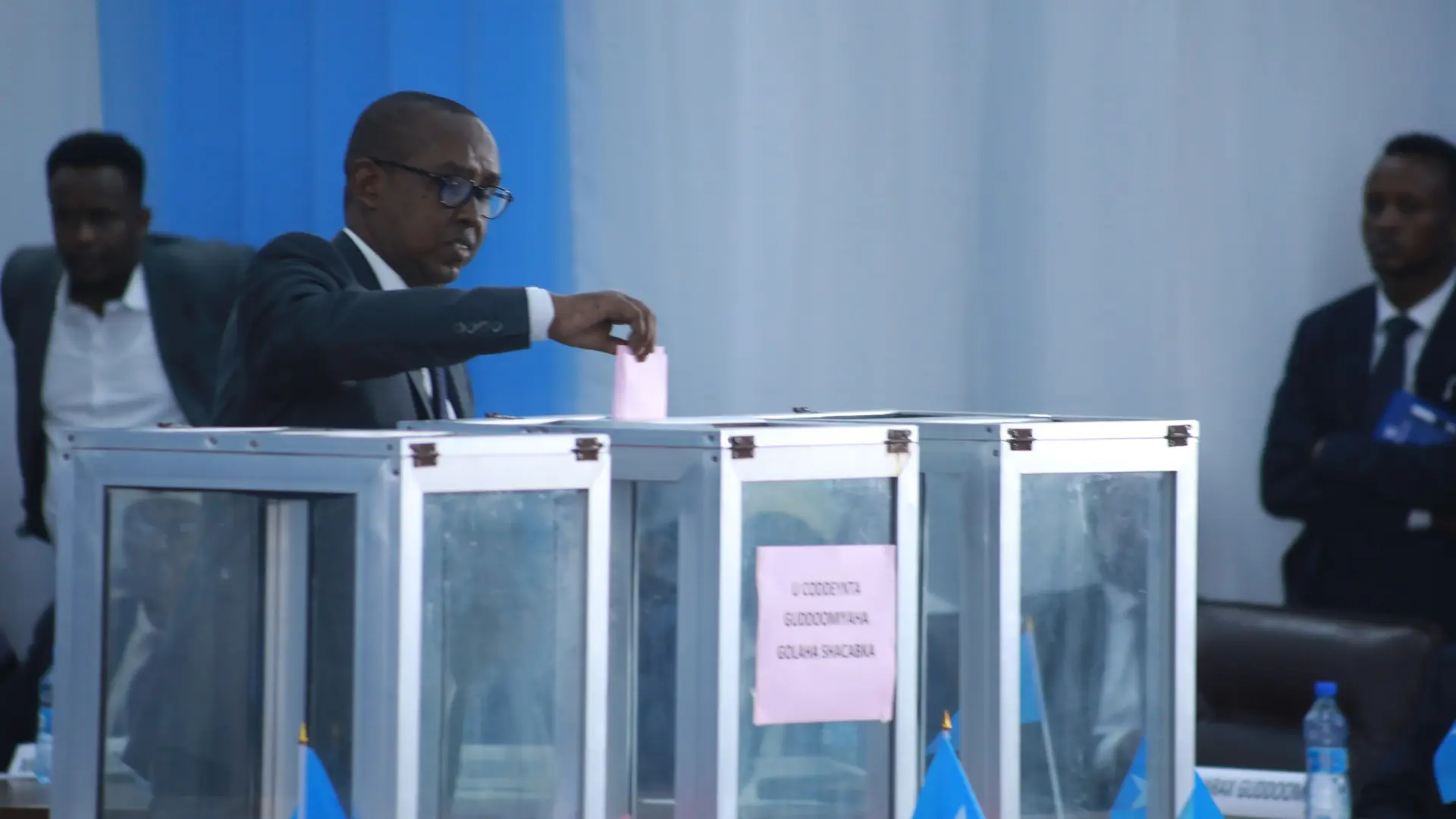
When armed men loyal to rival factions face each other in the streets of Mogadishu, the event is reported as a clash, a discrete security incident with a beginning and an end. The framing flatters the situation by making it sound contained. The clashes in the Somali capital are not the crisis. They are the visible discharge of a deeper problem, which is that the disputes Somalia cannot resolve through institutions are increasingly resolved through force and clan elders instead, and each unresolved dispute makes the next one more likely to be settled the same way.
The proximate dispute concerns time and legitimacy. Questions over the extension of an executive term beyond its expiry, over a contested overhaul of how elections are to be run, and over who has the authority to decide such things have pitted the federal government against opposition figures and some of the federal member states. In a consolidated democracy this would be litigated in courts and parliaments and settled by rules everyone accepts as binding. In Somalia the rules themselves are contested, the constitution remains provisional decades after the state’s collapse, and the bodies that should adjudicate are too weak or too compromised to command obedience. So the dispute does not get adjudicated. It gets mediated by clan elders, escalated by armed factions, and exploited by the insurgency waiting in the gaps.
This is the layering that makes Somalia’s crisis dangerous in a way a single clash never is. A constitutional dispute that cannot be settled institutionally invites clan mediation. Clan mediation that fails invites the militarisation of the opposition. A government and opposition consumed by their standoff cannot prosecute the war against al-Shabaab, and al-Shabaab, a powerful armed group, gains room precisely when the state turns its weapons inward. Each layer feeds the next. The question worth asking is not who wins the current standoff but what kind of political order remains when legitimacy is brokered by force and elders rather than by institutions, because that is the order Somalia is actually building.
The constitutional dispute
Somalia rebuilt a central state after decades of collapse, and the achievement is real, but the rebuild left the load-bearing institutions provisional. The constitutional settlement has remained contested, which means the most basic questions, the limits of executive power, the method of choosing leaders, the division of authority between the federal centre and the member states, remain open to dispute rather than settled by text. A constitution that does not definitively answer who holds power and for how long is not a neutral referee but a contested prize, and every political actor reads its silences in their own favour. The document meant to remove the most dangerous questions from the realm of force has instead kept them there.
Contested electoral rules
The electoral system compounds the fragility. Somalia has long relied on indirect, clan-mediated selection rather than direct popular vote, an arrangement that substitutes negotiation among elites for the legitimacy a national election confers. Efforts to move towards direct elections are themselves contested, and the contest over how leaders are chosen becomes inseparable from the contest over who stays in power. When the rules for transferring power are themselves the stake of the fight, every electoral cycle risks becoming a crisis, because losing the argument over the rules can mean losing power permanently. The institutions cannot hold the dispute because the institutions are the dispute.
Where the rules for transferring power are themselves the prize of the fight, every dispute is existential. That is the condition that turns a political disagreement into a question settled by gunmen and elders.
The security implications
Al-Shabaab is the actor that makes Somalia’s institutional weakness lethal rather than merely dysfunctional. The insurgency has survived years of military pressure, controls or contests significant territory, and possesses the capacity to strike the capital. It does not need to defeat the Somali state on the battlefield. It needs only for the state to remain divided, distracted, and incapable of sustaining a coherent campaign against it, and a government locked in a constitutional standoff with its own opposition supplies exactly that. Every month the political class spends fighting over terms and electoral rules is a month the most dangerous armed group in the country is not facing a unified adversary.
The insurgency also raises the stakes of the political crisis, because whoever controls the state controls the war and the foreign security partnerships and resources attached to it. The drawdown and reconfiguration of the African Union security mission that has long propped up the government against al-Shabaab sharpens the urgency, because the external scaffolding that contained the worst outcomes is thinning at the moment the internal structure is most strained. Somalia is being asked to stand on its own institutions precisely when those institutions are consuming themselves.
The costs of armed competition
The deepest cost of resolving disputes by force and clan mediation is that it teaches every actor that this is how disputes are resolved. Each time a standoff is settled by the threat or use of arms, by the intervention of elders rather than the ruling of a court, the institutional path loses credibility and the coercive path gains it. The danger is not that Somalia loses a particular standoff but that it normalises the method, building an order in which legitimacy flows from force and negotiation among armed elites rather than from rules and votes.
Somalia is the extreme case of a question that runs across the continent, from states amending constitutions to extend incumbents to those where elections are contested by force as much as by ballot. The question is whether legitimacy can be lodged in institutions strong enough to bind the powerful, or whether it remains a prize seized and held by whoever commands the most coercion. Somalia’s clashes will be reported as flare-ups and, when they subside, as a return to calm. The more honest reading is that each one is a load test on a state still deciding whether it will be governed by rules it has not finished writing or by the older logic of force and lineage that filled the vacuum when the rules collapsed. What holds Somalia together is the real subject, and right now what holds it together is not its institutions.



