Opens in a new tab

Topic

Governance and democracy

Elections, constitutions, corruption, institutions

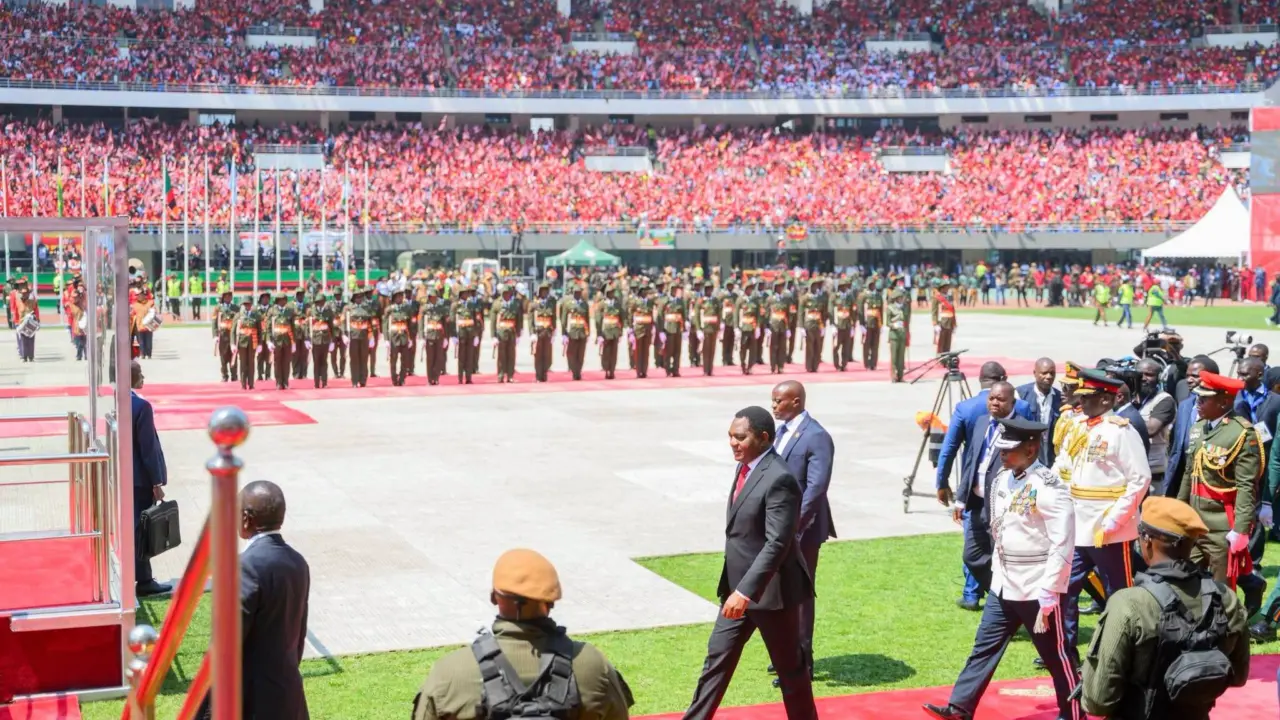
President Hakainde Hichilema walks along a red carpet past a guard of honour at his second inauguration in Lusaka

News · Analysis

Zambia’s election result leaves due-process questions over opposition arrests

Hakainde Hichilema won a second term with about 60 per cent of the vote, but the Zambia election arrests at challenger Brian Mundubile's house on counting night, where a former minister was killed, raise due-process questions that the margin cannot answer and that Volker Türk has asked the authorities to address.
By Victoria Akindele · · 5 min read

Latest in Governance and democracy

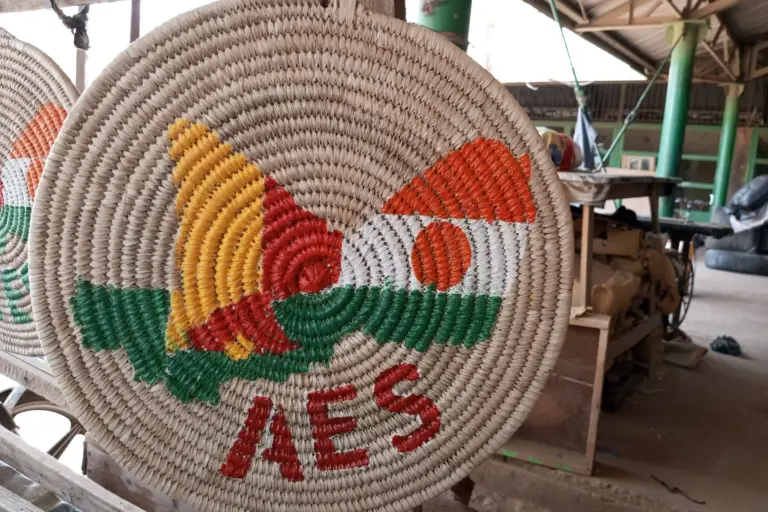
Woven basket bearing the emblem and initials of the Alliance of Sahel States, hanging at a craft market

News · Analysis

What McGovern’s Sahel sanctions letter asks Washington to do

Representative James McGovern's 12 August letter asks the State Department to sanction rights violators in Mali, Burkina Faso and Niger and to explain the February 2026 delisting of three Wagner-linked Malian officials. It is a request, not a designation, and Washington's leverage over the three military governments has weakened.

Michael Chisamba ·

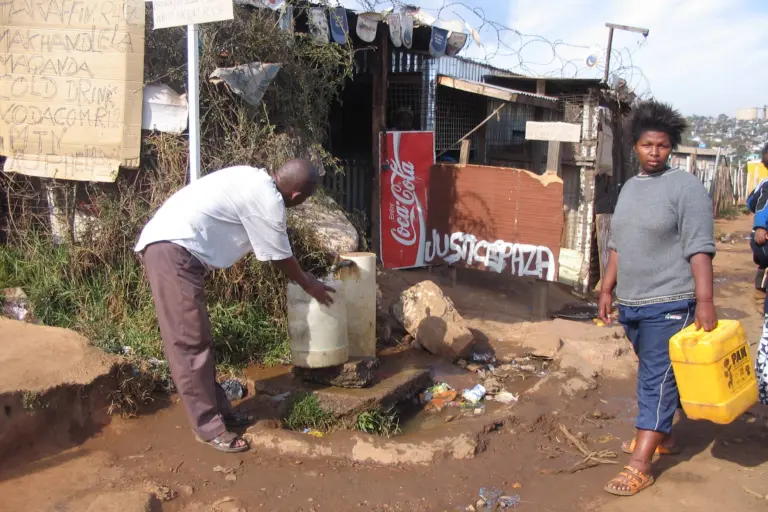
Residents collect water at a communal standpipe in Soweto, Johannesburg.

News · Analysis

Johannesburg’s water failures reveal the unequal costs of poor services

Johannesburg loses about 655 million litres of water a day, roughly a third of supply, as households that can afford boreholes leave the network. The real test of South African reform is whether non-revenue water falls and municipal connections recover, not what national budget speeches promise.

Alao Abiodun ·

The International Criminal Court building in The Hague, with its glass towers behind dune grasses.

News · Analysis

The Sahel’s ICC withdrawals test enforcement without erasing past jurisdiction

Rome Statute withdrawal by Niger, Mali and Burkina Faso, notified in June 2026, takes effect only in June 2027 under Article 127 and does not erase existing obligations or cases, so the real test is whether the three military governments cooperate with enforcement and offer victims credible justice at home.

Jamel Lahiani ·

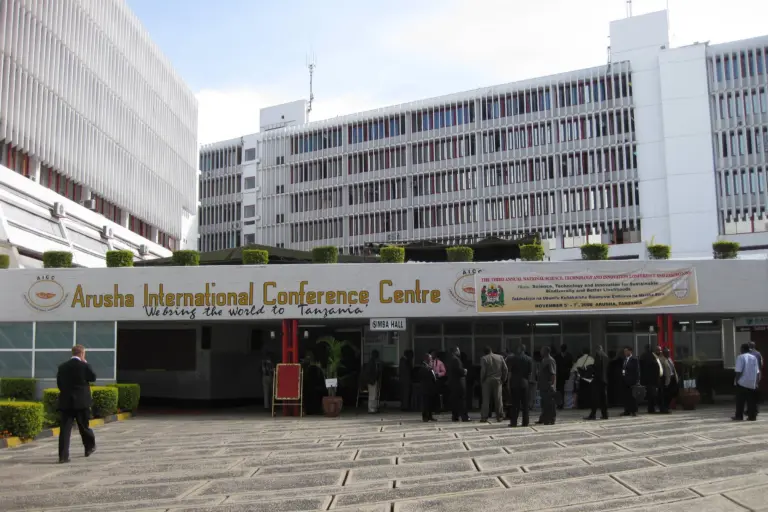
The Arusha International Conference Centre in Tanzania, with delegates gathered at the entrance.

News · Insight

African Court withdrawals restrict direct access to justice

Rwanda, Tanzania, Côte d'Ivoire and Benin each withdrew direct citizen access to the African Court on Human and Peoples' Rights after cases went against them, showing that a court built to bypass government goodwill still depends on the revocable consent of its defendants.

McDike Dimpka ·

The International Criminal Court headquarters in The Hague, photographed in 2019.

World

Sahel ICC withdrawals raise questions about future accountability

The withdrawal of Burkina Faso, Mali and Niger from the International Criminal Court rests on a legitimate grievance about selective justice, but it removes the one jurisdiction their governments do not command while their forces stand accused of mass killings.

Jamel Lahiani ·

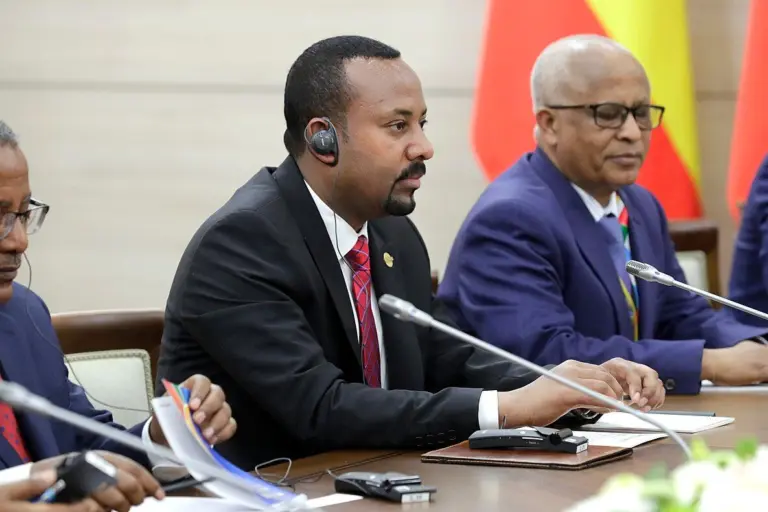
Abiy Ahmed attends a meeting in Sochi in October 2019.

News · Insight

Ethiopia’s election raises questions about participation and consent

Ethiopia's 2026 election is widely expected to return the Prosperity Party, but insecurity that blocks voting in conflict-affected regions and a tilted campaign field mean the result may confer the form of a mandate without the genuine consent of the regions that matter most for stability.

Daniel Whyte ·

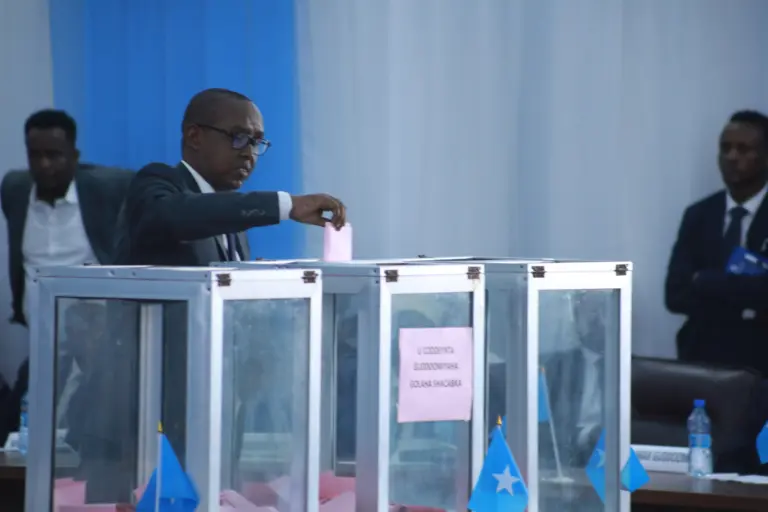
A member of Somalia’s federal parliament casts a ballot during the vote for Speaker of the House of the People in Mogadishu in April 2022.

News · Insight

Somalia’s political disputes test its institutions

Somalia's clashes in Mogadishu are symptoms of a provisional constitution and contested electoral rules that leave disputes to clan elders and armed factions. That layered crisis gives al-Shabaab room as the African Union security mission draws down, normalising force as the route to legitimacy.

Alao Abiodun ·

Earlier in Governance and democracy

Tshisekedi’s reported third-term remarks raise constitutional questions

Félix Tshisekedi's openness to a third term, tied to conflict in the east and doubts over 2028 elections, shows how prolonged insecurity can loosen constitutional limits before any law changes. When emergency becomes permanent, the moment for handing over power can be deferred indefinitely.

Alao Abiodun

South Africa’s coalition and watchdogs face an institutional test

South Africa's institutions are not failing as they did in the Zuma era, but they face quieter, cumulative pressure. Underfunding of the IEC, NPA and other watchdogs, and the compromises of coalition government since the ANC lost its majority in 2024, risk normalising lower institutional performance.

McDike Dimpka

Elections and political control can expand at the same time

Elections in Senegal and Ghana in 2024 produced real transfers of power, yet many incumbents are tightening control between elections. Term-limit amendments, media and NGO laws and economic dependency on the state produce a managed pluralism with more participation and less accountability.

Aderonke Ajibade

Nigeria’s alleged coup prosecution requires evidence and due process

Nigeria's prosecution of an alleged coup plot against the Tinubu administration is a test of due process as much as of the accused. A visibly fair trial with timely disclosure, access to counsel and judicial independence would defend constitutional order better than a conviction achieved through procedural compression.

McDike Dimpka

Governing coherence shapes Africa’s policy outcomes

IMF programmes in commodity-dependent states such as Ghana and Zambia follow the same technical script, but whether reform holds depends on governing coherence, the alignment of institutions behind a shared purpose, which is hardest to build where capturing the state is the main route to wealth.

Alao Abiodun

Gbemisola Adeoti’s ‘Ambush’ offers a lens on political power

Gbemisola Adeoti's poem Ambush reads as a diagnosis of political power in Africa, where promise is intercepted by extraction, youth are treated as threats and coercion disciplines dissent. The poem is a warning rather than a surrender, exposing the mechanics of power so they can be resisted.

Victoria Akindele

Madagascar’s September 2025 protests force a cabinet dismissal

Youth-led protests over power and water cuts forced President Andry Rajoelina to dissolve Madagascar's cabinet on 29 September 2025. With only about 36 per cent of the population connected to electricity, the crisis reflects a governance failure at the state utility JIRAMA, not a technical one.

Aderonke Ajibade

Somalia’s oil plans put revenue governance in focus

Somalia's offshore exploration, including seismic surveys by Türkiye's Oruç Reis in three blocks, precedes any proven commercial discovery. Publishing contracts, settling revenue sharing between Mogadishu and federal member states and building regulatory capacity now would reduce the risk of later disputes.

Kiraithe Daniel Mutemi

Nigeria’s B’Odogwu customs system faces an implementation test at PTML

Nigeria's homegrown B'Odogwu customs platform brings declarations, duty, payment and risk targeting into one interface at the PTML terminal in Lagos. Its success depends less on the software than on whether pay, incentives and oversight make compliance more rational than discretion for customs officers.

Michael Chisamba