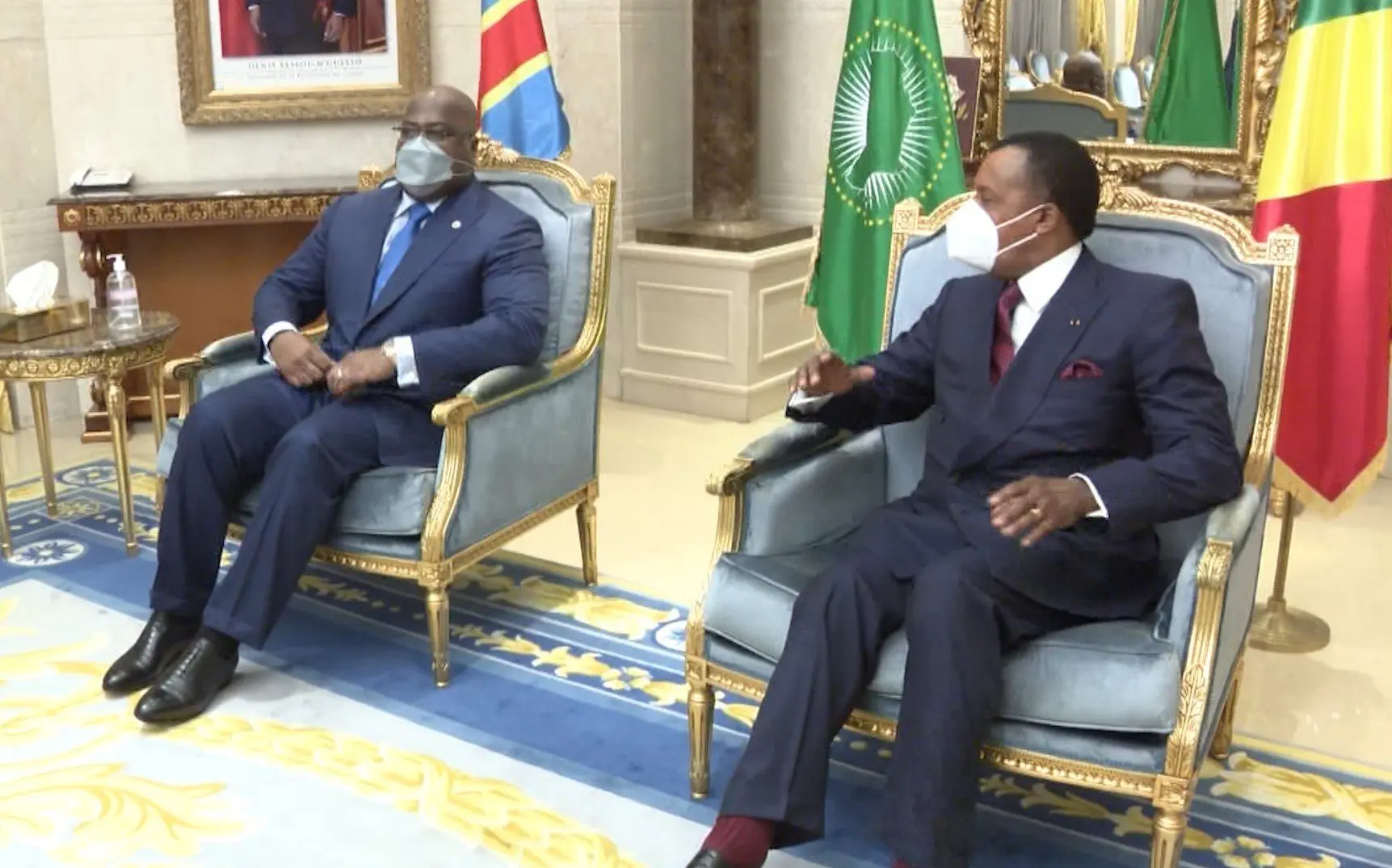
The Democratic Republic of Congo’s constitution limits presidents to two terms. Félix Tshisekedi has now signalled openness to a third term, citing the conflict in the east and warning that elections scheduled for 2028 could be complicated, or delayed, if insecurity persists. Opposition figures immediately read the remarks as an early test of institutional guardrails already strained by years of insecurity and political distrust. The controversy reveals something more consequential than presidential ambition. It reveals how conflict gradually alters the constitutional environment around it.
The remarks, delivered at a press conference in Kinshasa, were carefully hedged. Tshisekedi said any extension would depend on public support and constitutional processes. But the precision of the hedge matters less than its timing and framing. Introducing the possibility of extended tenure through the language of security necessity is a recognisable move in fragile-state politics. It does not require immediate legal action to begin shifting the political environment. It requires only that the idea enter circulation, attached to a crisis, and begin to seem less exceptional than it was before.
The eastern conflict provides that crisis with unusual continuity. Eastern Congo’s long-running instability (armed groups, regional tensions, mineral competition, humanitarian displacement and repeated accusations of foreign involvement) has become more than a security challenge. It now sits at the centre of national political calculations, shaping debates about the future form of the Congolese state. When war is both a recurring emergency and a permanent background condition, the logic of emergency measures begins to erode the distinction between temporary and permanent. That erosion rarely announces itself. It accumulates.
The mechanism deserves to be stated plainly, because it is the heart of the matter. A term limit assumes a normal time in which power is handed over on schedule. Permanent war abolishes the idea of a normal time. If the country is always in emergency, there is never a settled moment in which the handover is supposed to happen, and an incumbent can always point to the map of the east to explain why now is not it. Prolonged insecurity can be invoked to seek delays, but it does not itself establish a lawful suspension of constitutional limits. This is the quiet advantage of governing through emergency. It never has to win the argument against the term limit. It only has to ensure the argument is never finally held.
Follow who gains from the permanence and the conflict’s stubbornness becomes legible. A war that never resolves is a catastrophe for the displaced civilian and a political resource for any office-holder who can invoke it. The opposition’s deeper fear is not a single extra term. It is that a country can be governed indefinitely by the perpetual deferral of the moment when power is supposed to change hands.
For the DRC opposition, the concern is therefore not only the prospect of a third term as such. It is that wartime conditions are being used to create political space in which constitutional limits become subjects of discussion rather than settled facts. Once the question of whether the constitution should bend to security imperatives is live, the terrain of political contestation has already shifted. The burden moves from those seeking change to demonstrate necessity to those opposing change to demonstrate that stability is achievable without it.
The issue carries regional significance. The country occupies a central position in Central and East Africa, economically, geographically and strategically. Prolonged uncertainty in Kinshasa carries consequences for regional trade, regional security, mining supply chains and displacement that neighbouring states cannot insulate themselves from.
International partners have continued to back stabilisation efforts in the east while encouraging democratic continuity. But the gap between the formal constitutional order and operational state control in the DRC is difficult to bridge through diplomatic encouragement alone. Elections depend on institutions that retain the legitimacy and territorial reach to sustain public trust during periods of crisis. The deeper question now facing Congo is whether its institutions can absorb sustained security pressure without the rules constraining power becoming the first casualty of the strain. Constitutional limits are most at risk not when they are directly attacked, but when prolonged instability makes exceptions seem reasonable. This week’s remarks have brought that risk one step closer to the surface.



