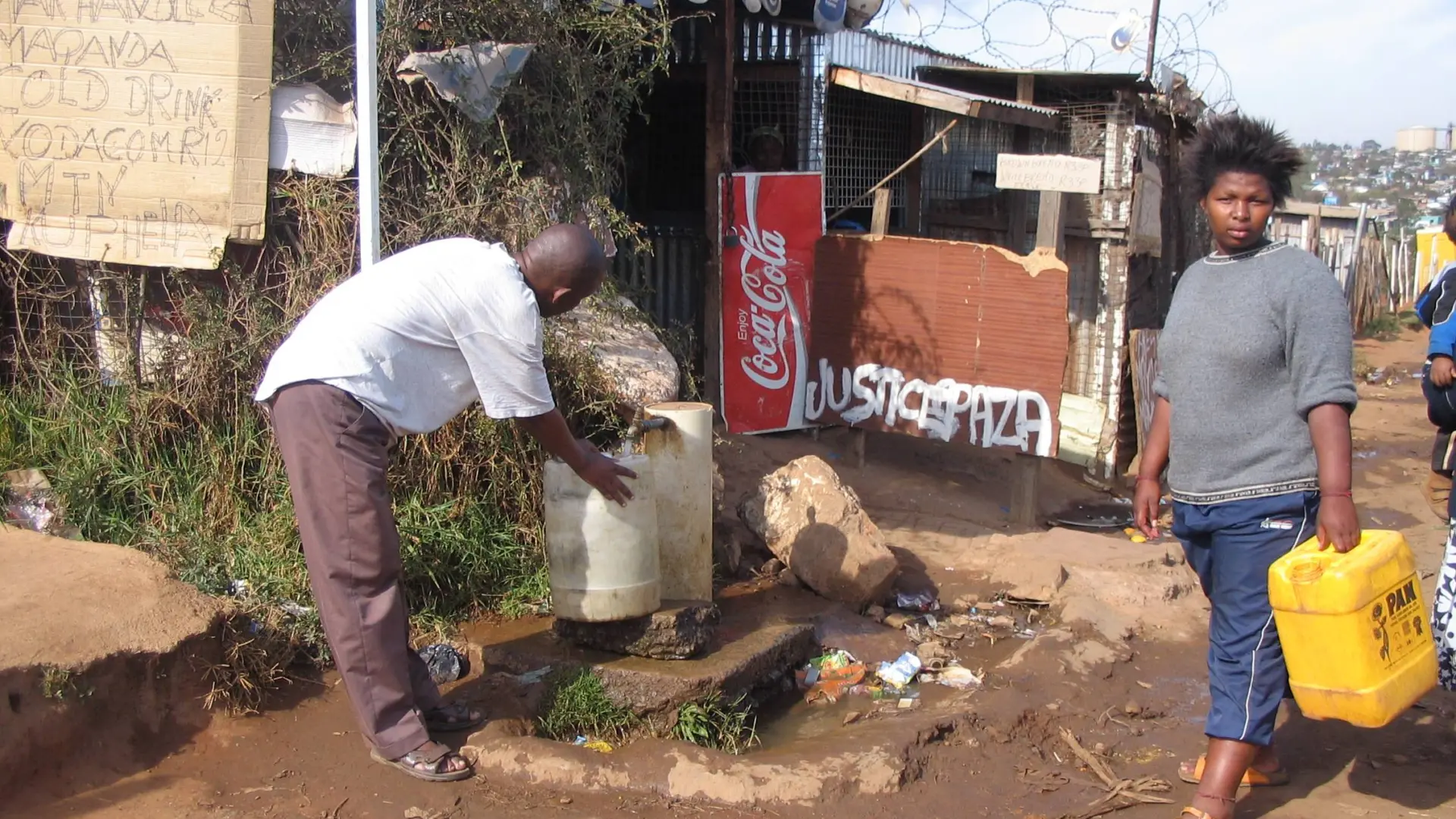
Johannesburg loses about 655 million litres of water every day through burst and ageing pipes, roughly a third of everything the city puts into its network. Johannesburg Water has acknowledged the condition of the infrastructure, much of which is more than fifty years old. Residents in parts of the city go without supply for stretches at a time, and those who can afford the capital cost are installing private boreholes and leaving the municipal system behind.
The macroeconomic reform conversation in South Africa is conducted almost entirely at national level, about fiscal consolidation, energy market restructuring, logistics and the debt trajectory. Those matter. None of them repairs a fifty-year-old water main. The country has built a policy apparatus capable of arguing about the right things at the national level, while the layer of government that actually delivers water, refuse collection, roads and local clinics receives far less of that attention. The test of reform is whether that layer can do its job.
Who leaves the network
Private boreholes can give households an alternative source, subject to groundwater availability, water quality and operating costs. They do not permanently solve every household’s supply problem, and some users remain connected to the network and continue to pay municipal charges. A shift towards private alternatives could weaken collective pressure for service improvements, but that effect needs evidence rather than an assumption about every household’s politics. The distributional question is how private alternatives affect demand, revenue and pressure for reliable service.
Private water alternatives can change households’ dependence on municipal supply, but their effect on revenue and political pressure needs evidence.
Electricity offers a comparison rather than a complete model. Rooftop generation and groundwater abstraction face different physical and regulatory constraints, and groundwater requires management if many users draw from the same resource.
Why a municipal failure is a national question
Johannesburg is not a marginal municipality. It is South Africa’s commercial centre, the seat of the continent’s largest stock exchange and the headquarters of much of its corporate sector, and it is the place where the country’s capacity to run a modern city is most visible to anyone deciding where to invest. A firm evaluating a Johannesburg location has reason to price water reliability into its decision in the way it already prices power, which converts a municipal maintenance failure into a national competitiveness question.
The national labour-market context is severe. On 11 August, the same day that reporting on the water losses circulated, Statistics South Africa published the second-quarter labour force survey. A government statement on the survey recorded the official unemployment rate rising from 32.7% to 33.6%. The survey put 345,000 more people out of work, taking the total to 8.5 million. Youth unemployment stood at 47.4%. Those figures are national and do not supply Johannesburg’s own employment trend or prove a specific reduction in its water-maintenance revenue. Both problems can reflect long-running investment and governance failures, but their appearance in the same week does not establish a shared cause.
The measurable question over the next year is narrow. Not whether reform is announced, but whether the volume of non-revenue water in Johannesburg falls, and whether the number of households on the municipal system rises or continues to fall. Those two figures will say more about the South African state than any budget speech, because they record whether it can still do the ordinary thing it exists to do.



