Opens in a new tab

Topic

Debt and public finance

Sovereign debt, budgets, credit ratings, IMF and taxation

The Addis Ababa skyline, dominated by the Commercial Bank of Ethiopia headquarters tower.

News · Analysis

Ethiopia’s bond deal pairs a principal cut with a future-financing option

Ethiopia's Eurobond restructuring pairs a 12 per cent principal cut, producing an 880 million dollar bond due in July 2029, with a New Money Warrant. Official creditors judged the terms comparable at that stage but reserved the right to seek compensation if the warrant proves excessively valuable.


By Michael Chisamba · · 2 min read

Latest in Debt and public finance

Nairobi city skyline with high-rise towers under heavy cloud, seen across low-rise buildings and trees

News · Analysis

Kenya’s debt options carry costs beyond the headline rate

Kenya's external financing programme of about $5.4 billion for the year to June 2027 spans Eurobond, Samurai, panda and sukuk issues plus a $1 billion debt-for-food-security swap. With global yields rising, the test of each option is its full cost after fees, hedging and conditions.

Adedoyin Shittu ·

Facade of the New York Stock Exchange on Wall Street with large columns and a US flag

Economics

Who assesses Africa’s sovereign credit risk?

Moody's, S&P Global and Fitch set the price of African sovereign borrowing from New York and London, and African finance ministers argue their models overweight political risk and regional contagion, a cost a 2023 UNDP-commissioned study put at billions of dollars.

Adedoyin Shittu ·

Lagos Island cityscape of office blocks and high-rise buildings seen from City Hall

Economics

Africa’s pension savings could finance more domestic investment

African pension funds hold a growing pool of patient, mostly local-currency savings, yet regulation channels much of it into government bonds. Measured allocation limits, pooled vehicles, guarantees and a pipeline of bankable projects could let that capital finance infrastructure without endangering retirement savings.

Adedoyin Shittu ·

The Plateau district of Dakar seen across the water from Gorée island

Economics

Africa’s borrowing costs require scrutiny of perception and fiscal data

African sovereigns can pay borrowing premiums their fundamentals do not explain, partly because foreign rating agencies and crisis-led coverage shape perception. Senegal's discovery of undisclosed debt shows the other half, that repricing African risk depends first on timely, audited and complete fiscal data.

Adedoyin Shittu ·

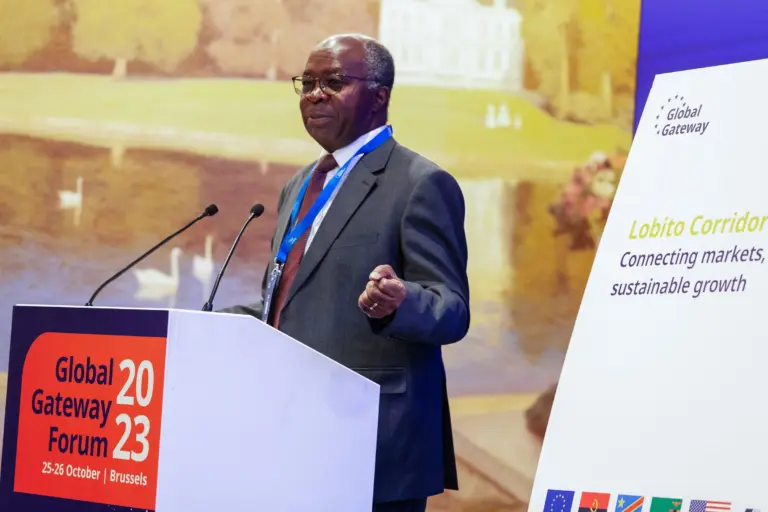
Zambian finance minister Situmbeko Musokotwane speaks at a lectern at the Global Gateway Forum in Brussels.

Economics

Zambia’s debt restructuring shows the cost of prolonged negotiations

Zambia's prolonged debt restructuring after its November 2020 default was not bureaucratic misfortune. The G20 Common Framework sets no binding timeline for creditors, so delay costs China and bondholders little while concentrating the cost on the debtor, whose own borrowing choices weakened its position.

Michael Chisamba ·

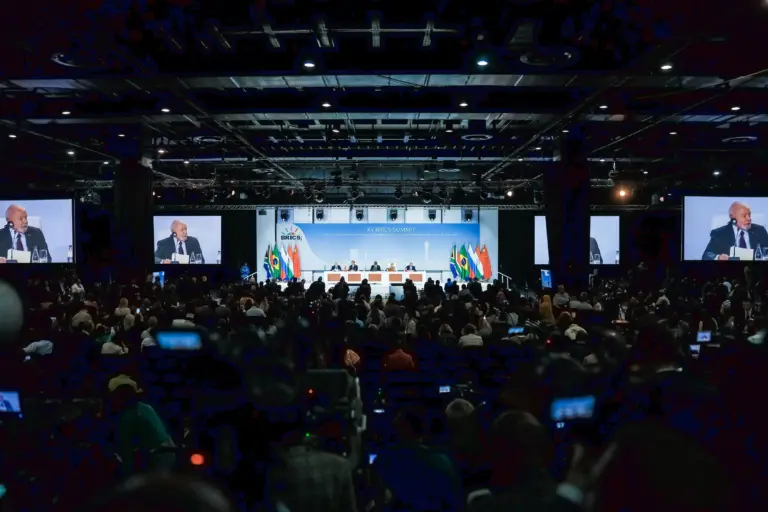
Journalists and delegates watch the leaders' panel at the XV BRICS summit in Johannesburg in 2023.

Economics

Africa’s monetary choices amid efforts to reduce dollar dependence

BRICS efforts to reduce reliance on the dollar give Africa an opening, but the risk is that de-dollarisation succeeds on terms Africa did not negotiate, swapping dollar dependence for yuan dependence. Expanding PAPSS, diversifying reserves and borrowing in local currency would build monetary sovereignty instead.

Adedoyin Shittu ·

A worker tends cocoa beans laid out to dry in Ghana.

News

Ghana’s cocoa payment strain complicates its recovery picture

Fitch's upgrade of Ghana's sovereign rating came as the state-linked Produce Buying Company faced severe debt pressure and farmers went unpaid for delivered cocoa. Sovereign stabilisation can reach bond markets before the farmgate, and that lag is where Ghana's recovery is most politically fragile.

Victoria Akindele ·

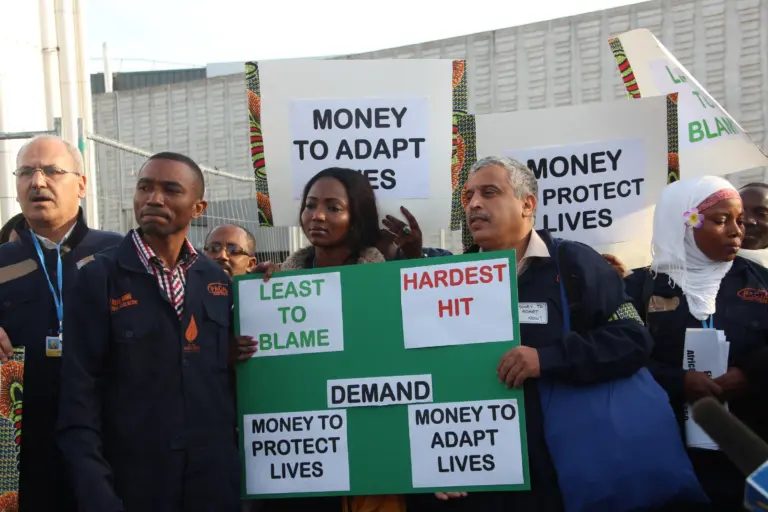
Climate campaigners hold placards calling for adaptation finance.

Economics

Climate-finance access depends on fund design and institutional capacity

Africa's difficulty in drawing on international climate finance reflects design rather than oversight. Green Climate Fund accreditation demands, private finance that follows credit ratings and risk premiums, and slow JETP disbursement filter out countries without bankable project capacity, and the COP29 goal will be judged on implementation.

McDike Dimpka ·

Earlier in Debt and public finance

Nigeria’s NNPC remittance dispute tests fiscal transparency

Nigeria's dispute over what NNPC Limited owes the Federation Account is a contest over who controls the authoritative account of public money. With no binding independent audit, contested data weakens Nigeria's credibility with rating agencies, the IMF and eurobond investors, and unsettles the federal revenue compact with states.

Alao Abiodun

Governing coherence shapes Africa’s policy outcomes

IMF programmes in commodity-dependent states such as Ghana and Zambia follow the same technical script, but whether reform holds depends on governing coherence, the alignment of institutions behind a shared purpose, which is hardest to build where capturing the state is the main route to wealth.

Alao Abiodun

Africa’s institutional capital and the infrastructure investment gap

African pension funds, sovereign pools and asset managers now hold more than $2 trillion, yet the African Development Bank puts the annual infrastructure financing gap at $68–108 billion. The constraint is a risk architecture of regulation, project preparation, currency mismatch and state enterprise governance, not a shortage of capital.

Victoria Akindele

Climate finance promises leave Africa with a delivery test

COP29 set a goal of at least $300 billion a year in climate finance by 2035, but the mix of grants, loans and private money will decide what reaches African states. African climate diplomacy holds leverage in critical minerals that it has barely used.

Adedoyin Shittu

Ayi Kwei Armah’s critique of post-independence disillusionment

Ayi Kwei Armah's 1968 portrait of post-independence Ghana diagnosed captured institutions rather than bad individuals, which is why it has not dated. The same logic now runs through debt service, extractive mining deals and reformers who govern as system-maintainers, from Kenya to Nigeria.

Aderonke Ajibade

How US interest rates reach African treasuries

US interest-rate decisions reach African budgets through refinancing costs, floating-rate debt, exchange rates and investor demand rather than by rewriting every coupon. Deeper local-currency bond markets and less unhedged foreign-currency debt can widen room for manoeuvre, though domestic fiscal choices also shape the final cost.

Adedoyin Shittu

Africa’s climate investment needs finance that reaches viable projects

Africa's climate finance gap is one of design as well as volume: tracked flows of about $30 billion a year against a $277 billion need, loans that add to sovereign debt and funds that take years to pay out. Scaling Solar and Kenya's geothermal show what works.

Adedoyin Shittu

Zambia’s mineral strategy tests the link between investment and industrial growth

Zambia is moving from a debt-distress story to a strategic minerals state, courted through rival Lobito and TAZARA corridors and AI-assisted exploration. Strategic importance is not the same as industrial leverage, and the test is whether Zambia moves further up the copper value chain while attention lasts.

Michael Chisamba