Africa’s climate finance problem is one of design as well as volume. The continent needs far more money than it receives, and much of what it does receive comes as loans that add to stretched sovereign balance sheets, through funds that take years to disburse. Where risk has been shared and timelines kept realistic, as in Zambia’s and Senegal’s solar auctions and Kenya’s geothermal fields, pledges have become working power plants.
What COP29 promised and what Africa needs
At Baku in November 2024, the COP29 decision on the new collective quantified goal set a target of at least $300 billion a year by 2035 for developing countries, with developed countries taking the lead. A separate paragraph called on all actors to scale up finance for developing countries from all public and private sources to at least $1.3 trillion a year by 2035. These are different commitments. Neither alone shows how much finance reaches African projects.
The need is large. The Climate Policy Initiative’s Landscape of Climate Finance in Africa, published in 2022, estimated that African countries need $277 billion a year, or about $2.8 trillion between 2020 and 2030, to deliver their nationally determined contributions. Tracked climate finance flows into Africa in 2019 and 2020 were about $29.5 billion a year, leaving an annual gap of roughly $250 billion.
The resource base is not the constraint. In its Africa Energy Outlook 2022, the International Energy Agency found that Africa holds 60 per cent of the world’s best solar resources but only 1 per cent of installed solar PV capacity. The figure refers to high-quality resource areas, not to all theoretical solar potential, but the contrast with installed capacity is stark.
Why debt-based climate finance falls short
Delivery has often fallen short of the headline pledges, but the deeper problem is that the architecture of climate finance fits African conditions badly. Concessional loans are better than commercial debt, yet they still add to sovereign liabilities. Many African sovereigns are under debt pressure from post-pandemic fiscal adjustment and dollar-denominated obligations. The countries most exposed to climate risk are often the least able to take on more debt without risking a fiscal crisis. Progress will require more grant-based and equity finance that does not compound existing debt.
Access is slow. Climate Analytics found that proposals from least developed countries to the Green Climate Fund took a median of 21 months, or 619 days, from submission to board approval, and up to 58 months in some cases. That excludes six to twelve months or more of preparation beforehand, and legal signing after approval. At the Global Environment Facility, moving from concept approval to final endorsement typically takes 18 to 24 months, with first disbursement months later. Taken together, projects at both funds often take three to five years from initial concept to first disbursement. The requirements are also calibrated for institutional capacity that many African governments have not yet built, a theme examined in our analysis of deforestation, drought and debt.
The accounting compounds the problem. Oxfam’s Climate Finance Shadow Report 2023 found that donors claimed to have mobilised $83.3 billion in 2020, but that the true grant-equivalent value was at most $24.5 billion. Loans were reported at full face value rather than grant equivalence, and up to one-third of reported public climate finance was existing development aid relabelled. The headline figures overstate the real transfer before disbursement delays shrink it further.
The headline figures overstate the real transfer before disbursement delays shrink it further.
Projects that worked
Several African projects show what climate investment can deliver when the financing is designed for local conditions. The World Bank Group’s Scaling Solar programme, according to an IFC factsheet, reached commercial operation in two African countries. In Zambia, two plants totalling 88 MWp were commissioned in 2019 at flat tariffs of 6.02 and 7.84 US cents per kWh, record lows at the time of tender. In Senegal, two plants totalling 79 MWp followed in 2021 at initial tariffs of 3.80 and 3.98 euro cents per kWh. Madagascar signed a Scaling Solar mandate but did not reach financial close.
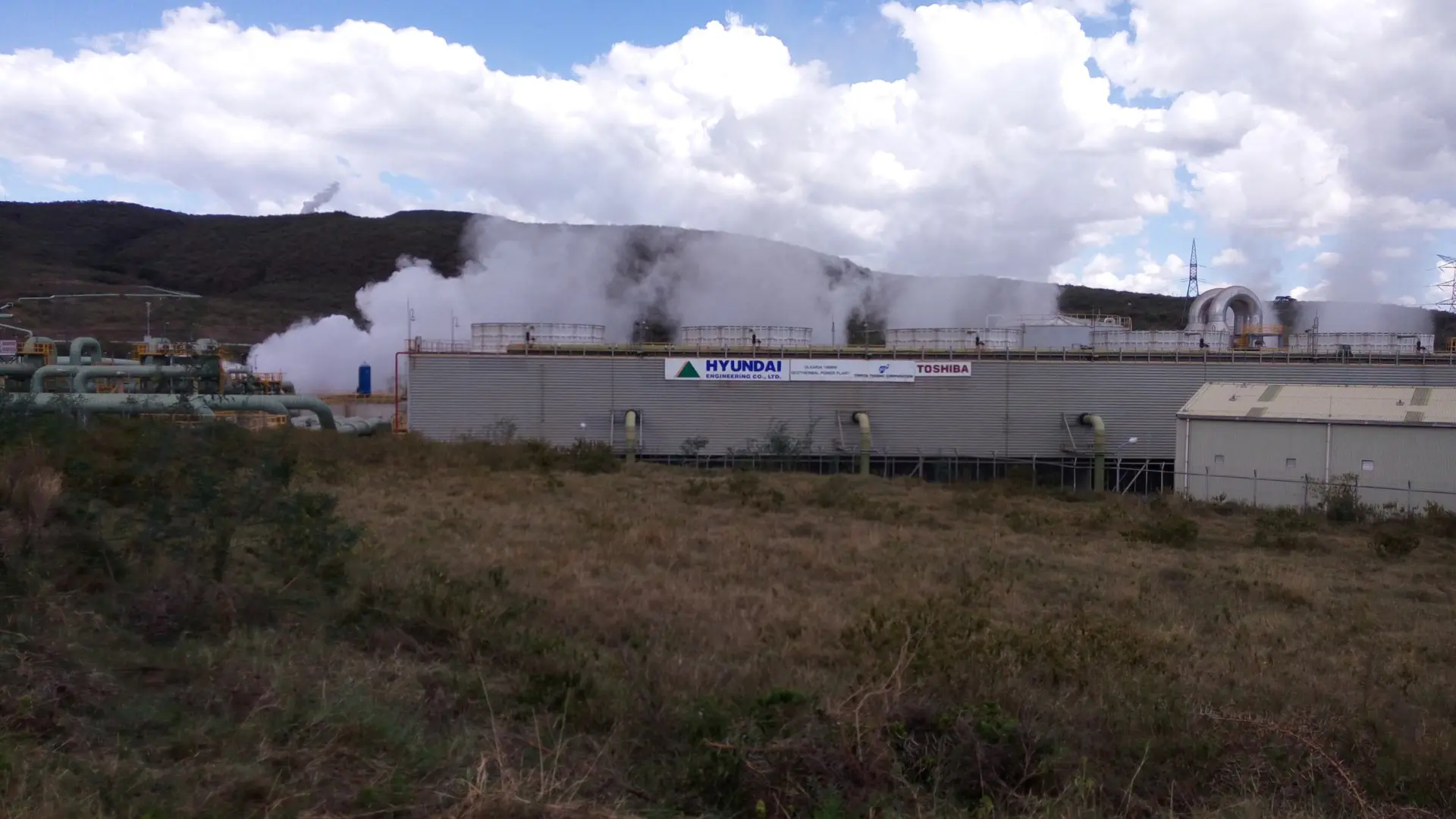
Kenya’s geothermal sector, built over decades with patient capital, provided 47.9 per cent of the country’s electricity generation in 2023 and 45.9 per cent in 2024, according to calendar-year national statistics. Morocco’s Noor Ouarzazate complex, run by the Moroccan Agency for Sustainable Energy, has 510 MW of concentrated solar power capacity, among the largest in the world. On 11 March 2024 the government launched its “Offre Maroc” for green hydrogen, offering up to one million hectares of public land for projects aimed at domestic use and export to Europe.
These are infrastructure investments that work when risk is shared, when project structures respect local capacity and when timelines allow partnership rather than imposed deliverables. The growth of renewables raises its own questions of ownership, set out in our report on Africa’s renewable energy growth.
Choosing instruments and fixing bottlenecks at home
The choice of instrument matters. Grants can support public goods without adding sovereign debt. Concessional loans and equity carry different risks and suit different projects. The right mix depends on project revenues, public benefits and the recipient’s fiscal capacity.
African governments also control part of the delay. An IFC evaluation of Scaling Solar found that slow power-purchase approvals and the credit risk of state utilities as buyers stretched the time to financial close on Zambia’s first plants to nearly 30 months, against 14 months planned. Faster approvals, creditworthy utilities and stronger project preparation are choices African capitals can make now. The test for the next decade is whether global climate finance adapts to the lesson of the projects that worked, and whether African governments remove the bottlenecks within their own control.



