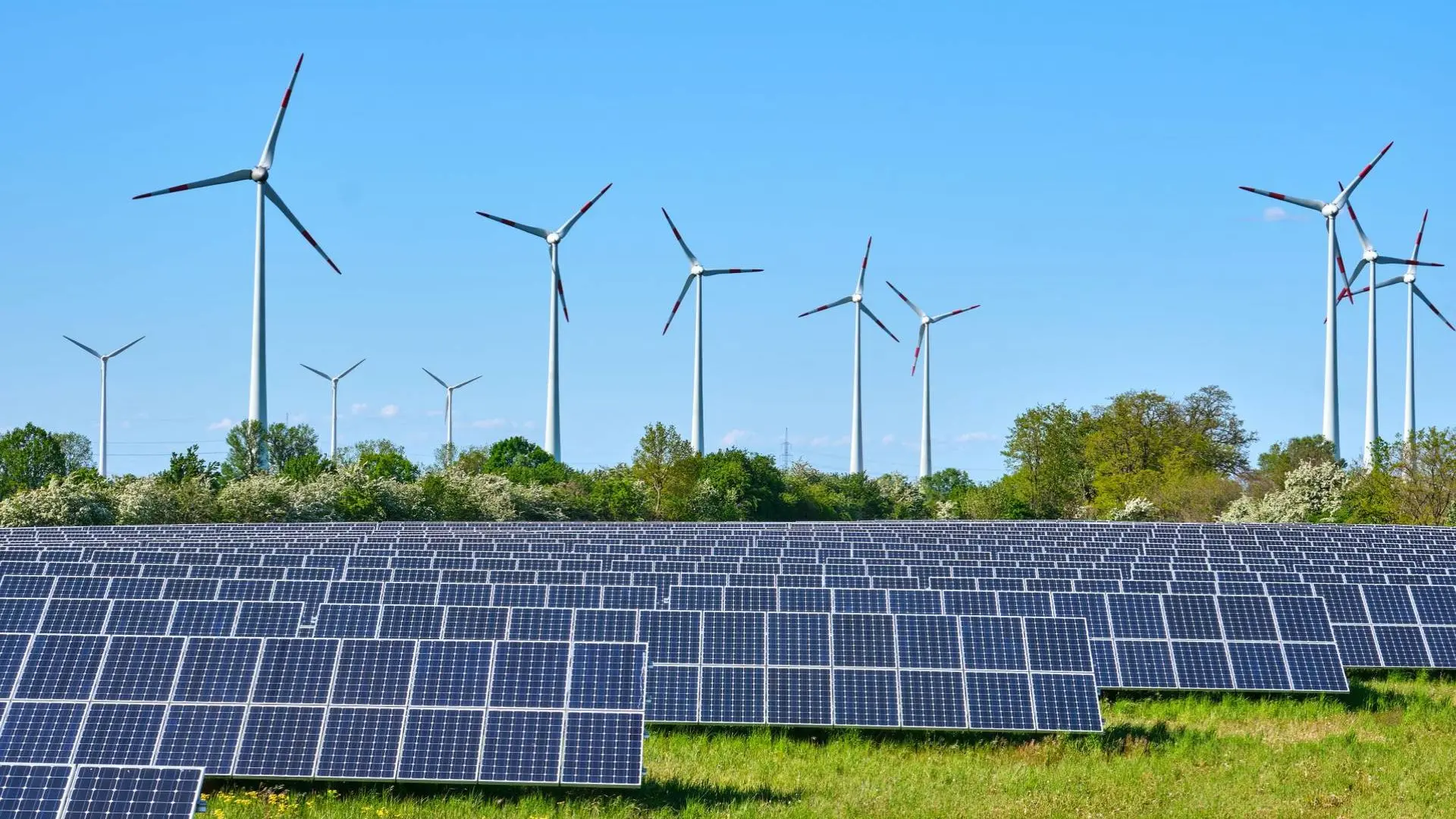
Africa’s renewable energy build-out is no longer a forecast. Solar capacity has grown across East and West Africa, wind in South Africa, Morocco and Ethiopia has moved from demonstration scale to grid-significant volumes, and off-grid solar home systems reach tens of millions of households the grid has never served, according to IRENA’s 2024 Africa report. The question most of the investment narrative obscures is who owns this infrastructure, on whose terms it operates and who it reaches. This analysis argues that the answer will be set by ownership structures, financing terms and whether African states capture value beyond the raw minerals and sunshine the transition depends on.
Two state-led models
Morocco has built one of the continent’s most coherent renewable energy strategies, anchored by the Noor Ouarzazate solar complex and a grid capable of exporting clean power to Europe through undersea connections. The strategy is sovereign in conception: state-designed, state-directed and structured to turn Morocco’s solar endowment into geopolitical leverage rather than simply clean electricity. Morocco intends to be an energy exporter, not merely an energy moderniser. The Noor complex is not development assistance. It is strategic capital deployed with a clear theory of return.
Ethiopia’s Grand Ethiopian Renaissance Dam is a different kind of assertion. Financed substantially through domestic bond issuance and positioned as a matter of national sovereignty against Egyptian objections, it shows that an African state can build major energy infrastructure on its own institutional terms when the political will is concentrated. The downstream consequences for Nile Basin water diplomacy are real and unresolved. But the dam’s construction, against sustained external pressure, sets a precedent for what infrastructure sovereignty can look like when a government commits to it fully.
Uneven deployment and the access gap
Elsewhere, deployment varies substantially by country. South Africa’s renewable energy independent power producer procurement programme has drawn significant private capital despite regulatory turbulence. Kenya’s grid draws on geothermal capacity from the Olkaria fields. Egypt has a pipeline of solar and wind projects along its coastal and desert corridors.
These are real achievements, but they sit within a continental picture marked by deep inequality in electricity access. Sub-Saharan Africa has the lowest electrification rates in the world, with hundreds of millions of people lacking electricity. The expansion happening at the headline level is not yet reaching the populations most in need of it, for reasons that are structural rather than technical. Grid infrastructure in rural areas has not been built, distribution economics in dispersed low-income communities are challenging, and the project finance models that have worked for large-scale generation do not transfer easily to the last-mile access problem.
Off-grid solar and foreign capital
The off-grid solar sector, which does reach those households, presents a more complicated ownership picture. The companies that have built the largest distribution networks in Africa (Bboxx, d.light, Greenlight Planet and others) are predominantly foreign-capitalised, with varied investor and headquarters structures; Bboxx announced its move from London to Kigali in January 2024. The product works. Solar home systems provide lighting, phone charging and increasingly refrigeration and fan cooling to communities where the alternative is kerosene. Ownership and control differ among firms and require company-specific assessment, but where investors sit abroad, part of the return on African household payments leaves the continent with them.
Minerals and the value chain
The ownership question extends to the minerals beneath the transition. Africa has substantial resources of several minerals used in batteries, electric vehicles and energy storage, with shares varying widely by mineral, and the DRC supplies most of the world’s cobalt. But the processing, refining and manufacturing that turn raw minerals into battery cells, and battery cells into energy systems, happen overwhelmingly outside Africa. The value capture occurs at those stages. Africa, as in previous commodity cycles, tends to export raw material and import finished product, paying the mark-up at each step and retaining the smallest share of the value chain’s total return.
Morocco’s decision to build battery manufacturing capacity at its Atlantic coast facilities, alongside its established phosphate industry, is a deliberate attempt to move up that chain. Zimbabwe’s suspension of raw lithium exports in 2022, which insisted on domestic processing before export, was a more confrontational version of the same logic. These are policy choices that treat the energy transition as an industrial sovereignty question, not merely an environmental one. They can also attract geopolitical friction.
The financing gap and the terms it sets
The International Energy Agency and the African Development Bank have each documented Africa’s financing gap for the energy transition: the difference between what the continent needs to invest each year to achieve reliable energy access and meet its decarbonisation commitments, and what it actually receives. That gap explains why African governments have accepted concessional lending, private equity and development finance on terms that give external parties significant influence over infrastructure that is, in principle, sovereign. The gap does not create an obligation to accept unfavourable terms. It does create the negotiating context in which unfavourable terms become standard.
Newer models have not closed it. The Just Energy Transition Partnerships, large multi-donor finance packages negotiated with South Africa, Indonesia and other countries, were presented as a move beyond project lending towards structural transformation of energy systems. South Africa’s partnership, announced at COP26, has since exposed the gap between announcement and delivery, with complex governance structures, blending mechanisms that require sophisticated financial management, and overlapping conditionalities that absorb significant administrative capacity.
Leverage that is not yet organised
Africa’s resource base for renewable energy is large. Many regions have strong solar resources, and hydropower potential, while geopolitically complex, remains substantial. Green hydrogen (using renewable electricity to produce hydrogen for export) has drawn interest from European governments facing decarbonisation pressure. Europe needs what Africa has, and that need creates leverage the continent’s governments have not yet organised to capture collectively.
The African Union’s energy frameworks and the regional power pools have the institutional form to negotiate on behalf of member states. What they have not yet developed is the political discipline to turn collective interest into collective action with international energy investors, development banks and climate finance institutions. Country deals negotiated separately produce separately negotiated terms. Continental coordination, which the AfCFTA has begun to attempt for goods trade, is the model African energy sovereignty requires.
Africa’s renewable energy future is neither the utopian leap that some advocacy suggests nor the green colonialism that the most critical readings assert. The transition is happening in Africa whether the continent leads it or follows it. What the next decade produces, a continent with sovereign control over its energy infrastructure, negotiating from strength on hydrogen exports, processed minerals and electricity trade, or one that has upgraded its energy mix while transferring the returns to external capital, will be decided now, through ownership structures, financing terms and regional coordination.



