Africa did not build the industrial economy that released the carbon now reordering its weather. It did not design the financial system that extracted its commodity wealth in exchange for the debt now constraining its capacity to respond. Yet the continent that contributed least to the climate crisis is managing some of its most severe consequences with the fewest resources, inside a global governance structure where the most powerful actors’ commitments remain non-binding and their compliance unenforceable. Deforestation, drought and debt are not three separate crises. They are three expressions of one relationship, in which the costs of decisions made by the most powerful economies are transferred to the economies least responsible for them and least equipped to absorb them. That makes Africa’s ecological situation a political problem, not only an environmental one.
Forests and the debt-environment nexus
The Congo Basin, one of the world’s largest tropical forest regions and an important carbon store, is losing forest cover, although estimates of the rate depend on the period and definition used. The drivers are not mysterious: agricultural expansion, charcoal production by households with no viable energy alternative, and commercial logging under regulation that is often weakly enforced. The countries responsible for managing the basin, the Democratic Republic of Congo, the Republic of Congo, Cameroon and Gabon, face differing debt burdens and fiscal constraints. Their capacity to fund forest protection has to be assessed country by country.
This is the debt-environment nexus the climate negotiation architecture has been slow to address directly. Countries whose ecological assets provide global public goods, atmospheric carbon storage, biodiversity and watershed maintenance, are asked to forgo the short-term revenue from extracting those assets for a long-term climate benefit that accrues globally. That is a legitimate conservation ask. It is an illegitimate one in the absence of payment. Debt-for-nature swaps, green bonds and REDD+ mechanisms have moved in the right direction conceptually. In practice, the flows have been too small, too slow and too encumbered by verification requirements that can be costly for applicants.
Drought and adaptive capacity
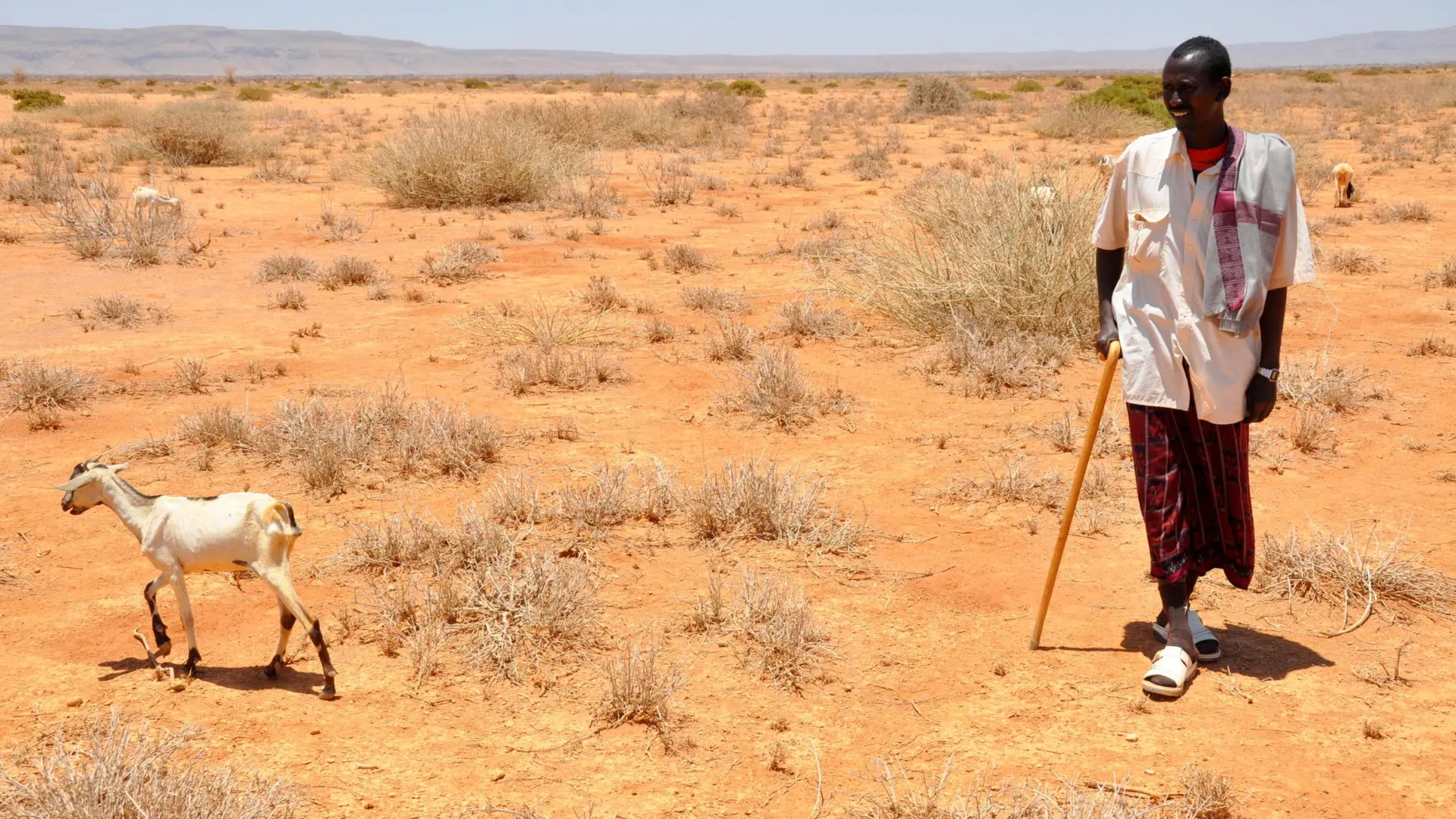
The drought picture in Eastern and Southern Africa has moved from emergency towards a structural condition. Repeated failed rainy seasons in the Greater Horn of Africa between 2020 and 2022 were followed by drought that disrupted Southern African agriculture in 2024. These events were not surprises in the scientific literature. They were projected, with increasing precision, as probable consequences of the warming trajectory that global emissions have produced. The gap between what climate science projected and what development finance was mobilised to prepare for is a failure of governance, not a failure of African adaptive capacity.
Adaptive capacity is where the analysis needs to be most precise. African smallholder farmers have been adapting to climate variability for generations, through crop diversity, seasonal migration and indigenous water management practices that formal development programmes have sometimes overlooked. The problem is not that Africa lacks adaptive capacity. It is that the scale of current disruption is exceeding the range of variability those strategies were designed to manage, and the public investment required to extend that range, in irrigation, drought-resistant seed systems and rural financial services, has not been made at the required scale.
The decade that decides
The Intergovernmental Panel on Climate Change’s assessments have been consistent that decisions and investments made between 2020 and 2030 will determine whether warming stays within ranges African agricultural systems can adapt to, or crosses thresholds that bring displacement, food system failure and economic damage that later investment may not fully reverse. Africa is in that decade now. Following COP29 in Azerbaijan and the agreement on a New Collective Quantified Goal on climate finance, the continent’s negotiating position matters not as diplomatic theatre but because it helps decide whether adaptation finance is mobilised at the required scale and speed, on terms African governments can actually deploy.
Naming the relationship between deforestation, drought and debt clearly is not pessimism. It is the precondition for designing a response on the scale the problem requires.



