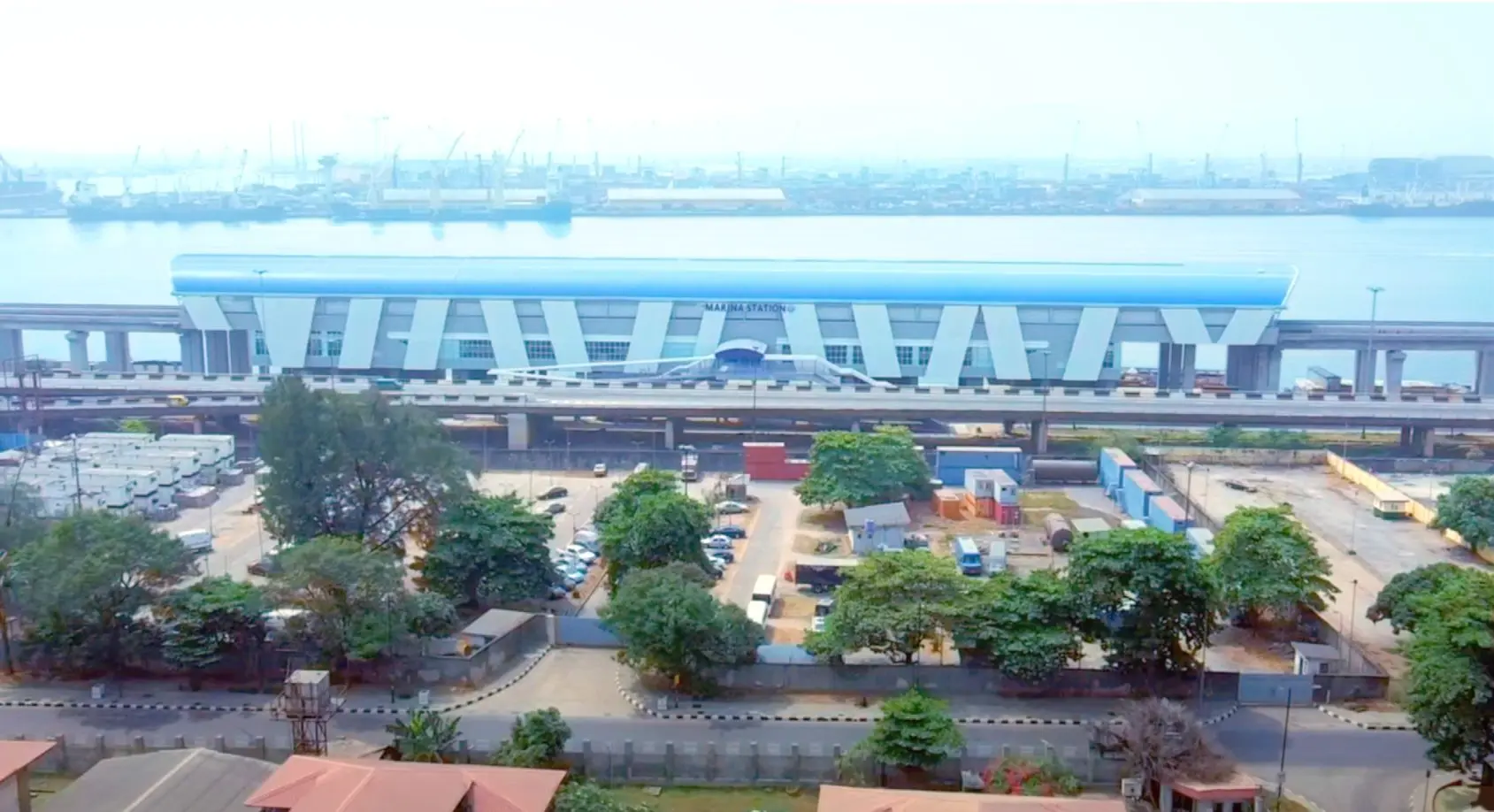
On 19 March 2026, during President Bola Tinubu’s state visit to the United Kingdom, Nigeria signed a buyer credit facility of £746 million, about $990 million, guaranteed by UK Export Finance to rehabilitate the Lagos Port Complex at Apapa and the Tincan Island Port Complex. The Nigerian Ports Authority is the borrower and the Federal Ministry of Finance the sovereign guarantor. At least £236 million of the contract value goes to British companies. The deal shows how export credit returns part of its value to the lender’s economy while the debt stays with the borrower, and why the terms Nigeria accepts matter as much as the repairs.
How UK Export Finance works
UK Export Finance is a British government institution. Its mandate is to support British exports, not African development, and its guarantees reduce the risk of selling into markets that carry sovereign risk. UKEF does not lend the money itself. It guarantees a commercial buyer credit, in this case arranged by the London branch of Citibank, N.A., part of the US-headquartered Citigroup, with reinsurance from KUKE, Poland’s export credit agency. UKEF cover extends to about 96 per cent of a project cost of roughly $998.9 million.
UKEF’s rules require a minimum share of UK content, typically 20 per cent for buyer credit support. Here at least £236 million, about 31.6 per cent of the facility, is tied to UK goods and services. The largest single item is a £70 million order for British Steel to supply 120,000 tonnes of steel billets to the Nigerian contractors Hitech Construction and ITB Nigeria. This is not an accusation. It is the mechanism working as designed.
The arrangement is a structured return loop, though not a purely British one. The UK government underwrites the credit risk, a US bank’s London branch arranges the loan, and British exporters secure guaranteed supply contracts. The steel goes to Nigerian contractors, but much of the material and all of the financing come from outside. The infrastructure remains in Nigeria. Part of the financial value chain does not.
Why the Lagos ports needed repair
The Lagos Port Complex and Tincan Island have long suffered from degraded berths, congestion and layers of regulation that turned West Africa’s natural trade gateway into a bottleneck. There has been progress. In the World Bank and S&P Global Container Port Performance Index, both ports were among the world’s 15 most improved for vessel time in port between 2020 and 2025: Tincan Island moved from minus 68 to minus 26 and Lagos from minus 61 to minus 26. Both still score negatively and sit in the bottom quartile globally, at around 320th place, held back by degraded berths and slow landside cargo clearance.
The facility covers the renovation of 20 berths across the two complexes. In one sense it is debt-financed repair: Nigeria is borrowing to fix what institutional failure allowed to decay. The test is whether the upgrade builds Nigeria’s capacity to manage, maintain and expand its own infrastructure, or simply resets the clock for the next borrowing cycle.
Why Nigeria chose export credit
Nigeria had reasons for the choice. Around the time of signing, Federal Government bonds carried coupons and auction yields of 17 to 21 per cent, and Nigeria’s Eurobonds traded at yields of about 7.4 to 10.4 per cent depending on maturity, according to Debt Management Office data. Buyer credits backed by export credit agencies typically offer longer tenors and lower margins than unguaranteed commercial debt. The government has paired the facility with its National Single Window programme for port modernisation. For Abuja the trade-off is cheaper, longer money in exchange for tied procurement: Nigeria carries the sovereign obligation, and external suppliers take a guaranteed share of the industrial content. The wider question of loan terms in African borrowing applies here in concrete form.
A logistics hub or a transit economy
Red Sea disruption has raised the stakes. UNCTAD’s Review of Maritime Transport 2025 records a 10 per cent rise in Africa’s Liner Shipping Connectivity Index between June 2024 and June 2025, the fastest of any region, as container ships rerouted around the Cape of Good Hope and West and Southern African ports handled more transshipment and bunkering. Nigeria, one of Africa’s largest economies and home to the most significant port infrastructure in West Africa, is positioned to turn this into lasting advantage. The question is not whether its ports get upgraded. They must. It is whether the model makes Nigeria a value hub or a transit economy, a choice that other African port concessions also face.
A value hub captures processing, manufacturing and logistics services and builds industrial density. A transit economy moves goods efficiently for others and keeps the thin margin of throughput. Financing terms shape what gets built, and the origin of equipment and materials shapes which technical standards become the baseline for maintenance, upgrades and compatibility long after the loan is repaid. The alternative would include technology-transfer clauses, local participation in maintenance, a domestic shipyard and logistics base, and links between port upgrades and AfCFTA corridors and export processing zones. Whether this agreement includes binding technology-transfer commitments or long-term maintenance arrangements is not clear from what has been published. If it does not, that is a policy choice, not a financing constraint.
The facility is an instance of a wider pattern in African infrastructure finance, though the evidence here is more mixed than the pattern suggests. Nigerian firms are building the berths, and Nigeria chose cheaper money over expensive market debt. But the guarantee, the loan and nearly a third of the facility’s value come from or return abroad, and the debt sits on Nigeria’s balance sheet. The trap is not the debt itself. It is the absence of control over the capital structure. Until that changes, Nigeria’s ports will be rehabilitated and its debt will grow, while the capacity to convert economic scale into bargaining power remains deferred.



