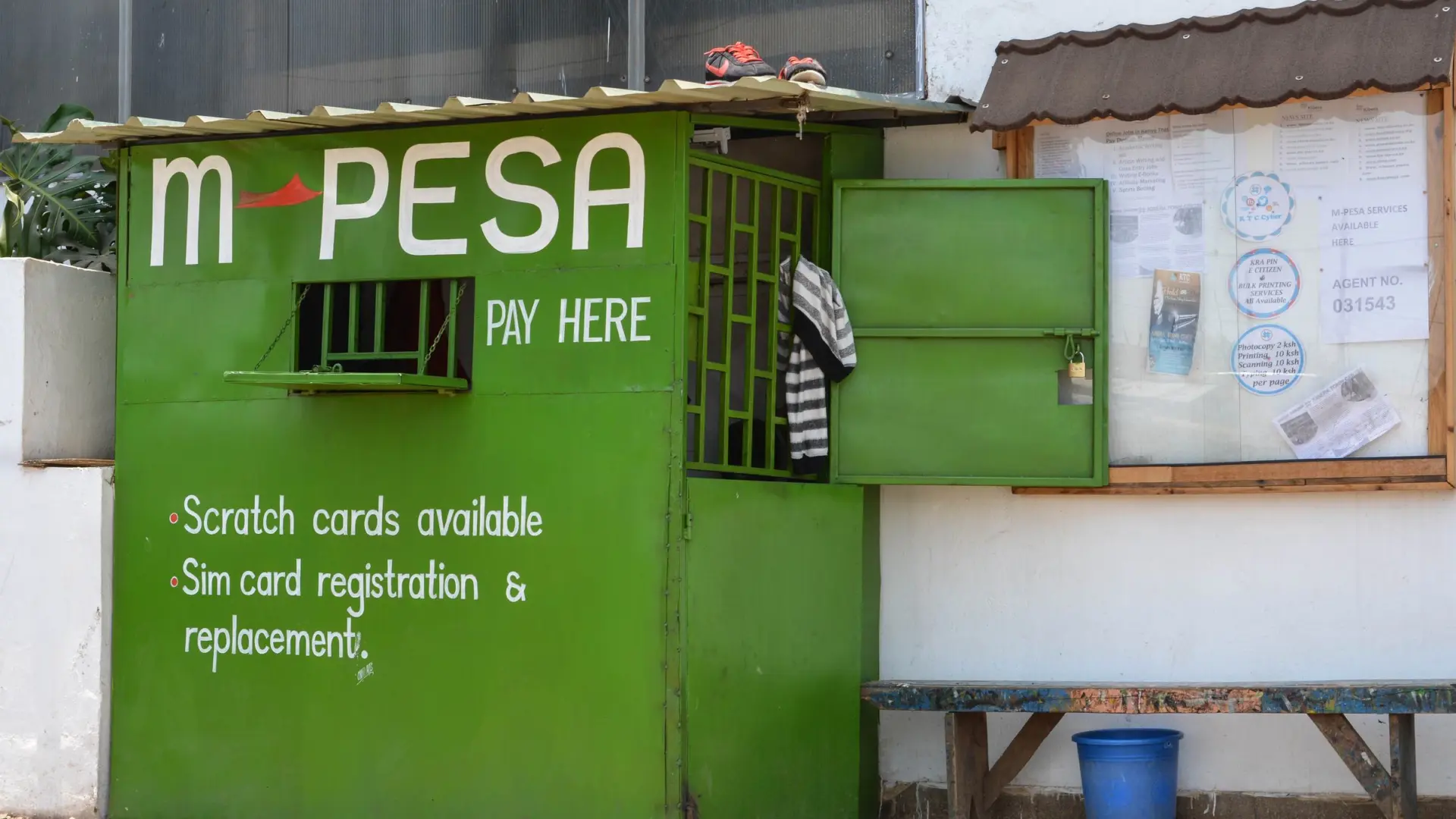
A trader in Kigali can send money to a cousin across town in under ten seconds, for a fee measured in cents, using a mobile money account that requires no bank branch and no smartphone beyond the most basic handset. The same trader paying a supplier in Nairobi, across an international border, faces a transaction that is slower, costlier and routed through an entirely different system: a correspondent bank relationship, a currency conversion priced in dollars, and frequently a Visa or Mastercard settlement rail that has nothing to do with either country’s domestic mobile money infrastructure. Africa built the most admired retail payment innovation of the past two decades. It still does not control the rails that move money across its own internal borders.
Domestic and cross-border systems
The gap is structural, not accidental. Mobile money networks such as M-Pesa in Kenya, MTN MoMo across a dozen countries and Wave in West Africa were built as domestic systems. They were licensed and regulated country by country and optimised for person-to-person transfers within a single national market. They succeeded at that task. What many did not initially prioritise, and what no single telecom operator had the mandate or the multilateral standing to build, was interoperability across borders. A Kenyan shilling in an M-Pesa wallet and a Ghanaian cedi in an MTN MoMo wallet exist in separate technical universes. Moving value between them has historically meant exiting the mobile money system entirely and re-entering the international correspondent banking system that African fintech was supposed to be disrupting.
That re-entry is where the leverage sits. Cross-border African trade settled in dollars must typically pass through a correspondent bank abroad. The bank charges a spread on the currency conversion and a fee for the service. The African Export-Import Bank has estimated that this structure costs African economies billions of dollars annually in fees and lost time that a direct currency-to-currency settlement system would not impose. A continent that trades more with itself every year under the African Continental Free Trade Area still pays a foreign intermediary, and bears foreign exchange risk, to settle a transaction between two African currencies.
A continent trading more with itself every year still pays a foreign intermediary to settle a transaction between two African currencies.
PAPSS and local-currency settlement
The Pan-African Payment and Settlement System, launched by the African Export-Import Bank in partnership with the African Union, is designed to close this gap. It allows commercial banks and licensed payment providers to settle cross-border African transactions directly in local currencies, without routing through a dollar correspondent account. Its ambition is settlement in local currency, cleared through an African-owned and African-governed platform. That is the sovereignty layer the mobile money revolution never built.
The advantage of established networks
The obstacle is not technical capability so much as the accumulated weight of everyone else’s existing infrastructure. Visa and Mastercard have decades of merchant relationships, bank integrations and consumer trust built across the continent. African banks that plug into their networks get instant international interoperability that a newer, thinner system like PAPSS cannot yet match at scale. Every bank, telecom and merchant choosing which rail to build for defaults to the network that already works everywhere. That is a self-reinforcing advantage the incumbents did not need to defend actively. PAPSS has to be better than the existing system for enough participants at once to reach the network effects that made mobile money viable within a single country. That coordination problem is much harder across fifty-four sovereign regulators than it was within one.
This matters beyond transaction fees because payment rails are a form of infrastructure leverage no different in kind from the port concessions and cloud regions that increasingly define who controls African economic activity. A settlement system is also a data system, a record of who trades what with whom, and at what volume. It is also a point of potential restriction, since a network operator can, in principle, decline to process a transaction. A continent that settles its own internal trade through foreign-domiciled payment networks has outsourced more than a fee structure. It has handed a layer of economic visibility and potential control to institutions with no obligation to African governments or regulators.
Mobile money proved that African markets could lead at the point of consumer transaction. The unfinished task is doing the same where value crosses a border, which is where the fees, the friction and the foreign dependency are concentrated. PAPSS is the first infrastructure with the mandate and the governance structure to close that gap. Whether it reaches the scale mobile money reached within a single country depends on how African governments treat it. They can defend it as a strategic priority against the network effects of incumbents, or leave it as one more well-intentioned platform competing for adoption on its own.