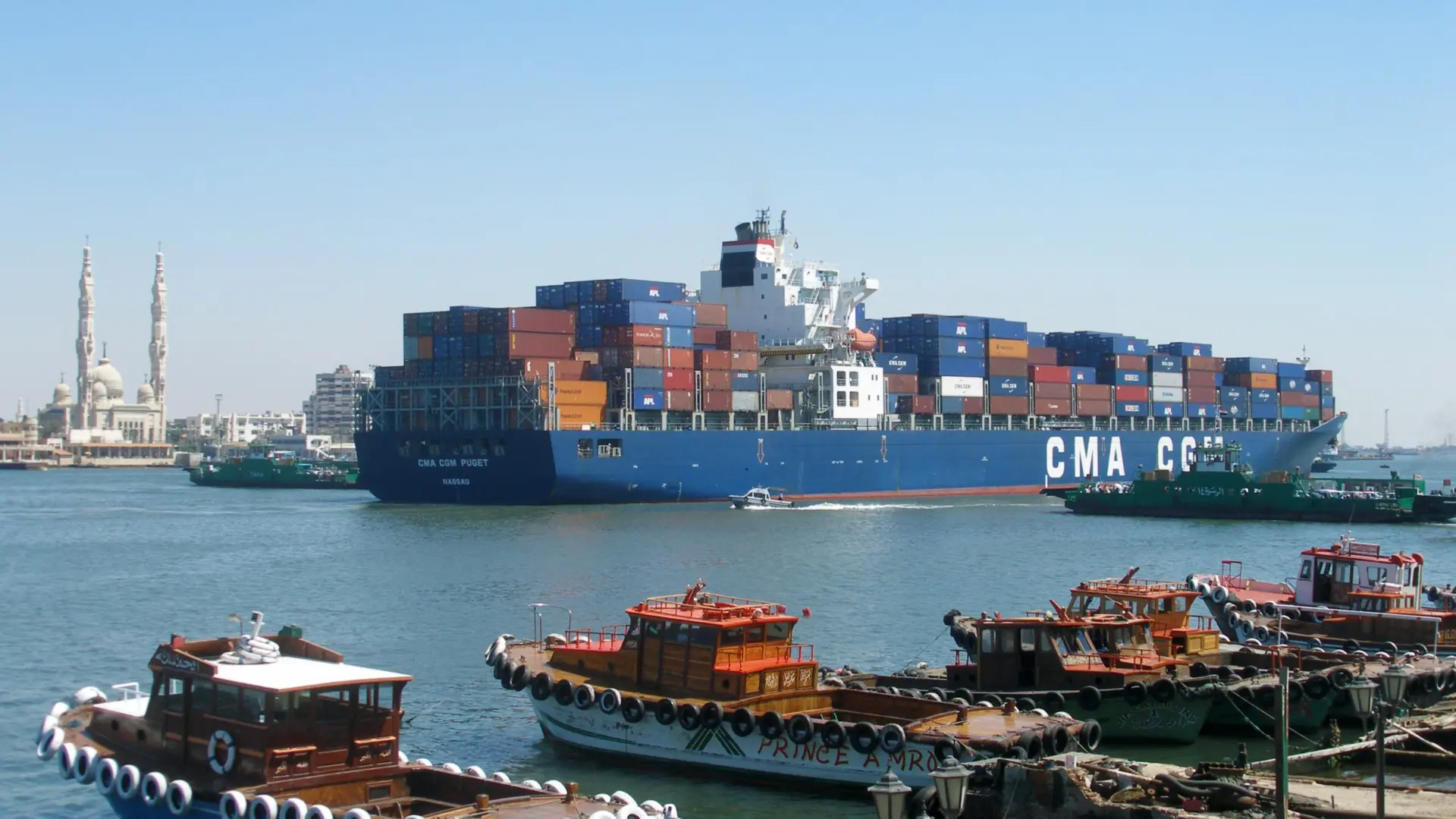
The rerouting of a major shipping line around the Cape of Good Hope, adding thousands of kilometres and many days to voyages that once passed through the Red Sea, was reported in the financial press as a freight-cost story. For Africa it was a sovereignty story. Attacks on commercial vessels by Iran-aligned forces near the Bab el-Mandeb strait have made one of the continent’s most important trade arteries a contested space, and the consequences fall on ports, exporters and consumers from Djibouti to Durban. The event is a campaign of maritime harassment in a narrow waterway. The structure beneath it is the uncomfortable fact that a large share of African commerce depends on a chokepoint the continent does not control, patrolled by navies it does not command, in a quarrel it did not start.
Geography and maritime power
The geography is unforgiving. The strait between the Horn of Africa and the Arabian Peninsula is the gateway between the Indian Ocean and the Suez Canal, and therefore the route through which a great deal of Africa’s trade with Europe and Asia moves. When that passage becomes dangerous, the cost is not borne equally. A vessel can be insured at a higher premium, rerouted or delayed, and the shipping company passes the expense down the chain until it reaches the African importer paying more for goods and the African exporter whose produce arrives late and dearer in distant markets. The disruption is engineered for leverage in a Middle Eastern conflict, and Africa absorbs the spillover as a bystander with cargo on the water.
The actors who project power into this space are revealing in their absence and presence. Iran’s support for the Houthis extends its regional influence and turns a regional rivalry into a tool that can squeeze global shipping, though support does not establish control of every operation. The navies that respond, assembling coalitions to escort vessels and strike launch sites, are predominantly external, drawn from powers that have long treated the Red Sea as their strategic preserve. The African states whose coastlines define one whole side of the waterway are largely spectators. The strait is African geography governed by non-African force, and the current crisis simply makes that long-standing arrangement visible.
The strait is African geography governed by non-African force. The crisis did not create that arrangement. It made it visible.
Basing rights and command
Follow the leverage and the dependency becomes clear. The value of secure passage is captured by whoever can guarantee or deny it, and at present that is Iran’s allies on the disruption side and external navies on the protection side. The risk is carried by the economies whose trade must transit regardless. A landlocked Ethiopian exporter, a Kenyan tea grower and a Sudanese importer have no instrument to influence whether the strait is open, yet each lives with the result. Even the African states that host foreign military bases along this coast, and several do, have leased basing rights without acquiring command. They are landlords to other people’s security architecture, collecting rent while the strategic decisions are made elsewhere. The continent supplies the real estate of the chokepoint and imports the order that governs it.
Building regional capacity
The symmetric point is that African states have not built the alternative, and that omission is theirs to own. There is no continental framework that pools the resources of the littoral states into a credible joint patrol, and there has been limited investment in the overland and trans-African routes that would reduce reliance on any single maritime passage. The African Union has spoken of maritime strategy for years. The Red Sea crisis finds the strategy mostly on paper. A continent that wishes not to be a bystander to the security of its own trade routes would need to fund the means of presence, and it has not. The dependence is external in its origin and internal in its perpetuation.
The deeper exposure predates this crisis. African trade is overwhelmingly extra-continental and seaborne, which means it is routed through a small number of global chokepoints: the Bab el-Mandeb, the Suez Canal, the Strait of Hormuz that governs the oil many African economies import, and the Strait of Malacca that governs trade with Asia. Each is a point at which a distant actor can apply pressure that reverberates through African economies. The remedy is not to wish the chokepoints away but to reduce the share of African prosperity that hangs on any one of them: deeper intra-African trade that moves overland, diversified routing, and a stake in the security arrangements that keep the sea lanes open. In a world of chokepoints, diversification is the most practical form of sovereignty available.
The verdict is that the Red Sea crisis is a preview, not an aberration. As long as African trade depends on narrow waters secured by others, every conflict that touches those waters will tax the continent without consulting it, and the actor willing to disrupt will hold an advantage over the bystander with cargo to move. Iran’s reach into the Red Sea is a Middle Eastern strategy with an African invoice, paid in higher prices, longer voyages and the quiet confirmation that the continent’s commerce floats on a security order it neither built nor steers. The timing and durability of a return to normal shipping remain uncertain. The dependence the crisis exposed will remain until Africa decides that the routes its economy depends on are worth the cost of helping to defend.



