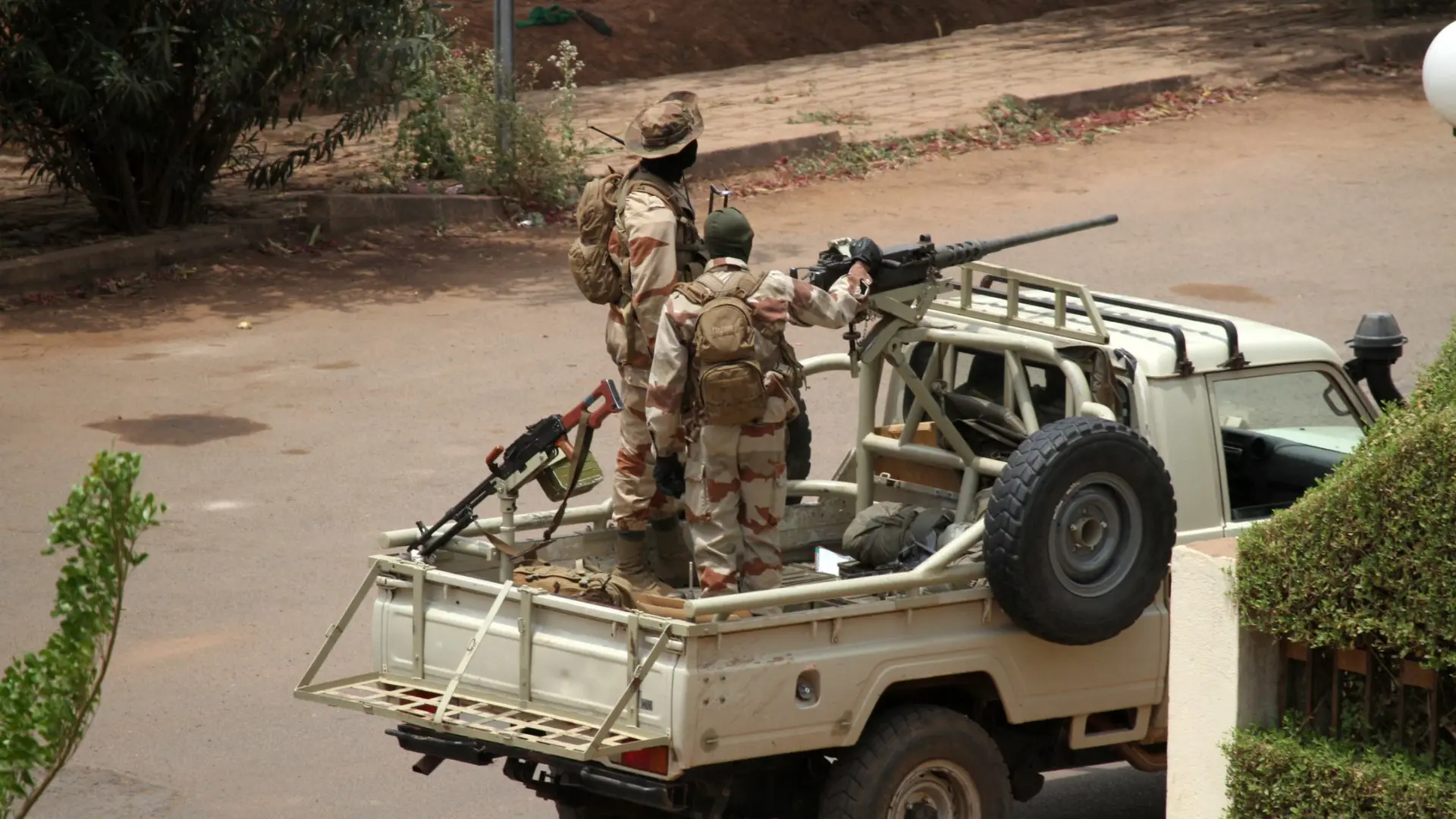
The escalation of militant attacks in Mali, coupled with the withdrawal of Russian-linked forces from Kidal, signals something tactical analysis alone cannot account for. External security partnerships are struggling to convert presence into permanence, and the gap between declared authority and actual territorial control is widening in full view. What appears on the surface as a strategic redeployment is another layer in a system that has managed Sahel instability without resolving it.
Armed groups are not merely launching attacks. They are establishing checkpoints and extending operational reach across corridors that state forces and their external partners claimed to hold. The ability to control movement, extract compliance and regulate territory is the essence of power in conflict environments. That such capabilities are expanding despite years of counter-insurgency investment suggests the balance is not just fragile but is being renegotiated.
Presence is not control
Kidal carries particular weight. The northern city has long been contested between state authority and non-state actors, and the change in external military presence there shows the distance between engagement and entrenchment. Forces can arrive, patrol and project strength; they cannot always remain. The Sahel’s security landscape is not defined by who enters. It is defined by who governs daily life once attention eases.
The distinction between projection and consolidation is visible at the operational level. External partners can project strength through deployments, training programmes and joint operations. Consolidation requires something more durable: local intelligence networks, sustained logistical depth and political legitimacy that extends beyond urban centres into the communities where insurgency embeds itself. Without those foundations, gains remain temporary, and territory reverts to contestation once external pressure eases.
The insurgencies themselves complicate any straightforward security response. Armed groups across Mali and its neighbours are adaptive networks that blend ideological purpose with local grievance and economic incentive. They operate across borders, exploit governance gaps and put down roots in communities that state structures have long failed to reach. Countering them requires governance capable of competing for legitimacy at the local level, something no external security partnership can deliver on behalf of a state.
Changing partners, not the model
Mali’s trajectory sits within a wider regional pattern. Military governments across the Sahel have pivoted away from Western partners towards alternative security arrangements, and these pivots are framed as assertions of sovereignty after years of externally directed intervention. But sovereignty is measured not by the diversity of partnerships but by the consistency of territorial control, and changing partners has not by itself resolved the conflict.
French-led operations, UN peacekeeping missions and now Russian-linked arrangements have each brought their own metrics and timelines. The underlying challenge has remained the same. The difficulty of translating external support into internal stability is not a failure of execution. It is a structural feature of the model itself. The Sahel does not lack engagement. It lacks alignment between strategy and the conditions that feed insurgency, and until that alignment is built from within, through governance, legitimacy and a presence that outlasts any partnership, each new intervention risks becoming another layer in the same system.
Accountability on both sides
The accountability runs in both directions, and an honest reading lets neither side off. The Western model failed to convert a decade of operations into territory the state could hold, and that failure is real. But the military governments that expelled it have not closed the gap; they have re-staffed it, exchanging a French garrison for a Russian one while the checkpoint at the edge of town still answers to an armed group rather than to a ministry. An armed group taxing a market beyond state reach exercises coercive control there, and no flag flown in Bamako changes who collects at the roadblock. Sovereignty is not the nationality of the soldier. It is the question of who governs the road when the cameras leave, and on Mali’s contested roads that question is not being answered by the state that claims them.



