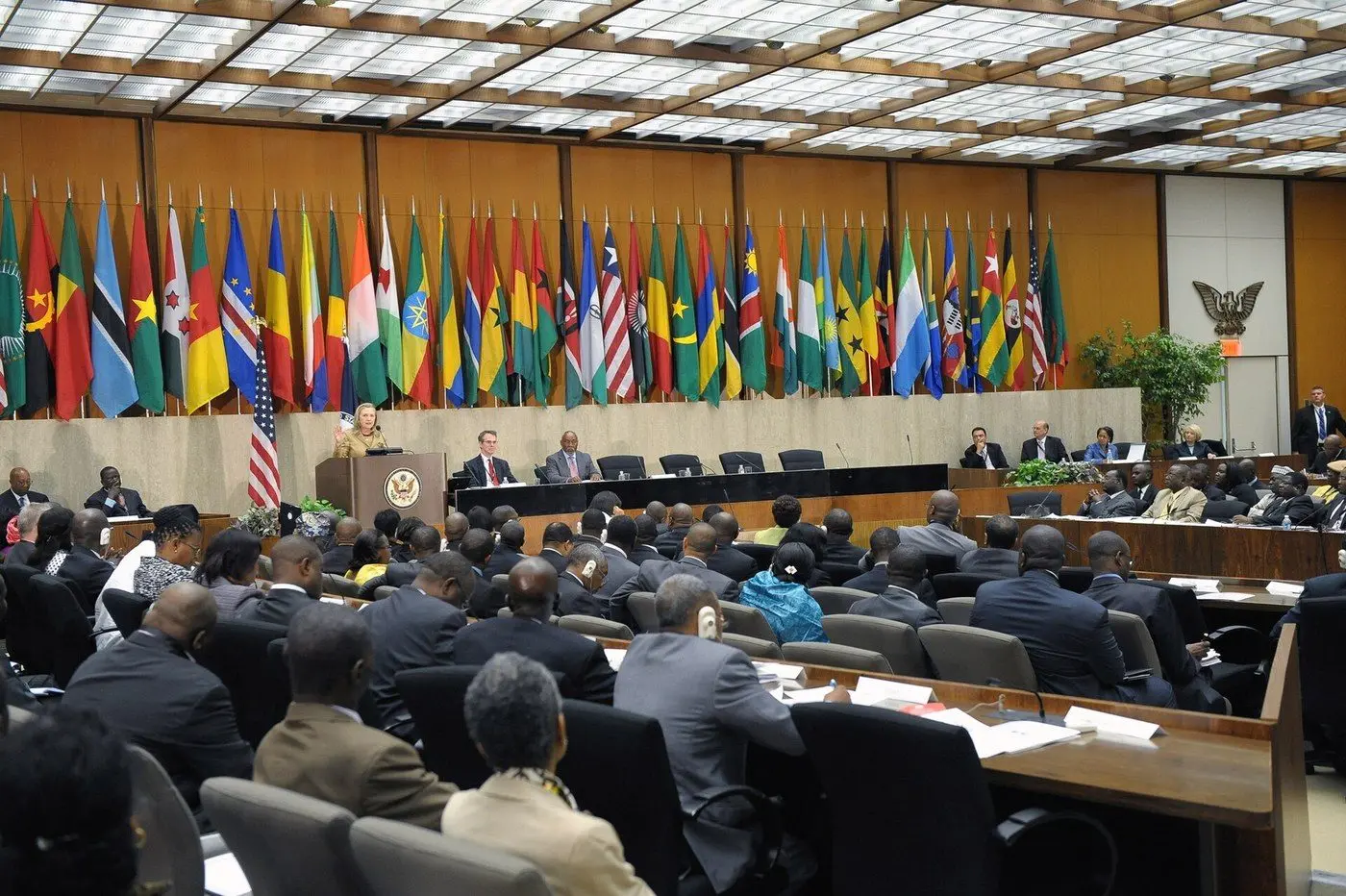
For a quarter of a century, the terms of African access to the American market were set by a single instrument that treated the continent as a partner to be encouraged. The African Growth and Opportunity Act let qualifying countries send thousands of product lines into the United States duty-free, and around it grew whole industries: Lesotho’s textile mills, Kenya’s apparel exporters, Madagascar’s garment lines, each built on the premise that the door to the American consumer would stay open. That premise no longer holds. AGOA lapsed at the end of September 2025, was revived only by a retroactive one-year extension signed into law in early 2026, and now runs to the last day of December 2026. What replaces it is a different bargain, with terms that have shifted towards Washington. This analysis argues that African states will get fair terms only if they negotiate as a bloc and insist that access be exchanged for processing on African soil.
Trade preferences and US strategy
The logic of AGOA was preferential. It granted access as a matter of policy, on the theory that African export growth served a broader strategic interest, and it asked relatively little in direct return. The logic now taking its place is transactional. Alongside the expiry, the current American administration imposed a wave of reciprocal tariffs calculated against trade balances, and because many African economies export raw commodities while importing very little from the United States, they were caught in a net designed for larger surplus countries. Lesotho, whose textile sector had been a showcase of what preference could build, faced tariffs reported as high as 50 per cent on goods that had entered free the year before. The tariffs were separate measures from AGOA, but together with the lapse of preferences they hit exporters hard.
What Washington now signals it wants in exchange for access is supply-chain security, and specifically critical minerals. Members of Congress have floated reshaping any successor to AGOA around benefits tied to the minerals the American energy and defence industries need, and around bilateral agreements that reward processing and refining capacity where United States interests and African industrial ambitions appear to align. Alignment is possible, but it is not automatic, and the difference between a deal that industrialises an African economy and one that merely secures a mineral for an American factory lies in where the processing happens.
What alignment means in practice
A minerals-for-access arrangement can be read two ways. In the favourable version, the United States trades market access for African commitments to build refining and processing at home, and the result is value captured on African soil: jobs, tax base, industrial depth, the slow accumulation of capability that turns a quarry into an economy. In the unfavourable version, access is traded for guaranteed offtake of raw or lightly processed ore, the refining stays offshore, and the arrangement reproduces the oldest pattern in the continent’s economic history, in which Africa supplies the input and imports the value. The same phrase, secure and reliable supply, describes both outcomes. Only the location of the smelter tells them apart.
The same phrase, secure and reliable supply, describes both outcomes. Only the location of the smelter tells them apart.
Benefits and risks
Set the beneficiaries against the risk-bearers and the structure becomes legible. The clear beneficiary of the new regime is the American industrial base, which converts a strategic vulnerability, its dependence on mineral supply chains it does not control, into a set of bilateral guarantees priced through tariff leverage. The African economies that hold the minerals gain a buyer and a bargaining chip, but they carry the risk that the chip is spent on short-term access rather than long-term capacity. The economies that hold no strategic minerals, those whose AGOA gains were in garments and agriculture rather than cobalt or manganese, are most exposed if preferences end without replacement, because they have nothing the new bargain is designed to buy. The regime does not treat the continent as a unit. It sorts it into those with leverage and those without.
That sorting is the danger, and it is also the clue to the response. Negotiating one country at a time, African states face the United States from a position of structural weakness, each dependent on the American market, each substitutable by the next, each unable to hold a price the others might undercut. The tariff leverage works precisely because it is applied bilaterally against parties that do not coordinate. The obvious counter is the one the continent has already built on paper and struggled to operationalise in practice: a common negotiating position, the collective bargaining that the African Continental Free Trade Area was meant to enable, a single answer to the question of what access to fifty-four markets is worth in return.
The AfCFTA test
Here the analysis meets an uncomfortable fact. Intra-African trade still sits below a fifth of the continent’s total commerce, years after the free trade area formally entered into force, which means the internal market that would give Africa an alternative to external buyers remains more aspiration than engine. A continent that traded more with itself would negotiate with Washington from a position of choice rather than need, because the American market would be one option among several rather than the option on which an industry survives. The tariff shock is therefore also an argument for finishing the integration project that would make such shocks survivable, by building the demand at home that reduces the cost of saying no abroad.
The end of AGOA as it was is not, in itself, a catastrophe. Preference schemes were always gifts that could be withdrawn, and a bargain that leaves the recipient permanently dependent on the giver’s goodwill was never sovereignty. The catastrophe would be to replace one dependence with a deeper one, to trade the duty-free door for a set of minerals contracts that lock the continent into supplying inputs to someone else’s industrial revival. The opportunity, harder and slower, is to negotiate as a bloc, to insist that access be exchanged for processing on African ground, and to build the internal market that makes the external one optional. Washington has decided that Africa’s minerals are worth more to it than Africa’s exports were. The question the continent must now answer is whether it will let that revaluation be priced by fifty-four separate weaknesses, or by one shared strength.



