Opens in a new tab

Topic

Security and conflict

Insurgencies, coups, wars, maritime security, Wagner

Earlier in Security and conflict

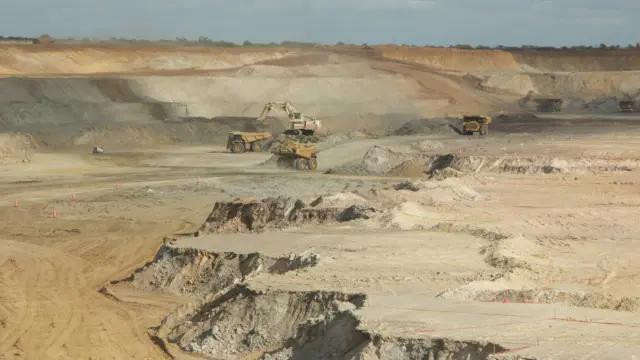
Resource extraction and the limits of state authority in CAR

The Central African Republic's conflicts persist because armed groups, the government's protectors and foreign traders profit from weak state authority and informal mining. Wagner's security-for-concessions deal extended government reach at a reported cost in abuses, while artisanal diamond miners carry the greatest risk for the least return.

Joseph Isaac

France’s Sahel withdrawals reshape its regional influence

France left Mali, Burkina Faso and Niger because its presence had become politically untenable, not because Russia offered an alternative. The military governments' demands belong to a generational renegotiation of the terms on which African states deal with every external power, even as insecurity persists.

Victoria Akindele

Taraba killings expose failures in Nigeria’s security coordination

The 2019 Taraba confrontation, in which soldiers killed three police officers and a civilian while a kidnapping suspect left police custody, exposed a Nigerian security architecture lacking inter-agency command protocols, independent oversight and political will for accountability.

Ebenezer Makinde

The Angolan War of Independence and Civil War

Angola won independence from Portugal in 1975 after a liberation struggle fought by three rival movements. Their failure to share power, and the foreign backers behind each, turned freedom into a 27-year civil war.

Victoria Akindele

Sexual abuse by UN peacekeepers rarely ends in a criminal trial

UN investigators, journalists and rights groups have documented sexual exploitation and abuse by peacekeepers in Congo, Liberia, Haiti and the Central African Republic since the early 2000s, yet few of the accused have stood trial. The author argues that because only troop-contributing states can prosecute their soldiers, the UN has too often protected itself rather than the people it serves.

Adedoyin Shittu

Biya’s national dialogue opens without the separatists it was meant to bring in

Paul Biya's national dialogue of 30 September to 4 October 2019 was meant to end the conflict in Cameroon's two English-speaking regions, but the separatist leaders refused to attend. The author argues for an inclusive dialogue with no subject off limits, federalism included, and against secession.

Adedoyin Shittu

Bentalha Massacre

On the night of 22 September 1997 armed men of the GIA killed hundreds of people in Bentalha, a village that had turned against them. The army's failure to intervene still shapes how Algerians remember it.

Victoria Akindele

Why the Islamic Movement in Nigeria is unlikely to become another Boko Haram

A Kaduna State inquiry counted 349 dead after soldiers attacked the Islamic Movement in Nigeria in Zaria in December 2015, and the group was banned in July 2019. Its habit of going to court suggests it will not become another Boko Haram. The greater danger is a government that ignores court orders.

Ebenezer Makinde

Inside the Central African Republic’s forgotten crisis

Years of coups and civil war have left the Central African Republic close to state collapse, with children bearing the worst of it. Yet the crisis draws a fraction of the attention given to Syria or Yemen.

Ebenezer Makinde

Refugees, armed conflict and the failure of governance in Africa

Africa’s refugee crisis is not a natural disaster. It is man-made, driven by armed conflicts that grow out of bad governance, personalised power and sit-tight rulers, from South Sudan and Somalia to the Central African Republic, DR Congo and Nigeria.

Ebenezer Makinde

Rape as a weapon of war in eastern Congo

Rape in eastern Democratic Republic of Congo is used as a weapon of war, and those who order it have long gone unpunished. The author argues that it will not stop until the Congolese government ends the conflicts that drive it.

McDike Dimpka