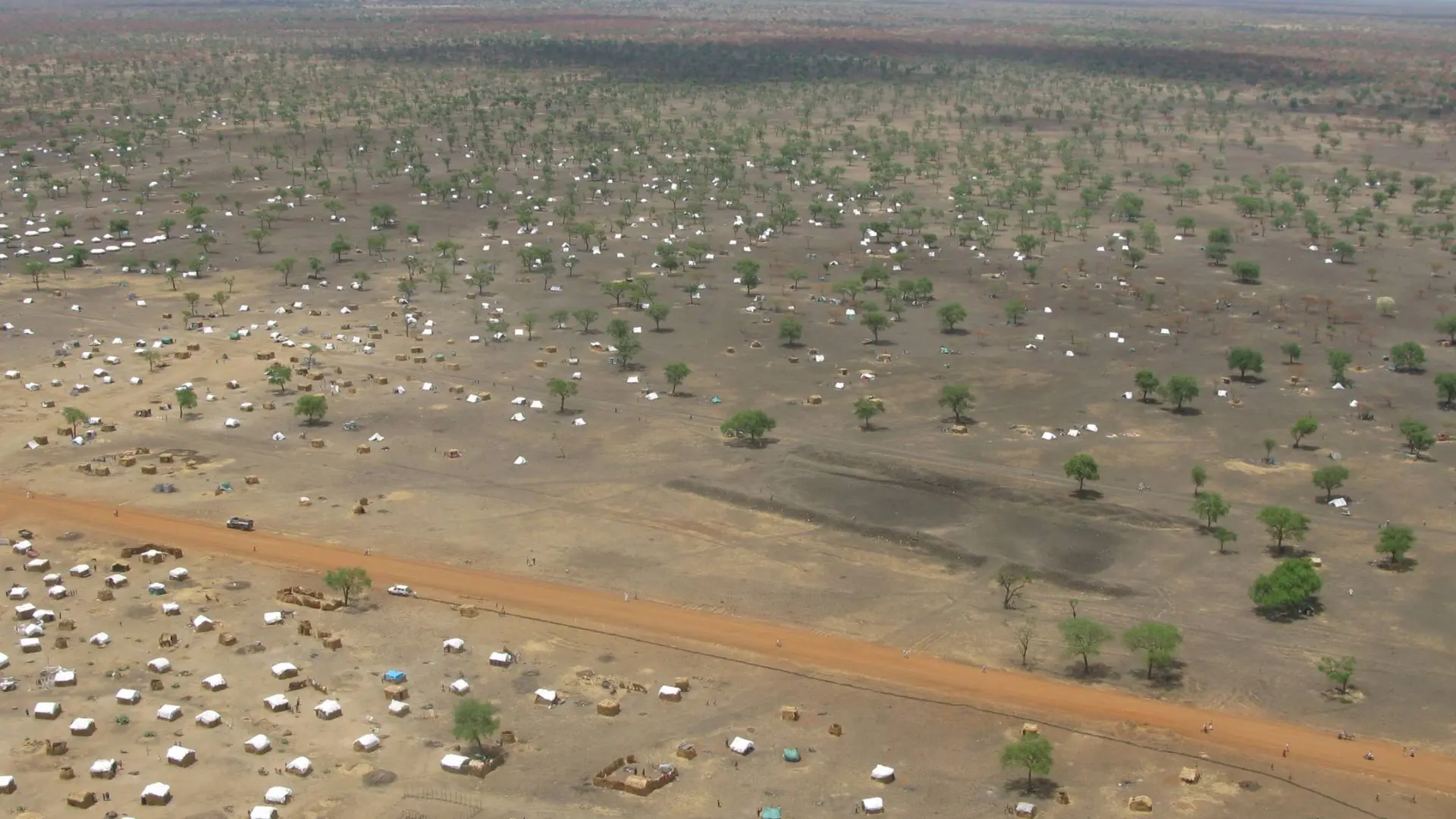
Africa’s refugee crisis is, above all, a crisis of governance. Armed conflict has driven more Africans from their homes than any other kind of humanitarian emergency, and the wars behind the largest displacements, in South Sudan, Somalia, the Central African Republic, the Democratic Republic of Congo and Nigeria, grow out of the way those states are run.
Humanitarian crises are often treated as natural and unavoidable, which makes blame hard to apportion. War is different. Whatever the human role in natural disasters, the human role in armed conflict needs no debate.
Africa’s overwhelming refugee and humanitarian crises
A humanitarian crisis is generally defined as an event, or series of events, that threatens the safety, health and well-being of a community. In Africa, the largest cause of humanitarian crises has been war and armed conflict. These conflicts do not only create humanitarian emergencies. They also create refugees, as many of those affected move in search of peace.
According to the United Nations Refugee Agency (UNHCR), sub-Saharan Africa hosts more than 26% of the world’s refugees; its end-2018 data put the share of refugees under its mandate at 31%. In recent years the crisis has been made worse by the conflicts in the Central African Republic and South Sudan.
By the end of 2018, UNHCR counted 26.4 million people of concern in Africa, up from 24.2 million the year before. They included 6.3 million refugees and 17.7 million internally displaced people. Many Africans have fled their homes without leaving their country, which explains the growing number of internally displaced persons (IDPs). At the end of 2018, UNHCR counted 668,494 internally displaced people in Cameroon. In Somalia, about 17 per cent of the population, or 2,650,000 people, was internally displaced.
At the end of 2018, according to UNHCR’s population statistics, 2,285,301 refugees came from South Sudan, 949,637 from Somalia, 724,787 from Sudan, 720,302 from DR Congo and 590,858 from the Central African Republic.
Armed conflict and the refugee crisis
Many of Africa’s refugees and internally displaced people are victims of internal conflict. In the countries that produce the most, human rights abuses, poverty and underdevelopment, social inequality and bad governance feed one another and drive conflict and political tension.
In South Sudan, the world’s newest country, the poor management of oil resources, ethnic tension and the power struggle between President Salva Kiir and opposition leader Dr Riek Machar have driven the violence. Civil war broke out in December 2013, two years after independence in 2011, and it has driven many South Sudanese to flee in search of peace.
The crisis in Somalia is harder to read, because of the role of the international community and of other anti-government forces. Even so, the role of government cannot be ignored. Somalia has not known peace since the fall of President Mohamed Siad Barre in 1991, and this is partly why the country has produced so many refugees and so much humanitarian need. It has faced civil war and has struggled with basic state functions such as personal security, food security and education.
In the Central African Republic, the conflict that began in late 2012 has escalated to the point where it has killed many civilians and created a vast humanitarian and refugee crisis. The overthrow of President François Bozizé by the Séléka coalition in 2013 spiralled into violence and instability across the country.
In the Democratic Republic of Congo, armed conflict resumed in 2016, especially in the Kasai region. It has killed many Congolese and displaced many more, estimated at around one million people. This latest crisis was sparked by tension between a local chief in Kasai-Central Province and the government. It has since drawn in militias, armed groups and the security forces.
In Nigeria, the Boko Haram insurgency has attacked soft targets since 2009, killing many Nigerians and filling the IDP camps. In Plateau, Taraba and Benue states, the conflict between herders and farmers has continued, costing many lives. The Global Terrorism Index later attributed 1,158 deaths in Nigeria in 2018 to what it termed Fulani extremists, the majority of the country’s terrorism deaths that year. Competition for land and other resources drives much of this conflict, and governments at every level in Nigeria have struggled to contain it.
Failed governance and the causes of conflict
These cases show how far governance has failed in the states concerned. Their political leaders have built personalised states in which armed conflict thrives, and citizens have paid for it. The problems range from corruption and bad governance to ethno-religious conflict, military coups and autocratic rule.
The sit-tight syndrome, rulers who will not leave office, has not served these countries well. Political power is seen as the route to economic dominance, so it is monopolised and concentrated, and rival groups turn to armed conflict to win it. In some cases the conflicts were created by governments themselves, through human rights abuses and tyrannical rule.
Commenting on the problem in February 2019, Khabele Matlosa, head of political affairs at the African Union Commission, told VOA: “The majority of forcibly displaced are a result of violent conflict. So, we need to address the root causes of conflict in the continent. We have to address inequality, poverty, unemployment that generate tension in the continent.”
South Sudan shows the cost. The war that broke out in December 2013, rooted in the political rivalry between President Kiir and his former vice-president, Dr Machar, had by the end of 2018 driven 2,285,301 people abroad as refugees and displaced 1,878,154 more inside the country, according to UNHCR, and killed many. Conflicts caused largely by what governments do have driven the rise in refugees and humanitarian emergencies in these countries.
The way African states were formed, through colonialism and imperial domination, is often cited as a further cause. The colonial powers brought distinct and separate communities together into single states and drew borders that later became sources of dispute. The border crisis between Ethiopia and Eritrea is a case in point.
What has happened since 2019
South Sudan’s Kiir and Machar formed a unity government on 22 February 2020, under the peace agreement signed in September 2018. The rivalry did not end there. Dr Machar was placed under house arrest in March 2025 and, in September 2025, charged with murder, treason and crimes against humanity over an attack in Nasir, and suspended as first vice-president, according to a public summary of the case. His trial opened on 22 September 2025.
The displacement the author described has grown. According to UNHCR’s figures for 2025, Sudan accounted for 2,820,737 refugees and 9,139,309 internally displaced people. The Democratic Republic of Congo had 1,176,489 refugees abroad and 5,669,479 people displaced at home, and South Sudan still had 2,386,499 refugees abroad. In Somalia, 3,347,408 people were internally displaced, and in Cameroon 1,004,257.



