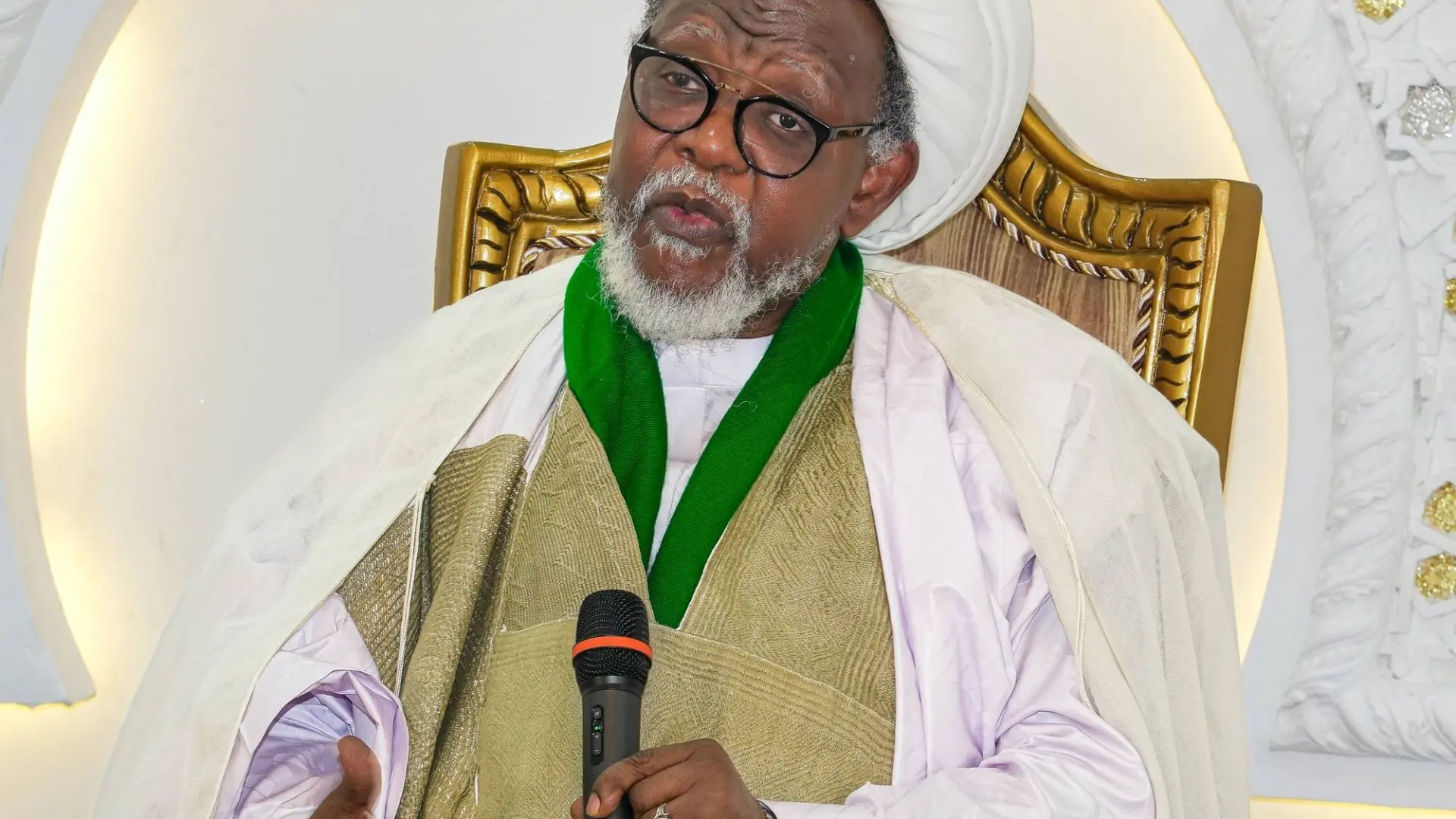
The Islamic Movement in Nigeria (IMN), the country’s main Shia Muslim movement, is unlikely to become another Boko Haram. Since soldiers killed hundreds of its members in Zaria in December 2015, as a Kaduna State inquiry later found, the movement has met the detention of its leader, deadly policing of its protests and, in July 2019, a ban as a terrorist organisation by going to court. The greater danger to Nigeria lies in a federal government that chooses which court orders to obey.
The fear is widespread all the same. DW reported in October 2018 that “Nigerians all over the country are increasingly worried that the IMN could turn into a second Boko Haram”, and a Federal High Court judge made the same comparison from the bench in 2016. This analysis sets out where the fear comes from and why the movement’s record points the other way.
What happened in Zaria
The crisis began on 12 December 2015. The convoy of the Chief of Army Staff, Lt Gen Tukur Buratai, was passing through Zaria, in Kaduna State, when it met a roadblock that IMN members had set up near their Hussainiyya centre. The army called the barricade an attempt to assassinate the general. Witnesses told Human Rights Watch that soldiers had opened fire outside the centre without provocation before the convoy arrived. Over the next two days soldiers attacked the centre, a burial ground and the home of the movement’s leader, Sheikh Ibrahim El-Zakzaky. He and his wife, Zeenat, were arrested on 14 December, both with gunshot wounds according to witnesses.
The death toll rests on official and independent findings. A judicial commission of inquiry appointed by Kaduna State reported in 2016 that 349 people had died, one of them a soldier, and that 347 had been buried in a mass grave, according to a Reuters account of the report. The commission found that the army “used excessive force” and recommended that the soldiers involved be identified and prosecuted. Amnesty International said in April 2016 that more than 350 people were believed to have been unlawfully killed by the military. The army has denied killing hundreds of people.
A movement the state has long distrusted
The IMN began in the 1980s under El-Zakzaky, who was inspired by Iran’s revolution. Nigeria’s Muslims are mostly Sunni, and Human Rights Watch estimated in 2019 that the movement had four million followers and close ties to Iran. Successive military governments detained El-Zakzaky many times between the mid-1980s and the late 1990s for what Human Rights Watch describes as anti-government rhetoric and advocacy of an Iran-style Islamic revolutionary government. His supporters say he does not advocate violence.
The state’s quarrel, by its own account, is therefore with a movement and its leader, and not with Shia Muslims as such. The Kaduna State governor, Nasir El-Rufai, said after the Zaria killings that the movement operated as a “state within a state”. When the presidency announced the ban in 2019, it said the measure was not directed at peaceful and law-abiding Shia Muslims practising their religion.
A court order ignored, then a ban
El-Zakzaky’s lawyers went to court. On 2 December 2016, Justice Gabriel Kolawole of the Federal High Court in Abuja declared his detention unconstitutional, ordered his release within 45 days and awarded him and his wife N25 million each in damages, ThisDay reported. The government had argued that the couple were in “protective custody”. The order was not carried out. In 2018 Kaduna State filed criminal charges against the couple, including aiding and abetting homicide, unlawful assembly and disruption of public peace, Al Jazeera later reported. In August 2019 they were still in custody, and their trial on those charges had not been concluded.
The movement’s protests for his release were repeatedly met with force. Africa 360° has separately examined police violence against civilians in Nigeria and three other countries. On 22 July 2019 a protest in Abuja ended with at least 11 protesters, a journalist and a police officer dead, by Human Rights Watch’s count. The journalist was Precious Owolabi, a 23-year-old National Youth Service Corps member reporting for Channels Television, and the officer was Deputy Commissioner Usman Umar. The Committee to Protect Journalists recorded a police spokesman’s “first hypothesis” that protesters shot both men. An IMN member told the committee that he saw no protester with a firearm, and a witness said he could not tell which side the shot that hit Owolabi came from.
Four days later, on 26 July 2019, the Federal High Court in Abuja ruled that the movement’s activities amounted to “acts of terrorism and illegality” and ordered the government to ban it. The government had applied without notice to the other side, so the IMN was not heard. The presidency announced the ban on 28 July, Human Rights Watch reported, saying it had “outlawed the criminality of the group”. On 5 August 2019 Africa 360° argued that the same government was treating protest as treason.
Where the Boko Haram comparison comes from
The comparison rests on one precedent. In July 2009 the police killed Boko Haram’s leader, Mohammed Yusuf, and dozens of suspected members. Human Rights Watch, in a 2012 report, called the killing an extrajudicial execution that “became a rallying cry for the group’s subsequent violent campaign”. Ibrahim Gwamna Msheliza, a political analyst from Maiduguri, told DW in 2018 that the central authorities had learnt nothing from what happened in the north-east.
Justice Kolawole drew the parallel himself. He warned that if anything happened to El-Zakzaky in detention the effect would be catastrophic, as the death of Mohammed Yusuf had been, ThisDay reported on 3 December 2016.
The ban sharpened the concern. Shehu Sani, a former senator and rights activist, told reporters in Kano on 28 July 2019 that branding the group terrorist would worsen the situation, Ripples Nigeria reported. He asked: “which one do we prefer: the Islamic Movement that has a leader we can arrest, that has members we can see, that has an identity that we can prosecute or a group that can be forced to go underground and pose a serious security danger to the country?” The Christian Association of Nigeria also questioned the government’s motives for the ban, Vanguard reported the same day.
Why the comparison does not hold
The movement denies any plan to take up arms. Its spokesman, Ibrahim Musa, rejected the analogy with Boko Haram when he spoke to DW in October 2018. “The Islamic movement is guided by and led by the principles of Islam, and Islam is a religion of peace. It only calls on people to understand it, it doesn’t force people to follow it,” he said.
A denial proves little by itself. The movement’s history carries more weight. The IMN is older than Boko Haram, and its leader was jailed repeatedly in earlier decades without the movement turning to insurgency. The two groups are also enemies. Human Rights Watch records that El-Zakzaky preached openly against Boko Haram’s vision of Islam and that Boko Haram claimed a suicide bombing that killed 22 people at a Shia procession in Kano on 27 November 2015.
The movement has also come through earlier shocks that could have pushed it underground. In October 2016 the Kaduna State government declared it an unlawful society. Musa told AFP at the time: “we will challenge this decision through all legitimate means.”
Above all, the IMN keeps returning to the courts. It was the movement’s leader, not the government, who brought the case that produced the 2016 release order. On 31 July 2019, five days after the federal ban, the IMN announced a temporary suspension of its street protests to allow, in its words, “for some new openings into the resolution of the problems, especially the court case instituted by our lawyers on the proscription order”, as TheCable reported. Two days later it asked the Federal High Court to set the ban aside.
The danger of selective obedience
It is therefore very unlikely that the IMN will go underground and take up arms against the state. Its protests have ended in violence, and the presidency accuses its members of killing police officers, which the movement denies. Yet the IMN has turned to the streets when its legal victories were ignored, and that is the danger to Nigeria’s democracy. A government that will not release a man a court has ordered freed teaches every aggrieved group that judgments are optional.
The administration’s actions have also won the movement sympathy from people who do not share its aims, among them a Christian umbrella body and a former senator who wants its protests to stop. A government that decides which court orders it will obey undermines the judiciary as an arm of government and the citizen’s last peaceful means of redress. As President John F Kennedy said in 1962, “Those who make peaceful revolution impossible will make violent revolution inevitable.”



