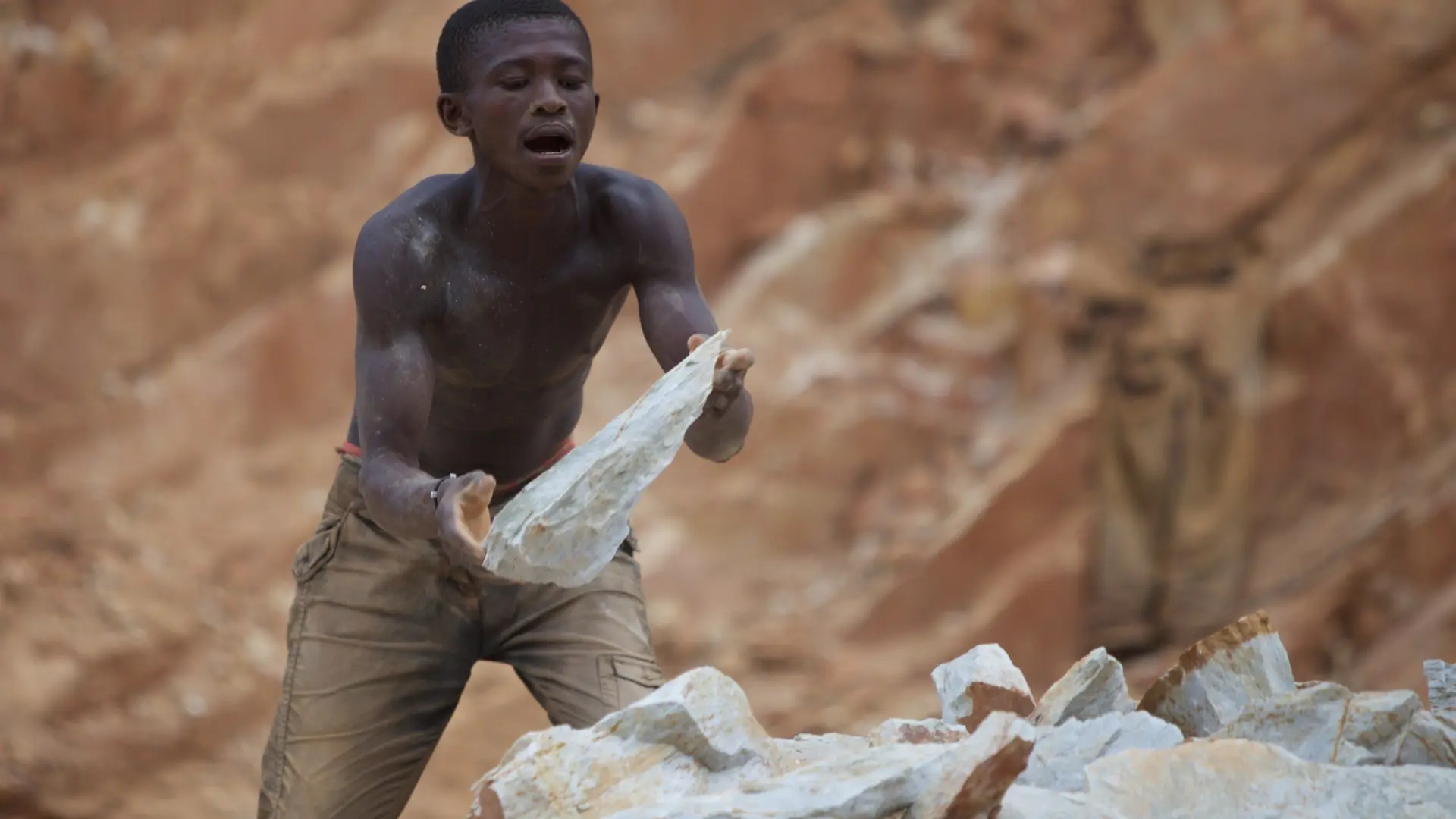
The Central African Republic’s conflicts persist because the parties that would have to settle them profit from the disorder. Armed groups, the government’s foreign protectors and the traders who move its minerals all benefit from weak state authority and informal mining, while civilians face violence and limited public services and artisanal miners carry the greatest risk for the least return.
A history of armed seizure
The coup of March 2013, which brought the Séléka coalition to power and removed President François Bozizé, is conventionally dated as the start of the current crisis. That periodisation is too narrow. CAR’s post-independence history is a sequence of armed seizures of power interrupted by brief intervals of quasi-constitutional government. The names changed, from David Dacko to Jean-Bédel Bokassa, Ange-Félix Patassé and Bozizé. The pattern of armed seizure, resource exploitation and political violence did not. The 2013 coup removed a government that had been losing territorial control for years and replaced it with a coalition held together by armed access to mining areas rather than a political programme. It also triggered the formation of anti-Balaka militias, whose atrocities against Muslim communities generated their own spiral of displacement and counter-violence.
The United Nations stabilisation mission, MINUSCA, deployed in 2014 and has remained, at a cost of about one billion dollars a year, without achieving the stability its mandate requires. Its constraints illustrate a broader point. A force designed to support a state cannot substitute for one. Where no government can extend authority, collect revenue, pay civil servants or deliver services, peacekeeping maintains a ceasefire around a vacuum, and violence resurfaces because armed competition for resources, the absence of other livelihoods and minimal state reach beyond Bangui remain unchanged.
Security and resource access
The arrival of the Wagner Group from about 2018 changed the operational picture without changing the underlying logic. Wagner, operating at first under cover of a Russian military training mission, moved into combat alongside the Central African Armed Forces (FACA), helping the Touadéra government recover territory from the Coalition of Patriots for Change, the rebel alliance formed in 2020. In exchange, Russian-connected entities received access to gold and diamond concessions in the areas Wagner helped secure. Similar security-for-resources arrangements have been reported elsewhere on the continent.
Two things have changed since Wagner’s involvement: the government’s territorial reach, now extended into areas armed groups once held, and the reported severity of abuses attributed to Wagner fighters, documented by the UN Panel of Experts on the Central African Republic and by Human Rights Watch and Amnesty International. Summary executions, torture, forced displacement and looting have been attributed to joint Wagner and FACA operations in several provinces. The extension of state reach has come at a cost to civilians that the international community has been unable to constrain and the government has lacked the will or capacity to prevent.
The diamond chain
CAR’s diamond sector shows the pattern most clearly. The country has significant alluvial deposits, mainly in the west and south-west. The Kimberley Process, the international scheme designed to stop diamonds financing conflict, banned its exports from 2013 to 2016, and trading from compliant zones resumed only partially afterwards. The artisanal miners who extract most of CAR’s diamonds work in near-total informality, without safety protections, price transparency, access to formal finance or secure tenure over their sites. The stones pass through a chain of intermediaries before reaching formal export channels, and each takes a margin while the miner at the base receives least and bears the greatest risk.
Who blocks a settlement
The settlement CAR needs, a genuine power-sharing arrangement among armed groups, state authority that reaches beyond Bangui and a revenue system that returns resource rents to the population, is blocked by the parties that benefit from the current disorder. Armed group leaders have economic interests in the informal mining and timber economies that conflict sustains. Russian-connected concession holders and the foreign traders and intermediaries in the diamond chain benefit from weak regulation and taxation. And the government, dependent on the security Wagner provides, has limited leverage over its protectors.
Peacekeeping and humanitarian aid, both of which CAR receives in substantial measure, cannot resolve that. A durable settlement requires renegotiating who captures value from CAR’s resources, and whether the state and the communities living above those resources will ever be the primary beneficiaries of what the ground contains.



