Opens in a new tab

Topic

History and identity

Colonial history, liberation, memory, identity, religion

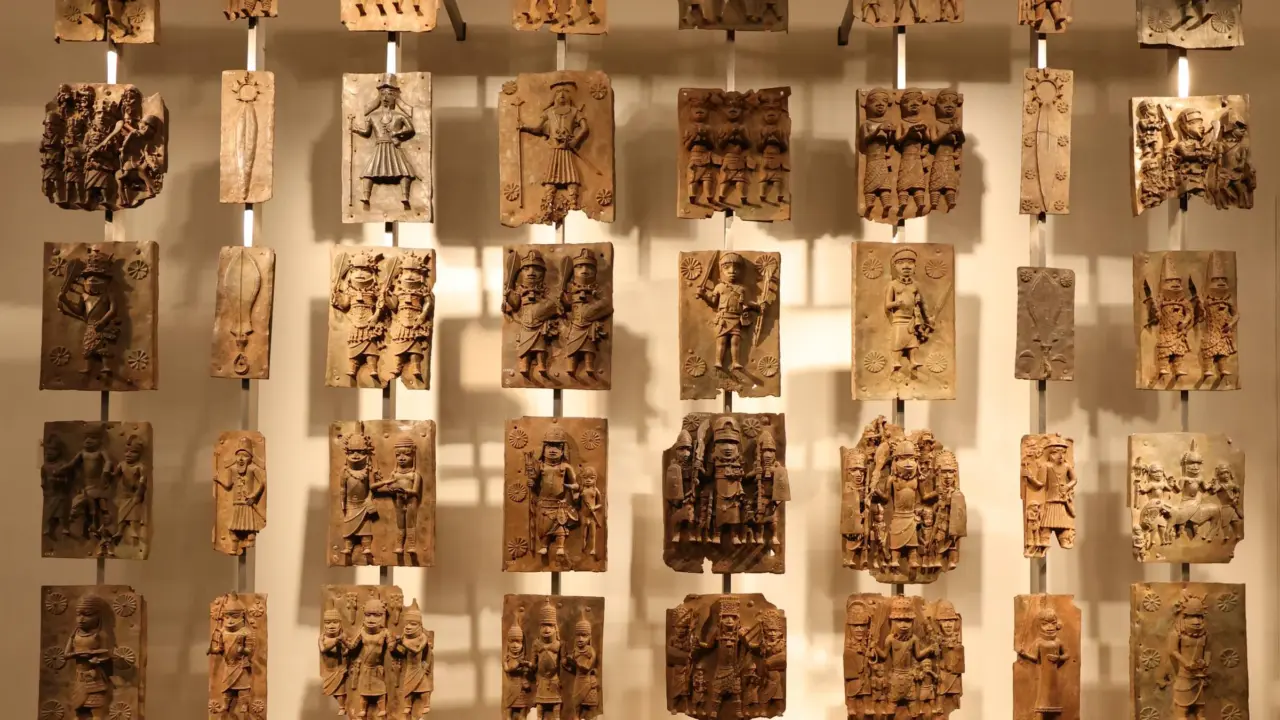
Rows of Benin Bronze plaques mounted on poles in a gallery at the British Museum.

Culture

Returning Benin Bronzes raises questions about ownership and public access

The return of looted Benin Bronzes has exposed a harder restitution question. A 2023 proclamation vesting ownership in the Oba of Benin, not Nigeria's national museum commission, shows that giving objects back does not settle who holds legitimate custody.

By Victoria Akindele · · 4 min read

Latest in History and identity

The statue of Patrice Lumumba, arm raised, stands on its monument above broad steps in Kinshasa.

Culture

Patrice Lumumba’s legacy and Congo’s unfinished sovereignty

Patrice Lumumba's removal in 1961 created a sovereignty debt that still compounds in Congo, where each intervention weakened the institutions self-rule requires and left a state unable to set the price of the cobalt underwriting the energy transition.

Victoria Akindele ·

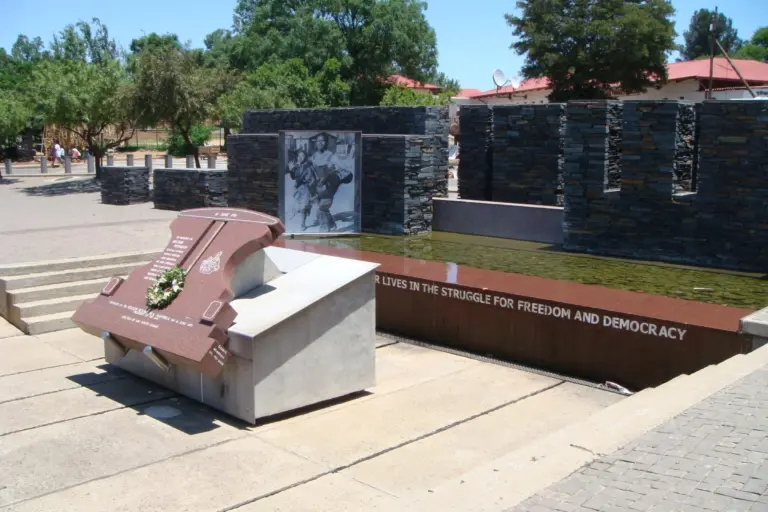
The Hector Pieterson Memorial in Soweto commemorating the 1976 student uprising

Culture

Soweto’s legacy and the language of opportunity in South Africa

Half a century after the Soweto uprising against Afrikaans instruction, South Africa recognises twelve official languages, but thin resourcing of mother-tongue teaching still pushes many pupils into English before they are ready, linking the language of schooling to youth exclusion from the labour market.

Victor Kekereekun ·

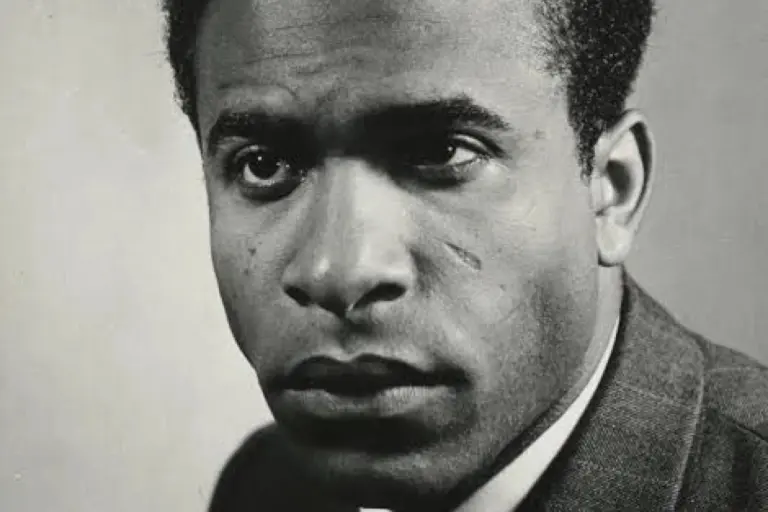
A black-and-white portrait of Frantz Fanon in a suit and tie.

Culture

Frantz Fanon’s radical humanism and the limits of nationalism

Frantz Fanon is often remembered for his writing on revolutionary violence, but the core of his work is a radical humanism. He warned that post-independence elites could reproduce colonial exclusion, and insisted that liberation needs economic justice, participation and the restoration of human dignity.

Aderonke Ajibade ·

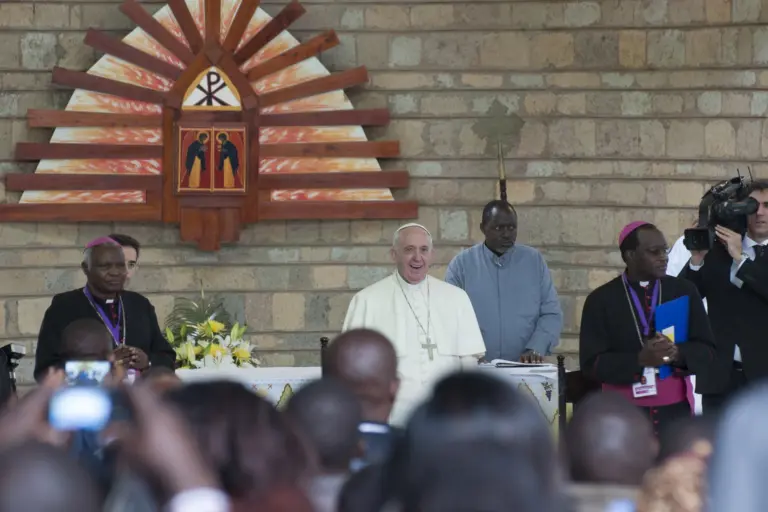
Pope Francis stands at the altar with bishops at St Joseph the Worker church in Kangemi, Nairobi, as the congregation takes photographs.

Culture

Francis’s legacy leaves Africa with a question about Church authority

Pope Francis moved the papacy's moral language towards Africa's concerns, from colonial extraction to economic justice, but left the Curia, canon law and Vatican finances centred on Europe. Whether Africa's demographic weight becomes structural authority in the Church is the question his death left to Leo XIV.

Aderonke Ajibade ·

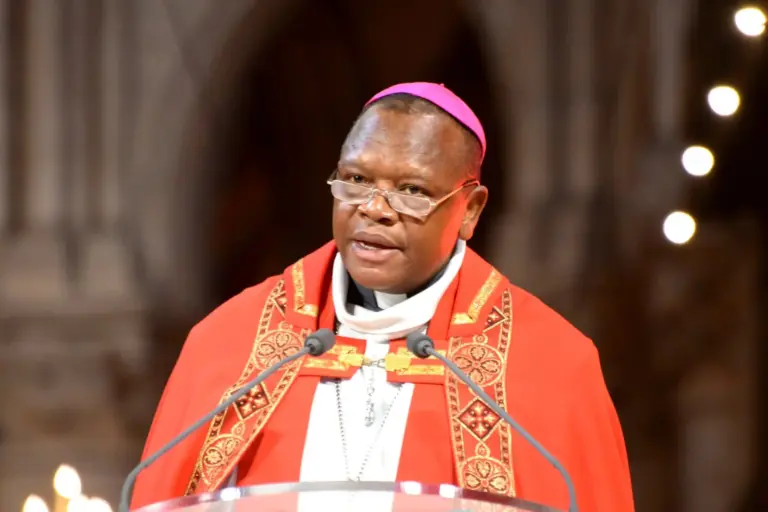
Cardinal Fridolin Ambongo, archbishop of Kinshasa, preaches from a lectern in red vestments.

Culture

Africa’s Catholic growth gives the Vatican a test of representation

As Pope Leo XIV begins his first African journey, Vatican geopolitics in Africa rests on 288.3 million Catholics, now more than in Europe. Their bishops seek a share in how Rome governs, and the Church's schools, hospitals and diplomatic network make it a political actor in its own right.

Aderonke Ajibade ·

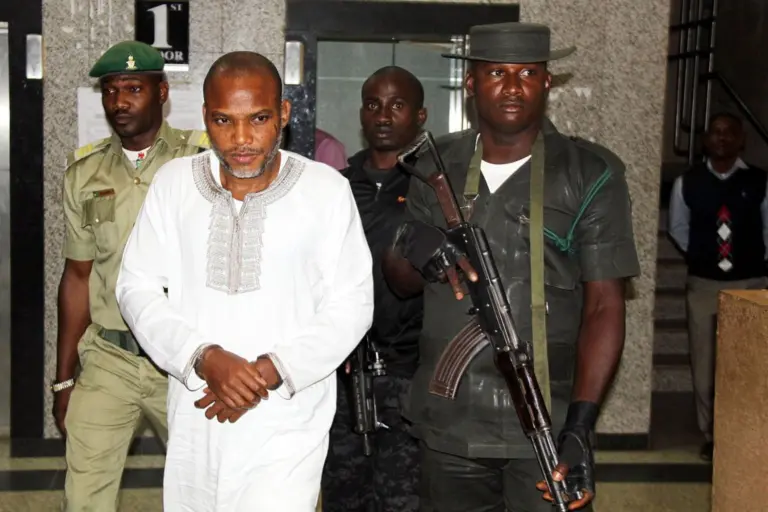
Nnamdi Kanu in white robes escorted by armed Nigerian security officers inside a court building

Culture

Biafra and the struggle for identity in Nigeria

The demand for Biafra is less about secession than about what Nigeria has failed to become. Declared in 1967 without the consent of all the Eastern Region's peoples, it now draws on South-East grievances over federal neglect, while Nnamdi Kanu's detention has deepened IPOB's appeal.

McDike Dimpka ·

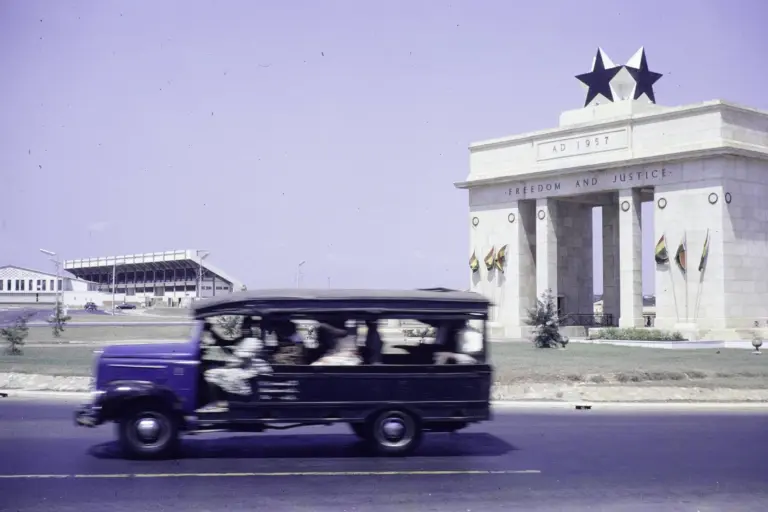
1962 colour photo of a passenger lorry passing Accra's Independence Arch, inscribed AD 1957 Freedom and Justice.

Culture · Insight

Ayi Kwei Armah’s critique of post-independence disillusionment

Ayi Kwei Armah's 1968 portrait of post-independence Ghana diagnosed captured institutions rather than bad individuals, which is why it has not dated. The same logic now runs through debt service, extractive mining deals and reformers who govern as system-maintainers, from Kenya to Nigeria.

Aderonke Ajibade ·

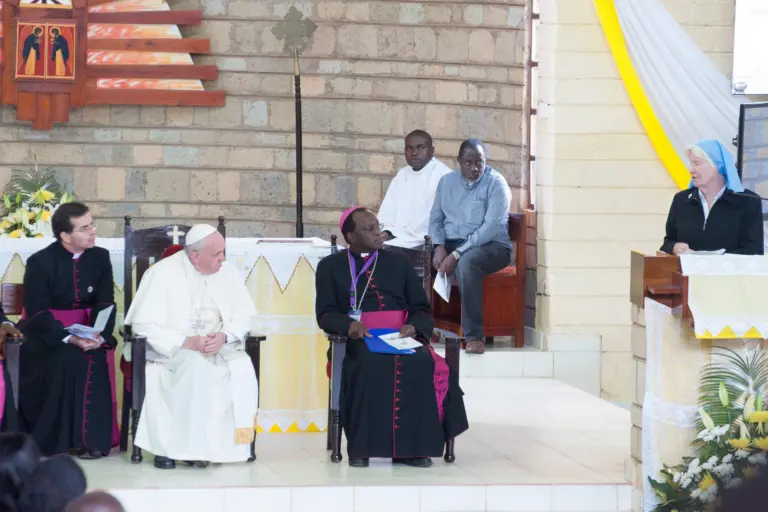
Pope Francis sits with clergy at St Joseph the Worker church in Kangemi, Nairobi, as a nun speaks from the lectern.

Culture

Will Rome give Africa’s growing Catholic population greater authority?

Africa's Catholic population, about 280 million people, is the Church's fastest-growing, yet African cardinals remain a minority and African dioceses depend on subventions from wealthier churches. Turning numerical weight into authority will depend on African Catholics building institutional capacity of their own.

Aderonke Ajibade ·

Earlier in History and identity

Pope Francis’s African legacy lies in appointments, worship and debate

Pope Francis died on 21 April 2025. Francis's African legacy was built through appointments, support for the Zaire rite and his language on economic justice. The dispute over Fiducia Supplicans showed that growth in Africa's Catholic population does not transfer authority automatically.

Aderonke Ajibade

Africa’s diversity should shape how its countries are understood

Treating Africa's 54 states as a single country obscures differences in institutions, histories, languages and economic conditions that matter to reporting, policy and investment. Country-specific evidence should guide analysis, and regional cooperation can recognise that diversity rather than erasing it.

Joseph Isaac

Malema’s ‘Kill the Boer’ chant and the politics of interpretation

South Africa's Supreme Court of Appeal ruled in 2024 that the Kill the Boer chant, read in context, is protected political expression. Its recasting by Donald Trump and Elon Musk as proof of white genocide displaces the country's real argument over land, inequality and redress.

Victoria Akindele

Bob Marley’s Pan-Africanism used music as political expression

Bob Marley's Pan-Africanism was a coherent political argument delivered through music, from performing Zimbabwe at the country's independence celebrations in 1980 to setting Haile Selassie's 1963 UN speech to song in War. The conditions his songs described remain unresolved, which is why they still surface at protests.

Joseph Isaac

Conflict threatens the transmission of Dogon cultural knowledge

Conflict and displacement in central Mali threaten the Dogon Sigui, a ceremony tied to a roughly 60-year cycle through which knowledge passes between generations. Such cultural losses go unrecorded in the humanitarian and development statistics used to measure the Sahel's crisis.

Joseph Isaac

Africa’s inherited alliances and the work of building alternatives

Political independence did not transfer economic and structural power. Commonwealth habits, CFA franc arrangements and military training ties still shape African choices, and the Sahel's break with ECOWAS and France shows why Africa needs its own monetary, security and trade frameworks to make partnerships genuinely voluntary.

Adedoyin Shittu

Seretse Khama’s path from chieftaincy to democratic leadership

Seretse Khama's marriage to Ruth Williams cost him six years of exile and his chieftaincy, but he turned private citizenship into democratic leadership. His non-racial party and the Debswana diamond partnership with De Beers built institutions that carried Botswana from poverty to middle-income status.

Victoria Akindele

South Africa’s TRC leaves unfinished questions of redress

South Africa's Truth and Reconciliation Commission documented apartheid's crimes with courage, but it traded accountability for disclosure and could not deliver redress. Reparations were cut in implementation, businesses that benefited were not required to contribute, and demands over land and fees continue that unfinished work.

Joseph Isaac

South Africa’s 1994 transition left economic questions unresolved

South Africa's 1994 settlement transferred political power while constitutional protections kept apartheid-era economic structures largely intact. Persistent inequality, high unemployment and slow land reform are inherited consequences of that sequencing, and the ANC's loss of its majority in 2024 has reopened the transition's unfinished business.

Joseph Isaac

Feminist resistance in the work of Ama Ata Aidoo

Ama Ata Aidoo's fiction, plays and poetry treat African women as intellectual agents who read the structures constraining them. From Our Sister Killjoy to Changes and Anowa, she resisted colonial assumptions and post-independence patriarchy with equal firmness.

Joseph Isaac