Pope Leo XIV begins his first apostolic journey to Africa on 13 April 2026, an 11-day programme that takes him to Algeria, Cameroon, Angola and Equatorial Guinea before he returns to Rome on 23 April. The journey is pastoral, and it is also diplomatic. Vatican geopolitics in Africa now rests on a demographic fact: the continent has more Catholics than Europe, and its bishops increasingly expect a say in how Rome governs rather than simply receiving its decisions. That weight, combined with the Church’s schools, hospitals and diplomatic reach, makes the African Church a political actor in its own right.
The Holy See’s travel programme, announced in March, runs from Algiers and Annaba, the site of ancient Hippo, in the first papal visit to Algeria, to Yaoundé, Bamenda and Douala in Cameroon from 15 April, then Luanda, Kilamba, Muxima and Saurimo in Angola from 18 April, and Malabo, Mongomo and Bata in Equatorial Guinea from 21 April. Four countries in 11 days is a statement of priority from a pontificate less than a year old.
What the Church’s own statistics show
According to the Vatican’s Annuarium Statisticum Ecclesiae, published alongside the Annuario Pontificio 2026 in March and covering data to 31 December 2024, Africa was home to 288.3 million Catholics at the end of 2024, up from 281 million a year earlier. That took it past Europe, at 287.2 million, for the first time. Africa now accounts for 20.3 per cent of the world’s 1.422 billion Catholics. Vatican News reported that the African Catholic population grew by about 2.7 per cent in a single year, adding 7.58 million faithful, more than double the global rate of 1.14 per cent. Africa was also the only continent to record net growth in major seminarians, up 2.25 per cent, and it now supplies 34.5 per cent of candidates worldwide.
What Francis changed and what the conclave showed
Francis’s papacy, which ended with his death on 21 April 2025, moved the ideological centre of gravity of global Catholicism in ways that Africa registered more acutely than Rome’s traditional interlocutors. His emphasis on the periphery and on poverty as a failing of systems rather than individuals resonated across the continent. African bishops and theologians found in Francis a papacy that gave African poverty, conflict and social teaching sustained public attention. Tensions over marriage doctrine, homosexuality and synodal authority showed that the relationship was more complex than simple alignment.
The conclave of 7 to 8 May 2025 that elected Leo XIV was the next test. Eighteen African cardinal electors took part, out of 133 cardinals who voted, or 13.5 per cent of the electorate. In 2013 the figure was 11 of 115, or 9.6 per cent. The rise signals something structural. African cardinals remain under-represented against the continent’s 20.3 per cent share of the faithful, but the gap is narrowing, and the African Church increasingly acts as a participant in defining Roman governance rather than a recipient of it.
The fault lines the Vatican faces in Africa have a theological surface and a political core. There is the tension between African bishops who hold conservative positions on social doctrine and reformist currents in the European and Latin American Church. There is the tension between Vatican engagement with African governments and the prophetic role the Church’s social teaching claims. And there is the tension between the Church’s institutional interests in Africa (schools, hospitals, land holdings, political access) and the preferential option for the poor that Francis made central to his papacy.
A diplomatic network and a social infrastructure
The Holy See maintains full diplomatic relations with 184 states, as well as with the European Union and the Sovereign Military Order of Malta, according to the Holy See Press Office. Its nuncios draw on continuous reporting from local bishops, parishes and religious orders in places where state embassies have little reach, a point diplomatic historians such as Victor Gaetan, author of God’s Diplomats, have documented. The result is a diplomatic and information network whose reach major powers have long recognised and, at various points, sought to work with.
On the ground, the Church’s presence is material. According to the Vatican’s Catholic Church statistics, it runs more than 1,600 hospitals and 4,973 dispensaries in Africa, roughly 30 per cent of all Catholic hospitals worldwide, and more than 45,000 primary and secondary schools. In regions where state services are thin, the Church is often the school, the clinic and the mediator in local disputes.
The China overlap
Beijing has engaged the Holy See in structured talks for nearly two decades. Benedict XVI’s 2007 Letter to Chinese Catholics and the Vatican commission on China created that year preceded the Provisional Agreement on the Appointment of Bishops of 22 September 2018. The Holy See Press Office and China’s Ministry of Foreign Affairs have renewed it three times, in October 2020, October 2022 and, for four years, in October 2024. The agreement concerns the status of Chinese Catholics, but it also concerns the Vatican’s relevance in a global order where Chinese influence is expanding across territories with a large Catholic institutional presence, including much of sub-Saharan Africa. Where Chinese infrastructure finance and Catholic schools and hospitals operate in the same places, as they do across the China-Africa investment relationship, the overlap is not incidental.
African bishops and the governance claim
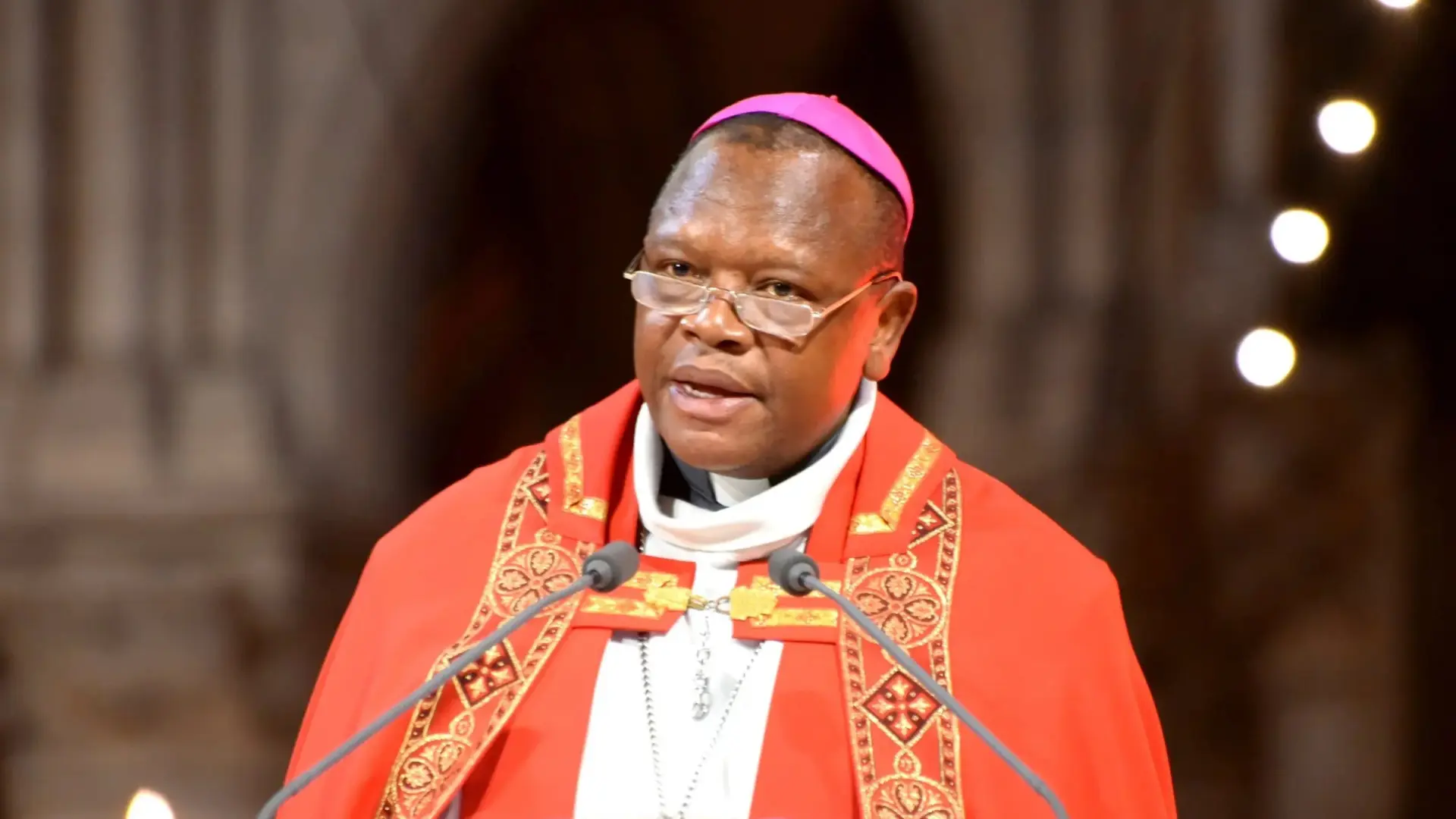
African Catholic leaders have begun to assert institutional independence in proportion to their demographic weight. When the Dicastery for the Doctrine of the Faith issued Fiducia Supplicans on 18 December 2023, permitting non-liturgical blessings for couples in irregular situations, including same-sex couples, African episcopal conferences produced the Church’s most unified regional response. On 11 January 2024, Cardinal Fridolin Ambongo Besungu, president of the Symposium of Episcopal Conferences of Africa and Madagascar (SECAM), issued a continental synthesis stating that “the extra-liturgical blessings proposed in the Declaration Fiducia supplicans cannot be carried out in Africa without exposing themselves to scandals”, according to the SECAM statement.
The statement was issued with the agreement of Pope Francis and Cardinal Víctor Manuel Fernández, the dicastery’s prefect. That detail matters. It was not a schism but a negotiated exemption, and it showed African bishops bargaining with Rome over how a universal rule applies on their continent. The argument, made in theological language, was that the direction of the Church should not be set in Rome and then communicated to Africa as instruction. African political leaders make the same argument in diplomatic language. The question of whether Rome will give Africa’s Catholics greater authority is now a question about governance as much as doctrine.
The Church’s knowledge of Africa is a form of geopolitical currency. It knows where the conflict zones are, because its missionaries are there. It knows where the poverty is, because its hospitals are there. It knows where the political fault lines are, because its bishops attend the funerals, the elections and the inaugurations. How that knowledge is used, in whose interest and under whose direction are questions that Africa’s Catholics, its political classes and its strategic community all have a stake in answering. Leo XIV’s journey will show how far Rome intends to share the answer.



