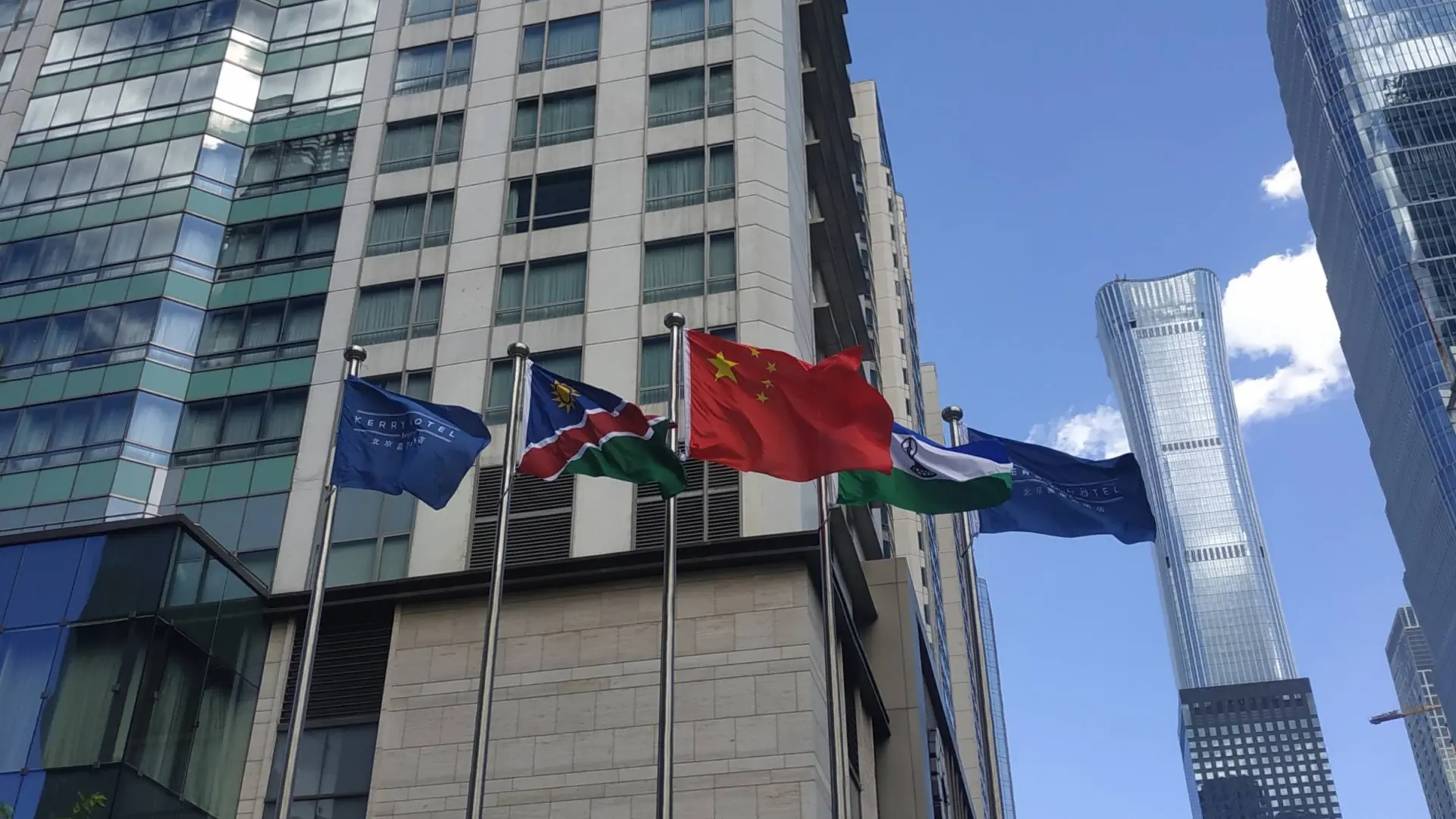
The Forum on China-Africa Cooperation that convened in Beijing in September 2024 was the latest summit of a relationship that has left a physical imprint on the continent. Chinese-financed ports, railways, roads and power plants shape trade logistics, governance capacity and sovereign debt obligations in ways no diplomatic communiqué can obscure. The 2024 summit showed both sides managing a relationship that can no longer be described without acknowledging its asymmetries.
The argument of this analysis is that the balance of those asymmetries now depends less on Beijing than on African states themselves. Competition among China, the G7 and the European Union gives Africa leverage it has not held before, but that leverage holds only if African governments bargain collectively rather than one at a time.
The headline commitments carried a familiar architecture. China pledged credit lines, support for agricultural development and greater access for African exports to the Chinese market. African heads of state arrived with investment lists and sovereign priorities. The language of mutual benefit (South-South cooperation, development without conditionality, shared destiny) remained the rhetorical frame. Beneath it, structural questions that the forum format does not easily accommodate were pressing harder than at previous summits.
Debt and bargaining power
Over the past decade, sovereign debt owed to Chinese institutions has become one of the defining variables in African fiscal policy. Countries including Zambia, Angola, Ethiopia and Kenya carry Chinese debt at levels that constrain their domestic fiscal choices and their access to other capital markets. Zambia’s restructuring, which involved long and difficult negotiations with Chinese creditors alongside Western bondholders, showed that Chinese lending does not come with the multilateral frameworks that make restructuring predictable. It comes with bilateral relationships whose terms are often opaque.
Confidential lending terms make public scrutiny and restructuring harder. Whether a particular loan carries strategic concessions can only be judged from the contract, the repayment history and any renegotiated terms.
What infrastructure delivered
Dismissing China’s role in African development as predatory misses what the relationship delivered. The Standard Gauge Railway in Kenya and roads across Ethiopia and Rwanda are not abstractions. Chinese finance supported projects African governments wanted to build. The question is not whether Chinese investment added value to African economies. It is at what price, under what governance terms and with what long-term implications for sovereign economic control, judged against the financing actually available at the time rather than an assumption that no alternative existed or that all terms were interchangeable.
Collective bargaining
The 2024 summit took place in a geopolitical context that the 2006 and 2015 summits did not face in the same form. The G7 has launched the Partnership for Global Infrastructure and Investment explicitly to compete with China in African markets, and the European Union’s Global Gateway scheme carries similar intent. African governments now sit at the centre of a genuine competition for their alignment and their markets. Whether they deploy that leverage collectively, through the AU, regional bodies and coordinated debt restructuring demands, or individually, in bilateral negotiations where the power differential remains significant, is the question the 2024 summit could not resolve.
That question answers itself badly when fifty-four states bargain one at a time. A single African economy facing Beijing, Washington and Brussels separately is a price-taker negotiating against price-setters. The same fifty-four coordinating a common floor on debt transparency, local content and technology transfer would turn a competition for Africa into a competition on Africa’s terms. The leverage exists in the aggregate and evaporates in the particular. A bundle of sticks is hard to break; a single stick snaps.
The relationship is at a threshold. The infrastructure phase, in which construction finance was the main mechanism of China’s engagement, is giving way to one in which trade terms, technology transfer, digital infrastructure ownership and debt sustainability are the operative questions. Africa enters that phase with leverage it did not have twenty years ago. Whether it leaves with structural economic gains or with dependency extended into new domains will depend on decisions being made now about how that leverage is organised and applied.



