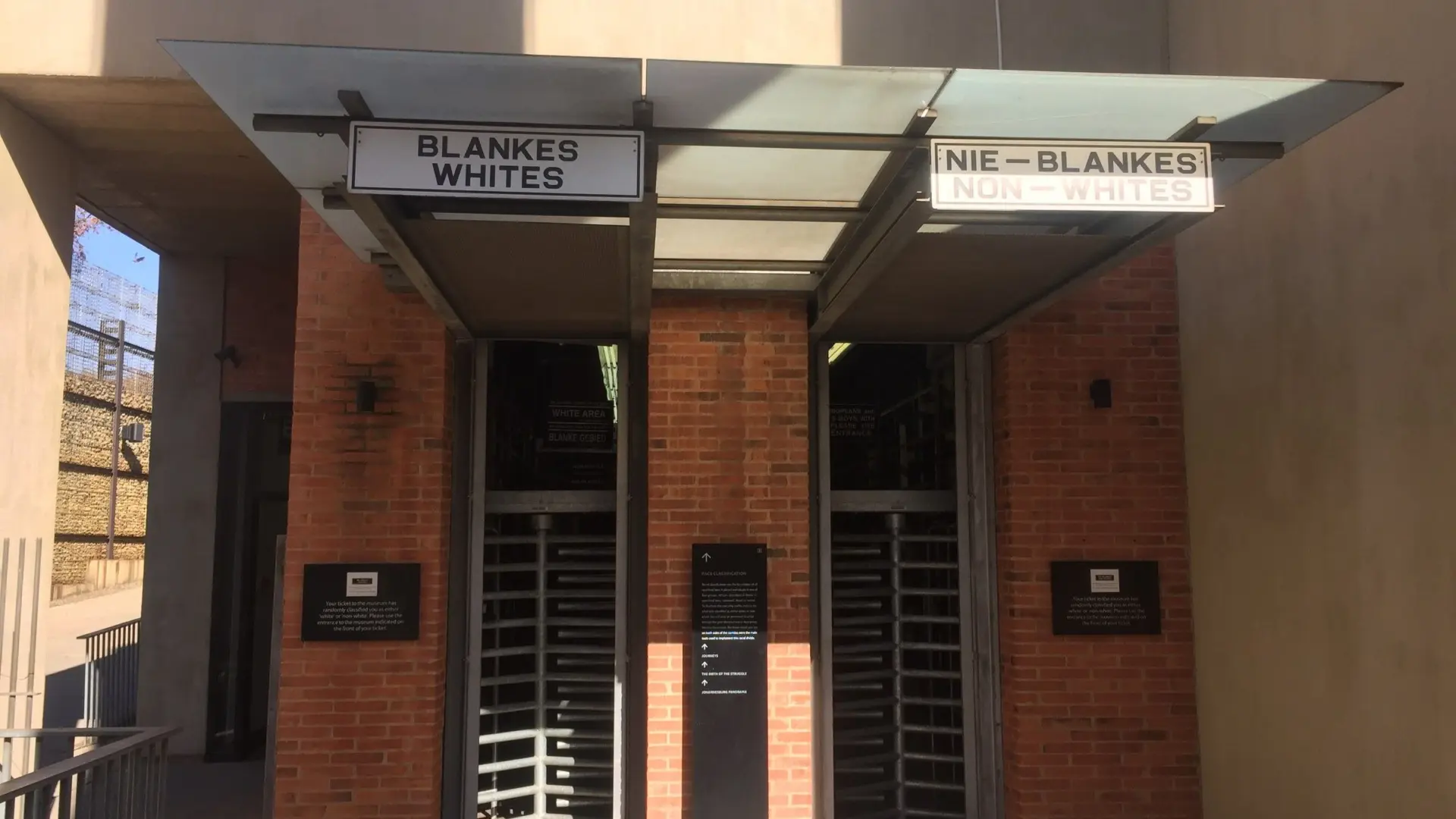
The long lines that formed across South Africa on 27 April 1994 were not a celebration of something already achieved. They were an act of collective will imposing itself on a system that had spent forty-six years designing the conditions for their impossibility. That distinction matters, because the way the transition is narrated, as a miracle, a gift or a parable of reconciliation, tends to obscure the bargain that made it possible and the weight that bargain would carry for the next three decades.
The negotiated settlement that produced the 1994 election was a political achievement of extraordinary complexity. It required the African National Congress to accept a framework that preserved significant economic continuity from the apartheid era, the property rights, the corporate structures, the financial institutions, in exchange for political power. Whether this was the only available path remains contested. The consequence is not. South Africa became politically free and economically stratified along lines that still largely follow the racial geography of apartheid.
The negotiated settlement
The mechanism of that outcome was sequencing, and sequencing is never neutral. At the negotiating table, political power was placed on the agenda and economic power was largely removed from it. Property protections were written into the constitutional order, the central bank’s independence was entrenched, and the existing structures of corporate ownership continued under new political management. A liberation movement can capture the government and discover that the commanding heights of the economy were quietly fenced off before the keys were handed over.
The Gini coefficient, the standard measure of income inequality, has remained among the highest in the world throughout the democratic period. Unemployment has stayed high, and highest among Black South Africans. Land redistribution, the unresolved question at the centre of the apartheid economy, has moved slowly enough that by the third decade of democracy, whether to change the constitutional framework to accelerate it has become a central political fault line. These are not accidents. They are the inherited consequences of what was agreed and what was not agreed at the moment of transition.
Truth and accountability
The Truth and Reconciliation Commission, established in 1995, was the moral architecture that held the transition together in the public imagination. It gave the society a way to confront the crimes of apartheid without a legal reckoning that might have tied the new government up in prosecutions running for years. Amnesty in exchange for truth. Acknowledgement in exchange for immunity. Whether the trade was worth it depends heavily on who bears the cost of the wounds the TRC could acknowledge but not heal. The commission held business hearings as well as hearings on specific abuses, but debate continues about how far its findings addressed economic benefit from apartheid and why many cases referred for prosecution were not pursued.
Follow who gained and who waited, and the settlement’s logic becomes legible. The value of the existing economy, its mines, banks, listed corporations and land, stayed with those who already held it, now insulated by constitutional protection rather than by the statutes of racial rule. The risk of the unfinished transformation was carried by the Black majority, who received the vote and the flag while inheriting the unemployment line and the title deed they did not hold. The first democratic election established universal adult suffrage. Economic enfranchisement was deferred to a future that the structure of the bargain made very difficult to reach.
The 2024 political shift
In 2024 the ANC lost its parliamentary majority for the first time in the democratic era, leading to a government of national unity with several parties, including the Democratic Alliance. That arrangement created a new setting for disputes over economic policy and the unfinished goals of the transition.
None of this diminishes what happened in 1994. The shift from a regime built on racial exclusion to a constitutional democracy with universal suffrage was a transformation of historical consequence. South Africa did not descend into the civil war that many analysts predicted. The institutions held. The election was administered with a credibility that has not been seriously challenged. These facts should not be flattened by the weight of everything that remained unresolved.
But the reading of 1994 that reduces it to a story of transcendence misses the system it reveals. South Africa shows what happens when political liberation and economic transformation are sequenced. A movement can win the state without changing the order it administers. The queues of 1994 imposed a democracy on a system built to refuse it; the unfinished business of those queues is now the country’s central argument with itself. The democracy invented under pressure has been durable precisely because its constraints were built in from the beginning. Understanding those constraints is not cynicism. It is the precondition for any honest assessment of what the next thirty years require.



