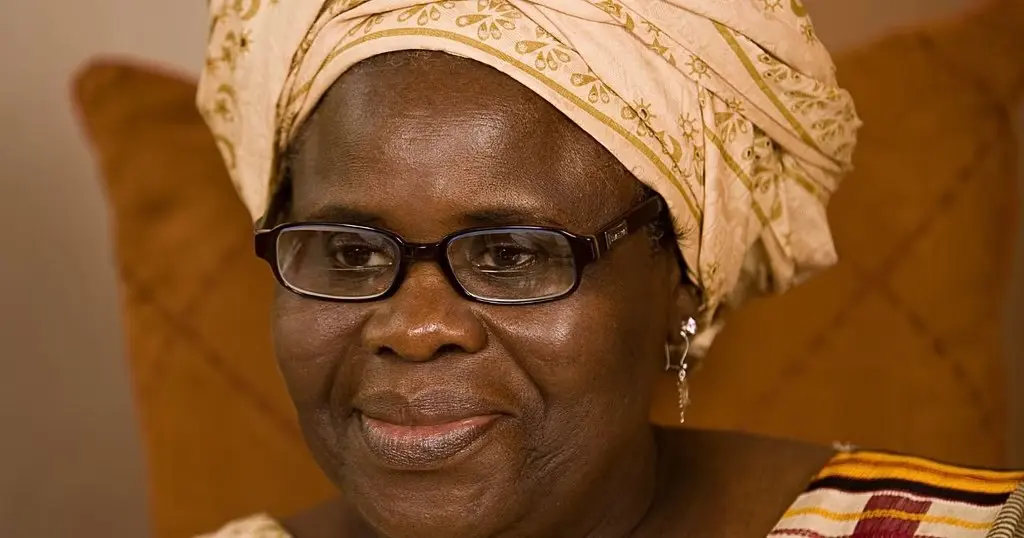
Ama Ata Aidoo’s fiction, plays and poetry place African women’s thought at the centre of their stories. Her characters question the social arrangements around them, even when they cannot escape the constraints those arrangements impose.
Born Christina Ama Ata Aidoo in the Fante region of what was then the Gold Coast, she came of age in a Ghana on the cusp of independence and spent her literary career examining what independence meant for African women, not rhetorically but structurally.
The resistance in her work runs in two directions. It is, most visibly, a resistance to colonial epistemology, to the Western frame that positions African tradition as static, African women as doubly oppressed, and African modernity as borrowed from elsewhere. But it is equally a resistance to the internal patriarchies of post-independence African society, which frequently relocated the rhetoric of liberation without relocating power. Aidoo refused both positions with equal firmness, which made her difficult to place and therefore easy to underestimate.
Aidoo’s women do not survive their circumstances. They read them, and that act of reading is itself a form of power the narrative refuses to take from them.
The work
Our Sister Killjoy, published in 1977, is the clearest demonstration of this approach. Sissie, the novel’s protagonist, travels from Ghana to Europe and encounters not the hoped-for horizon of cosmopolitan possibility but a complex field of racial condescension, misdirected solidarity, and the peculiar melancholy of the African in exile who discovers that distance from home does not liberate. It reveals. The form of the novel is itself an act of resistance. Prose-poem passages interrupt conventional narrative, the voice shifts and registers collide. Aidoo is not simply telling a story about what it means to be an African woman abroad. She is performing the fragmentation that those conditions produce, and insisting that the reader feel it rather than simply observe it.
In Changes: A Love Story (1991), for which she won the Commonwealth Writers’ Prize, Aidoo turns the lens inward towards contemporary Ghanaian middle-class life. Esi Sekyi, an educated, professionally accomplished woman, leaves a marriage in which her husband rapes her (the novel’s unblinking use of that word was, in its context, a political act) and enters a polygamous relationship she believes will give her freedom. What follows is an examination of how thoroughly the available structures, both traditional and modern, remain calibrated against the woman who insists on defining her own terms. Aidoo does not resolve this with a consolatory ending. She ends with a question, which is its own form of honesty. The structures are not changed by individual choice, however courageous.
From novel to stage
Her plays, particularly The Dilemma of a Ghost and Anowa, extend this into historical territory. Anowa, set in late nineteenth-century Ghana, follows a young woman who refuses an arranged marriage and chooses her own husband, only to find that the freedom of that choice does not protect her from the systems her choice moves through. The play maps the participation of Ghanaian elites in the transatlantic slave trade as a structural wound in the community, and positions Anowa (outspoken, resistant, ultimately destroyed) as the one figure with sufficient perception to name what is happening. Her destruction is not a punishment for being wrong. It is a punishment for being right in a world not yet prepared to hear it.
Women as thinkers
What distinguishes Aidoo’s feminist resistance from a simple taxonomy of grievances is its insistence on African women as intellectual agents. Her characters are not merely acted upon. They theorise their own conditions, sometimes in real time, sometimes in retrospect, sometimes in the gap between what they know and what they are permitted to say. This approach complicates accounts of emancipation centred only on individual exit from a social structure. Aidoo’s characters rarely exit. They remain inside the structures that constrain them and work to understand those structures from within. That understanding is offered to the reader as the nearest available form of power.
This matters for how her work is read alongside contemporary African feminism. Aidoo refused to accept that African women’s thought was a subordinate category. She insisted that the African woman’s perspective was not a special case within a general theory but a specific vantage point from which the general theory could be most clearly seen.
Aidoo died in May 2023. Her legacy is better understood through close engagement with her work than through tributes alone. The questions she raised about gender, colonialism and freedom remain unsettled.
Read Aidoo now and the resistance still lives in the sentences. It has not become metaphor. It remains instruction.



