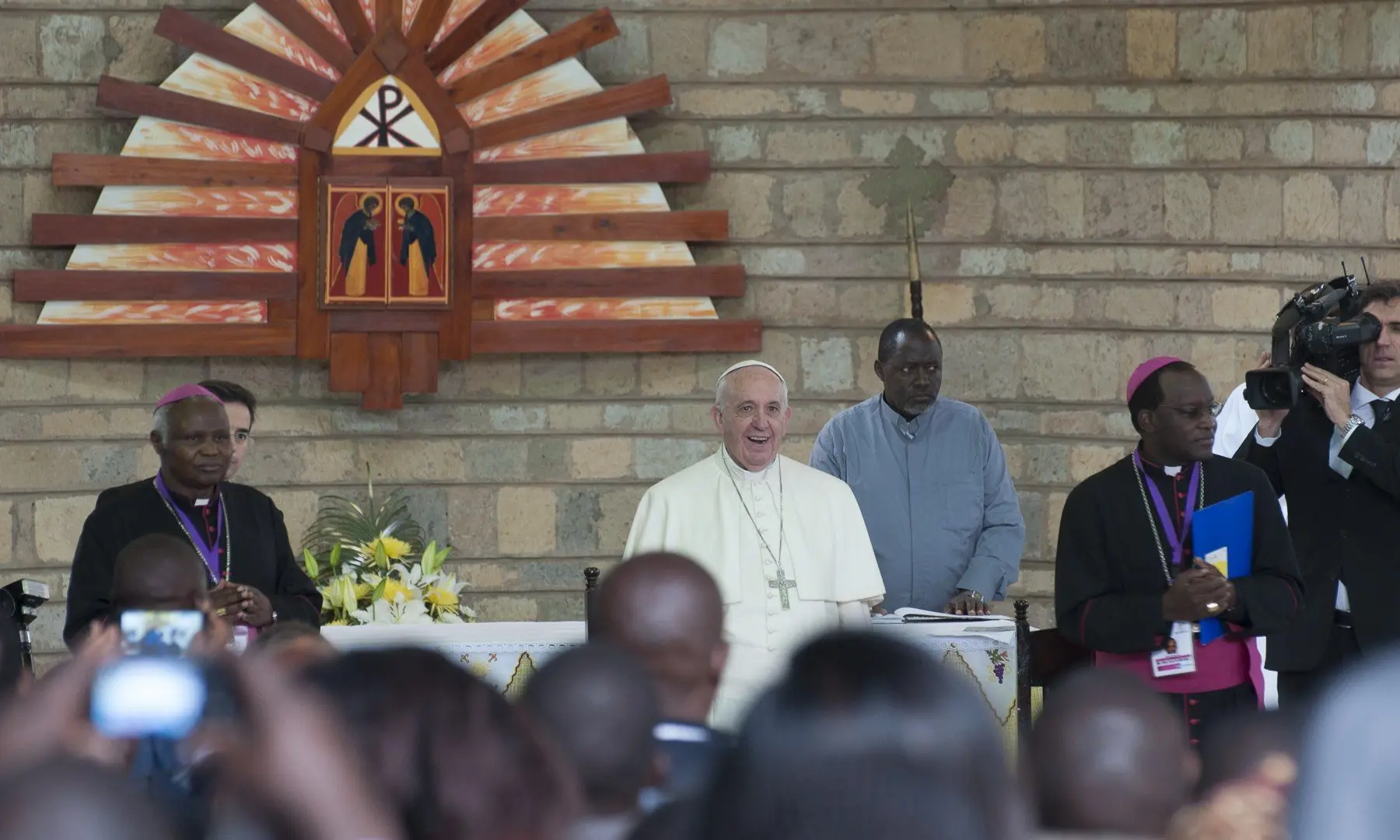
Pope Francis died on 21 April 2025. With him passed a pontificate that emphasised listening to the Church’s peripheries. It left Africa, the Church’s fastest-growing region, holding a question his papacy raised but never fully answered. Can an institution built for European authority govern a faith whose future is increasingly African and Southern?
Francis spent twelve years moving around the centre, rhetorically, symbolically and in some cases structurally, without displacing it. He visited the Democratic Republic of Congo and South Sudan in 2023, following earlier African journeys, including Mozambique, Madagascar and Mauritius in 2019. He appointed African cardinals. He elevated economic justice, colonial history and environmental consequence to papal priority. African bishops and theologians had pressed these questions for generations without the institutional authority to force their inclusion. These were not nothing. In an institution as hierarchical as the Catholic Church, the attention of a reigning pontiff redirects resources and theological legitimacy in ways that outlast individual gestures.
But the movement around the centre left the centre intact. The Roman Curia remains structurally European. Canon law is still interpreted through centuries of European juridical tradition. The financial architecture of the Vatican, despite ongoing reform efforts, remains opaque in its relationship to African dioceses. And Francis did not elevate the doctrinal positions on which African Catholic leadership has been most assertive. On sexual ethics and family structure, African bishops have consistently taken more conservative positions than their Western European counterparts. Francis managed carefully around those positions. The result was a sustained tension that his death has now placed, unresolved, before his successor.
The question of whether that demographic weight will ever translate into structural authority within the Church is not a theological abstraction. It is an institutional power question.
Africa holds more than 250 million Catholics and a rapidly growing Catholic population, according to Vatican statistics for 2024. Will that demographic weight ever translate into structural authority within the Church? That would mean control of the Curia, influence over canonical interpretation and the ability to shape doctrinal development rather than respond to it. The question is not a theological abstraction. It is an institutional power question. And Francis circled it without resolving it.
The DRC visit was instructive. Francis arrived in Kinshasa in January 2023 and delivered a homily that directly addressed colonial extraction, resource plunder and the structural exploitation of African economies, in terms more direct than most heads of state use. He called on wealthy nations to stop exploiting Africa. The reception was enormous. The political impact, three years later, is difficult to identify. Papal speech, even at its most pointed, works through moral authority rather than institutional mechanism. It changes the terms of conversation without changing the terms of extraction. Congo’s cobalt still flows to Chinese refineries and Western battery manufacturers at prices set outside Africa. The homily is archived. The supply chain is unchanged.
The conclave elected Pope Leo XIV on 8 May 2025. By April 2026, the question was no longer who would succeed Francis. It was how Leo’s governance would build on Francis’s legacy, including the representation of African Catholics.
For Africa, the question Francis left is not whether the Church cares for the continent. It has poured educational, health and social capital into African communities for generations. The question is whether that care translates into authority. Will Africa’s demographic centrality to the Church’s future be matched by structural centrality to its governance? The movement Francis made around the centre was real and meaningful. It shifted the moral language of the papacy in directions African theology had been pressing for generations. What it did not do was move the centre. Leo’s appointments and governance decisions will help show how much authority moves with that attention.



