Opens in a new tab

Section

Economics

Earlier in Economics

Why global poverty is increasingly concentrated in Africa

Extreme poverty has fallen globally since 1990 but is increasingly concentrated in sub-Saharan Africa, where conflict, fragility and job-light extractive industries limit gains. On the World Bank's $3 a day line, about 838 million people worldwide lived in extreme poverty in 2022.

Victoria Akindele

Climate change puts Africa’s biodiversity and livelihoods at risk

Africa holds roughly 25 per cent of the world's biodiversity yet accounts for less than 4 per cent of cumulative carbon emissions. Climate-driven loss is eroding the natural infrastructure behind its farming, fisheries and water, while underfunded conservation lets others capture the value of protecting it.

McDike Dimpka

How US interest rates reach African treasuries

US interest-rate decisions reach African budgets through refinancing costs, floating-rate debt, exchange rates and investor demand rather than by rewriting every coupon. Deeper local-currency bond markets and less unhedged foreign-currency debt can widen room for manoeuvre, though domestic fiscal choices also shape the final cost.

Adedoyin Shittu

AGOA’s uncertainty highlights the need to diversify African export markets

AGOA's expiry on 30 September 2025 left African exporters facing uncertain renewal. Ethiopia's loss of eligibility in 2022 shows how preferences can be withdrawn on grounds firms do not control, strengthening the case for diversified markets, regional trade and contingency planning.

Adedoyin Shittu

Somalia’s oil plans put revenue governance in focus

Somalia's offshore exploration, including seismic surveys by Türkiye's Oruç Reis in three blocks, precedes any proven commercial discovery. Publishing contracts, settling revenue sharing between Mogadishu and federal member states and building regulatory capacity now would reduce the risk of later disputes.

Kiraithe Daniel Mutemi

Africa’s renewable energy growth raises questions about finance and ownership

Africa's renewable build-out is under way, from Morocco's Noor Ouarzazate complex to the Grand Ethiopian Renaissance Dam and off-grid solar. The open questions are ownership, access and value capture, because the financing gap pushes governments towards external capital on terms they have not negotiated collectively.

Adedoyin Shittu

Africa’s renewable resources need investment that delivers reliable power

Africa holds 60 per cent of the world's best solar resources on the IEA's 2022 assessment, but resource quality is not electricity. Financing, transmission, maintenance and regulation decide whether solar home systems, mini-grids and projects such as Morocco's Noor Ouarzazate deliver reliable, affordable power.

Adedoyin Shittu

Reliable power and working conditions matter to retaining Africa’s health workers

Health workers leave African systems over delayed pay, missing equipment and poor conditions, and unreliable electricity, which a 2023 WHO-led report found affected about half of sub-Saharan health facilities, is part of that picture. Retention depends on dependable pay, safe facilities and career paths.

Daniel Whyte

Africa’s climate investment needs finance that reaches viable projects

Africa's climate finance gap is one of design as well as volume: tracked flows of about $30 billion a year against a $277 billion need, loans that add to sovereign debt and funds that take years to pay out. Scaling Solar and Kenya's geothermal show what works.

Adedoyin Shittu

AfCFTA needs trade finance and transport alongside tariff reform

Tariff cuts under the AfCFTA will do little alone while intra-African trade sits near 15 per cent of the total, because the tariff, the corridor and the trade-finance gap are one inheritance that must be tackled together on infrastructure Africa owns.

Kiraithe Daniel Mutemi

Trade barriers and political disputes complicate East African integration

East African Community trade is held back by non-tariff barriers, retaliatory taxes and political disputes that undercut treaty commitments. Members gain more in the short run by protecting their own industries, and integration will stall until enforcement makes breaking the rules costlier than complying.

Kiraithe Daniel Mutemi

China’s TAZARA plans add competition for mineral transport

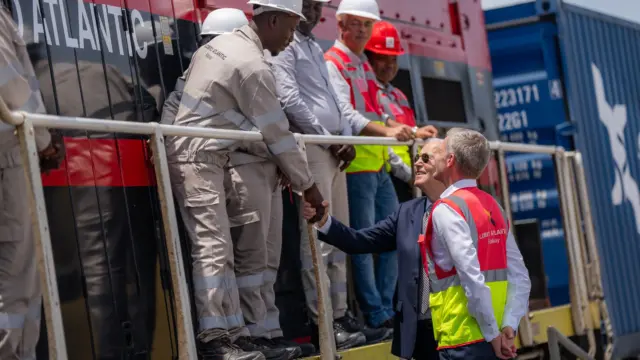
China's push to rehabilitate the TAZARA railway would strengthen an Indian Ocean route for Zambian copper and set up a rival axis to the Atlantic-facing Lobito Corridor. Whether Tanzania and Zambia gain lasting leverage depends on industrial depth, not on traffic alone.

Ebenezer Makinde

Zambia’s mineral strategy tests the link between investment and industrial growth

Zambia is moving from a debt-distress story to a strategic minerals state, courted through rival Lobito and TAZARA corridors and AI-assisted exploration. Strategic importance is not the same as industrial leverage, and the test is whether Zambia moves further up the copper value chain while attention lasts.

Michael Chisamba

Nigeria’s tanker fires demand safer distribution and stronger enforcement

Nigeria's fuel tanker explosions are the predictable result of a distribution system that relies on road haulage over deteriorating roads, with unenforced vehicle standards and weak regulation. Safer pipelines, rail freight and enforcement with real consequences have been repeatedly deferred.

Victoria Akindele

Congo’s mineral wealth and conflict demand different forms of accountability

Congo conflict minerals from the east fund armed groups through checkpoints and smuggling, while traceability schemes face repeated scrutiny and southern copper and cobalt deals raise their own questions. Resource sovereignty would mean local processing, public oversight of mining contracts and a paid, disciplined army.

Alao Abiodun

Intra-African migration can strengthen regional economies

Most African migrants stay within Africa, moving along trade corridors, labour markets and family networks that sustain regional economies. Europe's containment deals have shaped the policy debate instead, yet skills recognition, portable social protection and one-stop border posts would turn that movement into growth.

McDike Dimpka