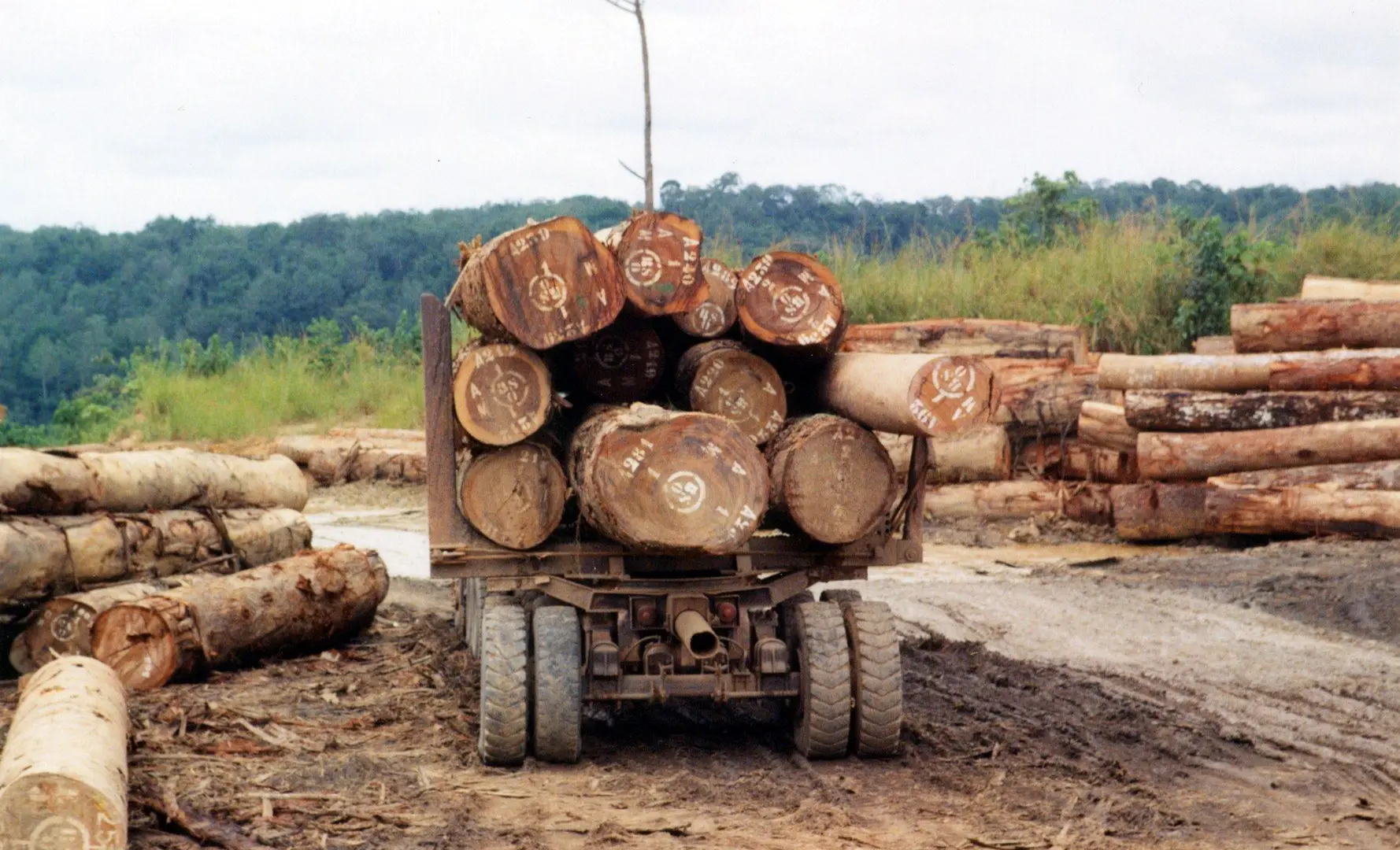
Climate change adds to the pressures on the Congo Basin’s forests from agricultural expansion and mining. Damage to these forests threatens species and the water, food and livelihoods that depend on them.
One emergency, many symptoms
Biodiversity loss and climate change reinforce each other. When rising temperatures change the seasonality of rainfall, they shift the range of plant species that can survive in a given place. When plant ranges shift, the insects, birds and mammals that depend on specific plant communities must move or die. When those species decline, the services they provide, pollination, seed dispersal, water filtration and soil stabilisation, degrade. When those services degrade, the farming built on them becomes less productive, and in communities with no alternative food systems the human consequences follow directly.
Africa’s exposure to this cascade is disproportionate to its historical contribution to the emissions that produced it. The continent accounts for less than 4 per cent of cumulative global carbon emissions. It contains roughly 25 per cent of the world’s biodiversity. The places that have done the least to create the climate crisis bear the greatest ecological cost of it.
The Intergovernmental Science-Policy Platform on Biodiversity and Ecosystem Services has documented that Africa holds biodiversity of global significance across its savanna, forest, wetland and coastal ecosystems. East Africa’s Great Rift Valley lakes support endemic fish species found nowhere else on earth. The Albertine Rift, stretching across parts of Uganda, Rwanda, DRC and Tanzania, is one of the most species-dense areas on the planet. Madagascar’s evolutionary isolation has produced a flora and fauna that is 90 per cent endemic, so each loss there is permanent.
The cost of inaction
The conservation financing gap helps explain the mismatch between the urgency of biodiversity loss and the response to it. Protected areas across Africa rely on government budgets with competing priorities, on tourist revenue that dried up during the COVID-19 pandemic and has recovered unevenly, and on international conservation funding that is itself subject to political cycles in donor countries. The rangers who maintain those areas are the immediate line of defence against poaching and illegal encroachment.
Presenting conservation as separate from development understates what loss costs. Fisheries in Lake Victoria, which support the food security and livelihoods of millions of people across Uganda, Kenya and Tanzania, have been significantly affected by invasive species, agricultural runoff and changing lake temperatures linked to regional warming. The cost of that disruption is not measured in extinction counts. It is measured in protein deficits and in lost income for fishing communities.
Who holds the key
There is also a question of leverage that the conservation conversation rarely names. Much of Africa’s biodiversity sits in carbon sinks and gene reservoirs that the rest of the world needs intact for its own climate and food security. That value can be captured elsewhere, through carbon-credit schemes priced in distant markets, bioprospecting that patents African genetic material abroad, and conservation financing that flows to international NGOs rather than to the ranger and the fishing community who actually hold the line. A continent that lets others monetise its biodiversity while it absorbs the cost of protecting it will have repeated, in green, the old arrangement it has spent a century trying to escape. The question is who controls these resources and who is paid to protect them.
Africa’s biodiversity is not a heritage asset to be preserved for posterity. It is living infrastructure that underlies the continent’s agricultural productivity, water security and the long-term habitability of its landscapes. Treating conservation as a luxury, to be addressed once industrialisation and poverty reduction are complete, is a category error. When the foundation collapses, what it was supposed to underpin collapses with it. The climate is not waiting for Africa’s development agenda, and the policy response to biodiversity loss cannot wait either.



