The dominant image of African migration (the overcrowded vessel, the desperate crossing, the European coastguard) captures a fraction of the reality and distorts the whole. The majority of Africans who move stay within Africa. They cross into neighbouring states for seasonal work, follow trade corridors established over generations, care for relatives in expanding cities, and return home with skills, savings and wider networks. Intra-African migration is an important economic force, yet the policy frameworks meant to govern it have consistently treated it as a problem to be managed rather than infrastructure to be built.
The scale is not marginal. The number of international migrants worldwide grew from 173 million in 2000 to 258 million in 2017, according to the United Nations International Migration Report 2017. According to the United Nations Department of Economic and Social Affairs, the majority of African migrants remain within the continent, strengthening city corridors and knitting border towns into living supply chains. The main patterns are Sahelian communities moving towards coastal cities, Somali and Ethiopian nationals crossing East Africa towards South Africa, and circular labour migration within West Africa that sustains household economies across borders. West Africa is the most legible example.
ECOWAS protocols have created the formal architecture for free movement across its member states, with interim movement arrangements continuing for citizens of Burkina Faso, Mali and Niger after their January 2025 withdrawal. The human reality has outrun the paperwork. Artisans, traders, nurses and students move between Lagos and Accra, Dakar and Abidjan, Bamako and Ouagadougou, following labour demand and kinship networks that no customs checkpoint fully interrupts. In East Africa, tea harvests draw workers down from highland farms. Southern African mining corridors pull labour across borders along routes that predate the independent states through which those borders now run.
Where the boat image comes from
North Africa and Libya’s position as a transit corridor to Europe is the most visible and deadly layer of the system, and its majority is invisible to European audiences because it does not end at their shores. Europe’s encounter with irregular migration (more than one million arrivals by sea in 2015 alone, primarily via Turkey and Greece) produced a policy response shaped by containment rather than root-cause resolution. The EU-Turkey agreement in 2016 aimed to curb crossings on the eastern Mediterranean route. Agreements with Libya, Morocco and Tunisia offered financial incentives for tighter border enforcement.
These deals cut numbers at the points that mattered politically in European capitals. They did little to address the conditions that made the journeys feel worth the risk, and smuggling networks adapted, finding new corridors as old ones were sealed. Migration, seen this way, is not the disruption. It is the mirror, reflecting back the inequalities, conflicts and governance failures that the receiving world would rather not examine too closely.
Climate pressures and mobility
Climate stress is reshaping intra-African migration in ways that existing governance frameworks are not equipped to absorb. Rainfall arrives later and departs earlier across the Sahel. Coastal erosion displaces fishing communities. Pastoralist routes that have functioned for centuries are squeezed between desertification from the north and agricultural encroachment from the south. The movements that result are not panics. They are adaptations, often sequential and reversible. But their scale is increasing, and the cities and border zones receiving them are carrying costs for water, sanitation, housing and public services that were not budgeted for. Policy that treats climate-driven intra-African migration as a security matter rather than a development challenge will spend money in the wrong places.
Building the framework
The frameworks exist on paper. The Global Compact for Safe, Orderly and Regular Migration, adopted by the UN in 2018, emphasises human rights protections, legal pathways and addressing the root causes of forced migration. The African Union’s Agenda 2063 envisions more structured intra-continental migration governance. The African Union Free Movement Protocol, adopted in principle in 2018, is the institutional architecture that could turn intra-African migration from a patchwork of bilateral arrangements into a coherent continental framework.
But ratifications have moved slowly, and the gap between treaty text and border post reality remains wide. It is the gap between what states sign and what they build the institutional capacity to deliver. Where customs officers supplement inadequate salaries with informal levies from traders, that is a symptom of a system that has not been resourced to function, not an aberration within a working one. Border digitisation, one-stop clearance posts and public accountability dashboards would address this directly. They require capital investment and political will in roughly equal measure.
Trade corridors
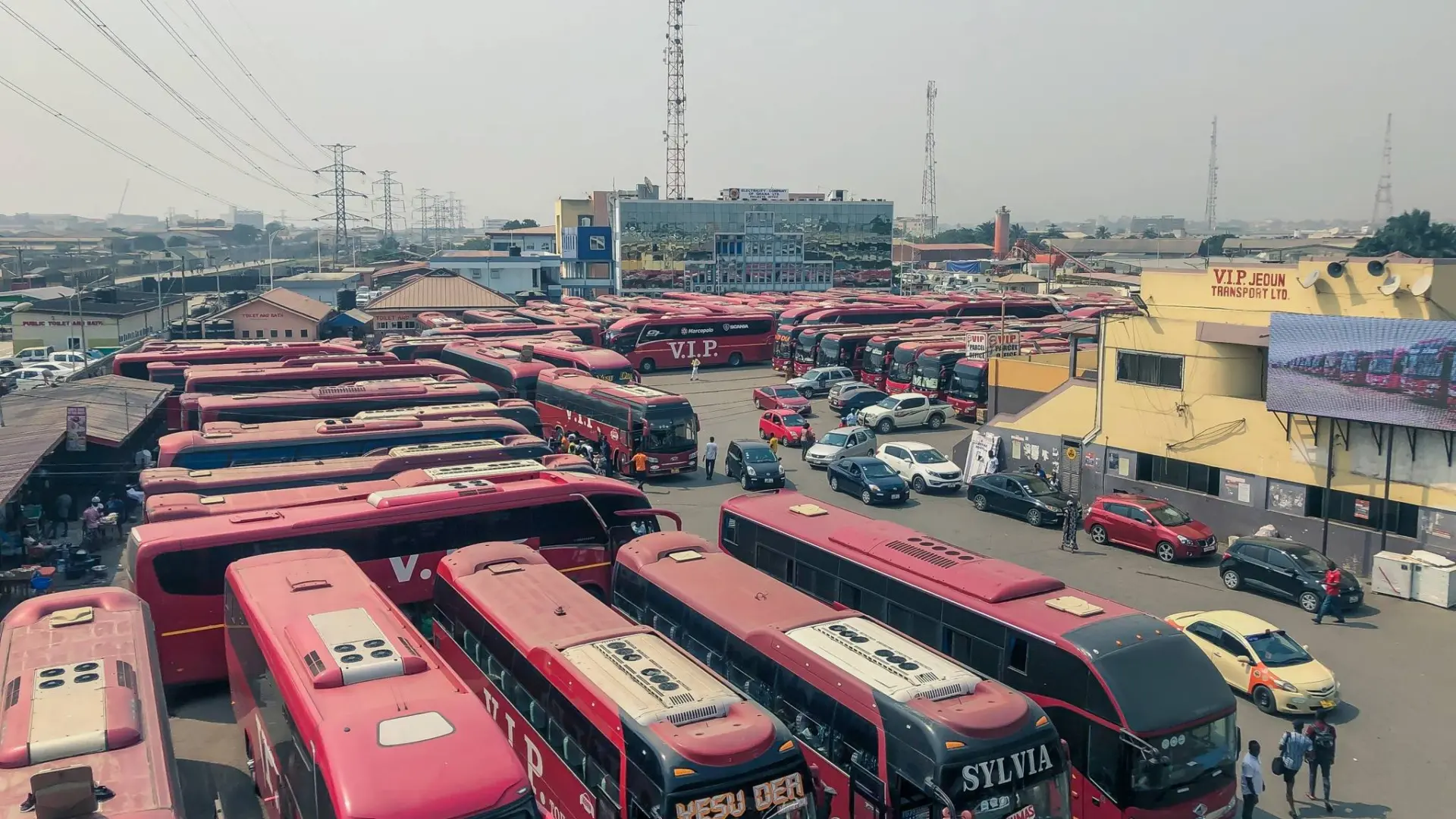
Trade corridor economics illustrate what intra-African migration makes possible when it is supported rather than tolerated. The Lagos-Abidjan corridor, the Northern Corridor linking Mombasa to Kigali and beyond, and the Maputo Development Corridor are not lines on maps. They are the living architecture of intra-regional commerce, dense with warehouses, repair shops, restaurants, bus stations and the activity of millions of crossings. The AfCFTA’s potential to deepen this integration depends substantially on reducing the non-tariff barriers (informal fees, inconsistent standards enforcement, port delays) that add cost at every link in the chain. Those costs fall hardest on the small traders who move goods in buses rather than containers.
Building mobility, not policing it
Intra-African migration will not be stopped by tighter borders, and the attempt to stop it will produce worse outcomes than the alternatives. What governance can do is make mobility safer, more productive and more formally recognised. Mutual skills recognition frameworks, so the electrician from Kumasi does not start from zero in Abidjan, are tractable policy problems that require institutional agreement. Portable social protections, so that the construction worker who crosses a border does not lose access to health coverage, are administratively complex but not conceptually impossible. A country that develops these systems does not just manage migration better. It becomes a more attractive destination for regional talent.
The deepest cost of the boat-and-coastguard image is that it sets African policy against African interest. When governments absorb a narrative written for European audiences, in which migration is a flow to be stopped at a Mediterranean edge, they build their own borders to interdict the movement that knits their economies together. They spend scarce capacity policing the trader from Kumasi as though she were a threat, rather than building the one-stop posts and skills-recognition systems that would turn the same movement into growth. Seeing intra-African migration clearly is therefore not a humanitarian preference but a strategic correction.



