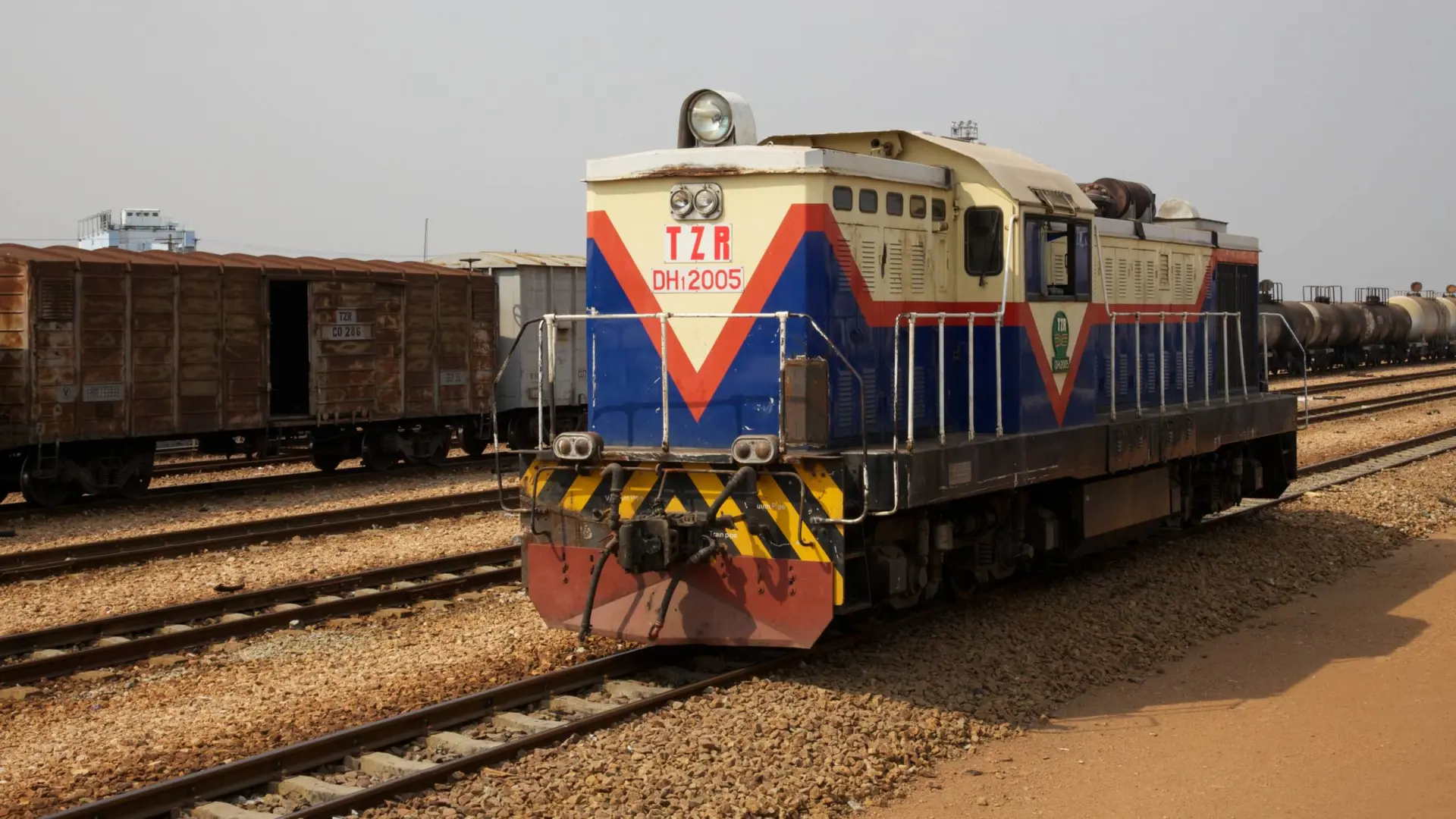
Plans to rehabilitate the TAZARA railway would strengthen an Indian Ocean route for Zambian copper and other freight. China’s renewed investment push into the Tanzania-Zambia line could turn an ageing Cold War corridor into a strategic artery and a rival axis to the Atlantic-facing Lobito Corridor, in a growing contest over who controls the movement of critical minerals.
The Tanzania-Zambia Railway Authority line was built in the 1970s as a symbol of post-colonial solidarity between China, Tanzania and Zambia. Rehabilitation discussions and concession negotiations have repositioned it. Once a struggling transport system, it is now a corridor tied to copper flows, supply-chain resilience and competition between external powers over where Africa’s minerals go and by which route.
Railways, ports and trade routes are no longer evaluated simply as development infrastructure. They are becoming instruments of industrial strategy as copper, cobalt, lithium and other transition minerals enter national-security calculations in major economies. Dar es Salaam is emerging as a competing export gateway for Central and Southern African minerals as buyers search for diversified routes that reduce their exposure to disruption elsewhere.
For China, the TAZARA revival fits a pattern rather than a standalone investment. Chinese firms have built commercial depth across African mining, infrastructure financing, industrial construction and commodity logistics over decades. Rehabilitating TAZARA would link extraction, transport, financing and export capability more tightly within those networks. The actor that can join rail, ports, financing, processing and trade into one functioning system gains influence far beyond any single project announcement.
The TAZARA line introduces a direct geographic counterweight to Atlantic-facing routes such as the Lobito Corridor. Africa’s infrastructure map is slowly evolving into overlapping spheres of commercial and strategic alignment, each anchored at a different coastline.
Western-backed initiatives emphasise Atlantic export routes for critical minerals, and China’s posture around TAZARA reinforces the Indian Ocean as an alternative. One axis runs westward through Angola’s Atlantic ports. The other runs eastward through Tanzania’s coastline. Zambia sits near the centre of this competition, courted by rival corridor strategies that promise faster export routes and deeper integration into global mineral supply chains.
The question that matters is who shapes the systems surrounding those exports. Control over movement is becoming nearly as important as control over extraction. Electric vehicles, battery systems, renewable energy infrastructure and data centres depend in part on minerals mined in Africa, so the corridors connecting those resources to global markets acquire strategic value of their own.
For Tanzania, greater mineral traffic through Dar es Salaam could strengthen its regional influence and its role as a logistics gateway into the interior. But leverage built on infrastructure lasts only when paired with industrial depth, governance capacity and the ability to negotiate beyond raw commodity dependence. External powers have historically financed corridors that secure access to strategic minerals without ensuring structural transformation for the economies those corridors cross. The return of TAZARA shows mineral security, trade corridors and geopolitical influence converging into the same contest, and the countries along the line will gain most if they bargain for more than transit.



