Opens in a new tab

Topic

Kenya

Kenyan politics and economy

A Badili staff member in a teal company shirt shows a boxed refurbished smartphone to a customer in a Badili store.

Technology · Explainer

Badili’s refurbishment model highlights the distinction between used phones and waste

Badili, founded in Kenya in 2022, refurbishes used phones and resells them with a verified condition rating. Consistent grading, repair and warranty turn an unpriceable second-hand device into a trustworthy one, and help separate legitimate reuse from e-waste shipped under the same customs description.

By Kiraithe Daniel Mutemi · · 6 min read

Latest in Kenya

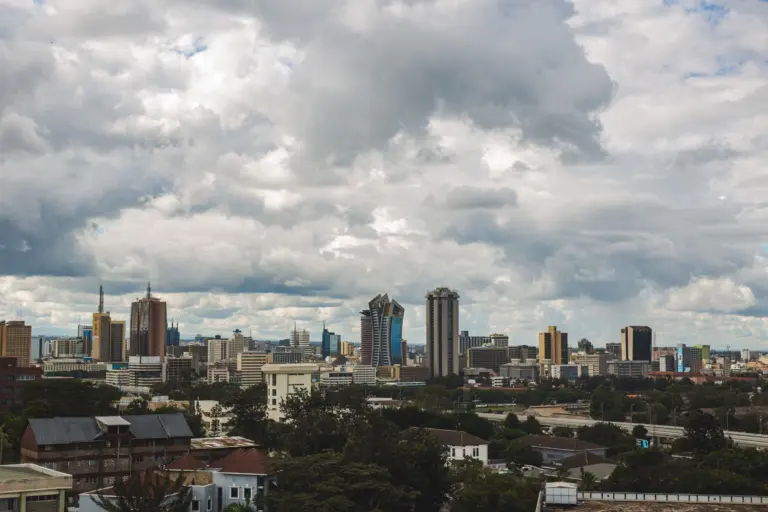
Nairobi city skyline with high-rise towers under heavy cloud, seen across low-rise buildings and trees

News · Analysis

Kenya’s debt options carry costs beyond the headline rate

Kenya's external financing programme of about $5.4 billion for the year to June 2027 spans Eurobond, Samurai, panda and sukuk issues plus a $1 billion debt-for-food-security swap. With global yields rising, the test of each option is its full cost after fees, hedging and conditions.

Adedoyin Shittu ·

Kenya Airways Boeing 787-8 Dreamliner registration 5Y-KZF taxiing at Amsterdam Schiphol airport

News · Analysis

Fuel costs put Kenya Airways’ thin margins under pressure

Kenya Airways says fuel has risen from about 40 per cent to 50–55 per cent of its operating costs amid Middle East disruption, against a reported net profit of about $1.50 per passenger seat. The airline offers a rare public readout of how a distant chokepoint feeds into Kenyan costs.

Kiraithe Daniel Mutemi ·

Kenya Airways aircraft stand at the terminal of Jomo Kenyatta International Airport in Nairobi, seen past a plane's wing.

News · Analysis

Kenya’s recruitment cases expose the risks in overseas job promises

Kenya has reported 289 citizens recruited into the Russian military, with at least 69 dead or missing, and its choice to press Moscow rather than prosecute deceived recruits shifts attention to recruitment oversight, consular assistance and information for families.

Adedoyin Shittu ·

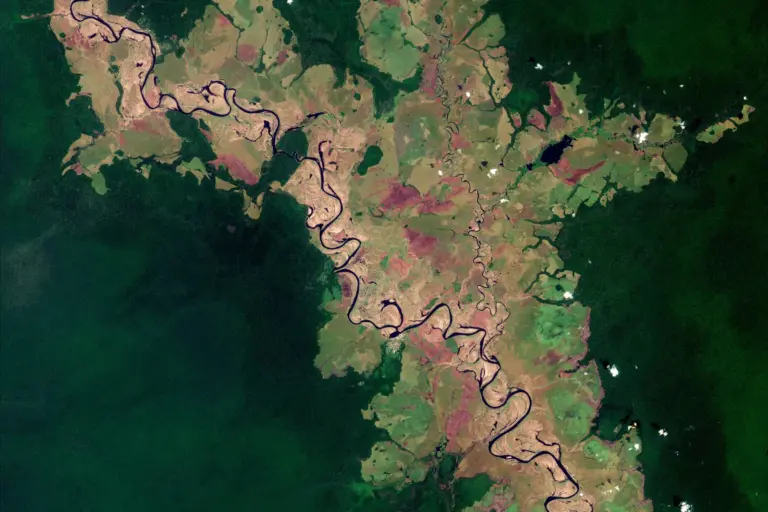
A satellite view of the Likouala-aux-Herbes river winding through cleared land and rainforest in the Republic of Congo.

Technology

Amini’s environmental data raises questions about risk pricing and access

Thin environmental observation across Africa is a priced uncertainty paid by farmers, insurers, borrowers and states, and as venture-backed firms such as Amini close that gap, African states should treat ground-truth data as strategic infrastructure with public access.

Kiraithe Daniel Mutemi ·

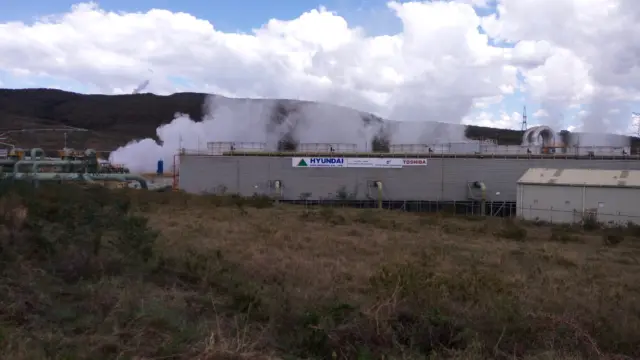
Olkaria V geothermal power station with steam pipes and plant buildings in Hell's Gate National Park, Kenya

Technology

Electricity supply constrains Africa’s data-centre plans

Kenya's suspension of a billion-dollar Microsoft and G42 data centre, which would have drawn roughly a third of national capacity, shows that African digital sovereignty depends first on electricity generation, and compute plans must follow power supply rather than precede it.

Victoria Akindele ·

Young Kenyan man in a dark jacket working at a desktop computer in an office

Technology

Kenya’s AI data workers bear costs that contracts can obscure

Kenyan data workers employed through outsourcing firms such as Sama have reviewed traumatic material to train AI systems for low pay and limited support. The AI developer captures most of the value, and Kenya has yet to use its leverage to set protections for hazardous digital work.

Kiraithe Daniel Mutemi ·

A man seen from behind walks along a red dirt path towards the outpatient department of AIC Kapsowar Mission Hospital in Kenya.

Technology

Kenya’s health insurance reform raises questions about data governance

Kenya's Social Health Authority, rolled out on 1 October 2024 to replace the NHIF, links health cover to biometric registration and national identity records. That can improve administration, but weak data protection oversight leaves questions about access, exclusion and misuse for other governments watching the model.

Alao Abiodun ·

Eliud Kipchoge, left, runs with pacemakers past spectators at the 2023 Berlin Marathon.

Culture

Kenya’s athletics future depends on institutions as well as athletes

Kenya athletics rests on training environments, coaching networks and economic incentives rather than presumed physiology. Its future depends on funded anti-doping systems, accountable federations and a fairer share of prize money for runners who can lose more than half of it before it reaches Kenya.

Victor Kekereekun ·

Earlier in Kenya

Trade barriers and political disputes complicate East African integration

East African Community trade is held back by non-tariff barriers, retaliatory taxes and political disputes that undercut treaty commitments. Members gain more in the short run by protecting their own industries, and integration will stall until enforcement makes breaking the rules costlier than complying.

Kiraithe Daniel Mutemi

Agency banking expands access while raising questions about network control

Agency banking has extended financial services to communities without bank branches across Nigeria, Kenya and beyond, but it has not settled who controls the network. Without rules on interoperability, pricing and data, inclusion can become dependency, with communities admitted as users of the system but not owners.

Kiraithe Daniel Mutemi

Judicial independence depends on institutions as well as individual judges

Judicial neutrality is an institutional condition, not only a personal virtue. Secure tenure, independent appointments, adequate resources and professional standards help courts resist executive and public pressure, as Kenya's Supreme Court showed when it invalidated the August 2017 presidential election.

McDike Dimpka

Kenya’s interest rate cap exposes the limits of price controls

Kenya capped bank lending rates in 2016 and repealed the cap in 2019 after credit to small businesses contracted. The failure confirmed the limits of price controls, but the cap also exposed a concentrated banking sector whose wide margins persist, pushing many borrowers towards costlier digital lenders.

Kiraithe Daniel Mutemi

Consumer protection depends on enforcement as well as new laws

Consumer protection laws only matter when regulators can enforce them. Nigeria's 2019 Federal Competition and Consumer Protection Act is a start, but the COVID-19 emergency shows that trained staff, accessible complaint channels and clearly published decisions decide whether consumer rights work in practice.

Kiraithe Daniel Mutemi

Coronavirus and locusts threaten different parts of Africa’s economy

The coronavirus outbreak and desert locusts threatened Africa's economy in early 2020 through different channels. China's disruption travelled through trade, tourism and supply chains, while locusts, the worst in over 70 years in Kenya, destroyed crops and pasture that rural households depend on directly.

Kiraithe Daniel Mutemi

Corporate rescues need to protect the public as well as the company

A large company's failure can harm workers, suppliers and lenders, but that does not justify rescuing every struggling firm. Corporate rescues work when terms address the causes of distress, as AIG's 2008 rescue showed, a point that bears on Kenya's debate over Mumias Sugar and Nakumatt.

Kiraithe Daniel Mutemi

Kenya’s devolution needs public participation that shapes spending

Kenya's 47 counties have brought key services closer to residents since 2013, but transferring money and authority does not guarantee responsive decisions. Devolution delivers when public participation shapes budgets and continues through scrutiny of spending, supported by clear accounts and accessible project information.

Kiraithe Daniel Mutemi