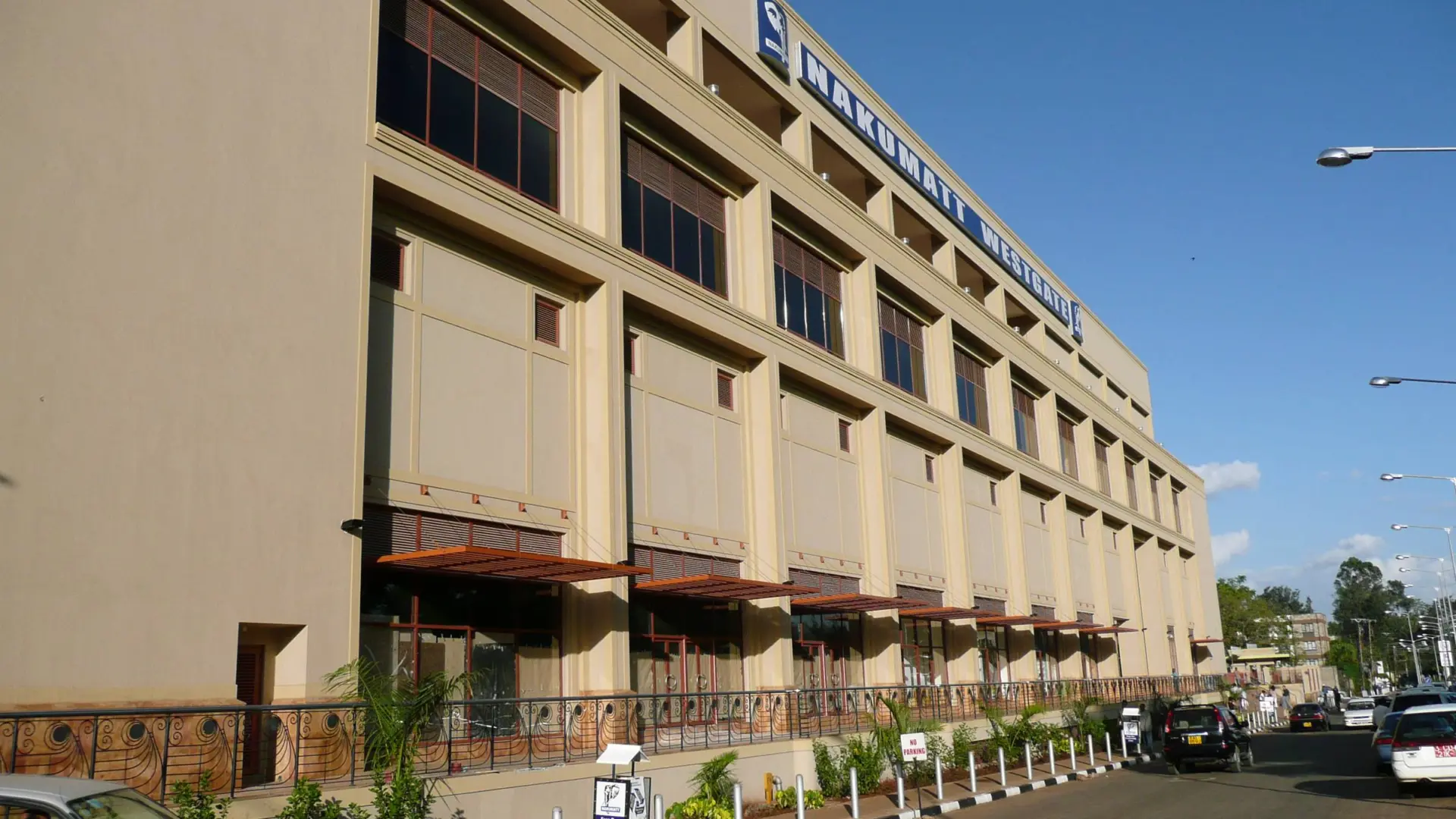
Corporate rescues are justified when they protect a public interest, not simply a company’s name. A large company’s failure can reach far beyond its shareholders. Workers may lose jobs, suppliers may struggle to collect payment and lenders may face losses. Where a firm is closely connected to the financial system, its collapse can also threaten institutions that appear healthy on their own. The 2008 rescue of American International Group in the United States and the collapse of Mumias Sugar and Nakumatt in Kenya show how different those cases can be.
Those risks explain the argument that some businesses are too big to fail. They do not establish that every struggling large company should receive public money. A rescue needs a clear public purpose, an assessment of the alternatives and conditions that address the causes of distress.
What the AIG rescue demonstrates
AIG became a central case during the 2008 financial crisis. Its subsidiary AIG Financial Products, based in London, had written credit default swaps with a notional value of roughly $440 billion, many of them on debt securities backed by US subprime mortgages. When rating agencies downgraded AIG on 15 and 16 September 2008, those contracts triggered tens of billions of dollars in immediate collateral calls. A securities lending business that had invested cash collateral in residential mortgage-backed securities added to the strain. The Financial Crisis Inquiry Commission’s final report of January 2011 and the Congressional Oversight Panel’s AIG report of June 2010 both trace the crisis to these two exposures.
The US government intervened through the Treasury and the Federal Reserve. The Treasury’s account of the programme records combined support commitments of approximately $182 billion: nearly $70 billion from the Treasury through the Troubled Asset Relief Program and $112 billion from the Federal Reserve Bank of New York, including the Maiden Lane II and III facilities. In December 2012 the Treasury sold its last 234,169,156 AIG shares at $32.50 each, raising about $7.6 billion, according to its press release of 14 December 2012. The combined intervention produced a reported positive return of $22.7 billion, of which $5.0 billion went to the Treasury and $17.7 billion to the Federal Reserve.
That outcome does not make the original risk insignificant. It shows why the terms and management of an intervention matter. The size of the public commitment, the amount actually advanced and the proceeds eventually recovered are three different numbers, and a rescue is judged on all of them. For AIG, the Congressional Research Service put commitments at $182.3 billion, peak disbursements at $141.8 billion and total recoveries at about $205 billion.
AIG was also a highly interconnected financial institution in a systemic crisis. A large employer or a prominent retailer is a different case.
Kenya’s experience raises different questions
Mumias Sugar, in which the Kenyan state held a 20 per cent stake, received billions of shillings in government bailout funds between 2015 and 2017. The money did not restore it. Unpaid debts and shortages of cane persisted, and on 24 September 2019 KCB Group placed the miller under receivership and appointed Ponangipali Venkata Ramana Rao as receiver-manager. Cane farmers and other suppliers carry part of that failure, as do smaller businesses whose survival depends on being paid on time.
Nakumatt Holdings, once East Africa’s largest supermarket chain with more than 60 outlets, fell into acute cash-flow distress in 2016 and 2017. A court placed it under administration in January 2018, with Peter Kahi of PKF Consulting appointed administrator, owing more than KSh 38 billion to banks, suppliers, holders of its commercial paper and landlords. At the end of 2019 that administration was still running.
The two cases differ in kind. Mumias absorbed public money and still failed. Nakumatt was a private retailer whose distress was handled through a court-supervised process. Those consequences warrant scrutiny of management, financing and oversight in each case, because distressed companies do not fail for the same reasons or receive the same treatment from the state.
Public support is unlikely to provide a lasting solution if operating losses, weak controls or an unsuitable business model remain unaddressed. Mumias suggests as much: state funds arrived, but the debts and the cane shortages remained. A company may require restructuring, new management or an orderly process for dealing with creditors. In some cases, preserving the existing corporate structure may be less useful than protecting essential operations and helping affected workers.
Oversight should begin before a crisis
Audits, financial reporting and regulatory supervision help identify weaknesses, but their existence does not guarantee that failure will be prevented. Boards and owners must also respond to information that challenges a successful public image. Nakumatt’s expansion and its standing as a household name did not stop its debts to suppliers and lenders from building up to more than KSh 38 billion.
Warning signs deserve attention before a firm becomes dependent on emergency assistance. Persistent payment delays, deteriorating cash flow and repeated changes to financing arrangements warrant closer examination, though none of them is proof of wrongdoing.
Governments cannot prevent every business failure, nor should they promise to absorb every commercial loss. Where intervention is justified, the public should be able to see its purpose, cost and conditions, the same test of visible spending that runs through Kenya’s debate over devolved budgets. Protecting employment and economic stability requires more than keeping a familiar company name alive.



