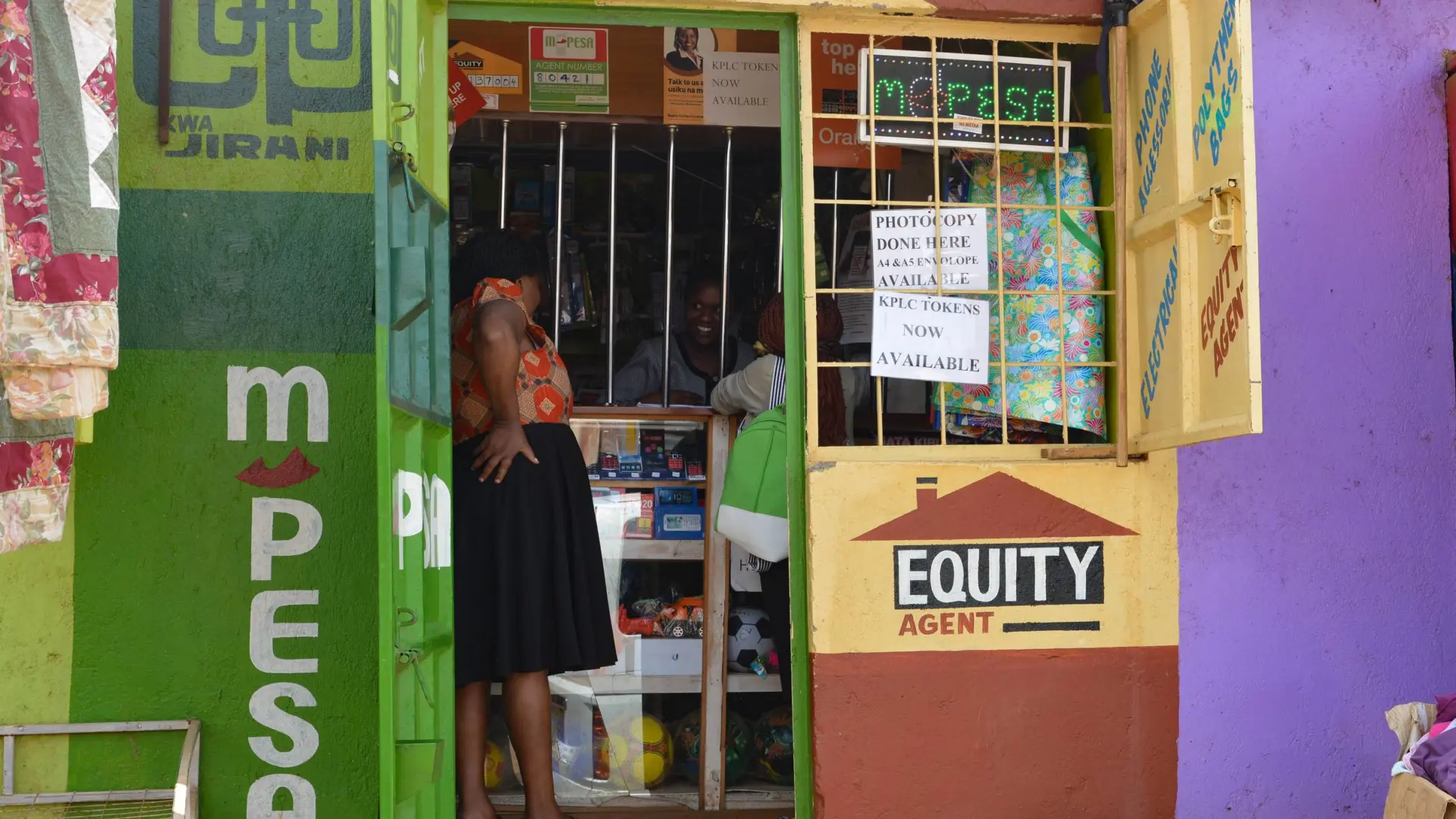
Agency banking has brought financial services to communities that formal banks never reached, by letting local businesses act for licensed financial institutions and mobile money operators. It has not settled who controls the network. Without rules on interoperability, pricing and data, inclusion can become dependency, with communities admitted as users of the system but not as owners.
Under the model, licensed institutions deploy independent agents to deliver services that would otherwise require a physical branch. It relies on regulation as well as phones, liquidity and community relationships, and it has moved from pilot programme to continental architecture. In Nigeria, agent networks operated through licensed mobile money operators and super-agents reach local government areas where no formal bank branch exists. In Kenya, the M-Pesa agent network, the model the rest of the continent has studied and adapted, is deeply embedded in daily economic life. In Tanzania, Ghana, Uganda and increasingly Senegal and Côte d’Ivoire, variations of the same model are extending financial reach.
Who controls the network
The strategic shift inside the agency banking story concerns network architecture and who owns it. The traditional banking model was vertically integrated. The bank owned the branch, the staff, the ATM and the customer relationship. The agency model breaks that integration apart. The agent, whether a pharmacist, a grain trader or an airtime dealer, owns the customer touchpoint, builds the trust and provides the physical presence that the bank’s digital infrastructure cannot replace. The bank provides the licence, the float management and the product suite. The value creation is shared. So is the power, and whoever controls the network’s terms, pricing and interoperability standards decides who ultimately captures it.
Arrangements differ by market and provider. Nigeria’s framework, for example, includes several types of licensed institution and agent arrangement, with different permitted activities and responsibilities, so interoperability should be assessed through the rules and services of particular providers rather than by assuming every agent is exclusive.
The question is sharpest where international technology platforms meet African agent networks. The major mobile money platforms in East and West Africa run on licensing agreements, technology stacks and data architectures with varying degrees of African institutional control. When the business logic of those platforms changes, agents, customers and regulators must respond. Fee structures, interoperability decisions and data policies are set by entities whose primary accountability is to their own investors, not to the financial inclusion mandate they also serve.
Gender sharpens the point. Where women run agent kiosks, or rely on agents because bank branches have been harder for them to reach, a model that admits them as users but not as owners or governors of the system would reproduce the exclusion that agency banking claims to disrupt.
Access and influence
Regulation and interoperability standards, more than technological innovation, will determine the next phase. Mobile money, biometric verification and digital credit scoring are well developed and widely available. What is less settled is a regulatory and competitive framework that prevents agency banking from becoming a new form of concentrated market power, in which whoever owns the agent rails effectively controls the financial lives of the communities those agents serve.
The extension of access is real and should not be qualified into irrelevance. The agent at the kiosk supplies the indispensable last mile: the trust, the face at the counter, the knowledge of who in the village is good for a loan. The rails beneath that last mile, meaning the platform, the fee schedule, the data and the switch that decides which transaction clears, are often owned and governed elsewhere. Access to the network is not the same as power over it. The agent has solved the access problem the formal banks could not. The ownership problem, harder and less photogenic, is the one the next decade of African financial regulation must answer.



