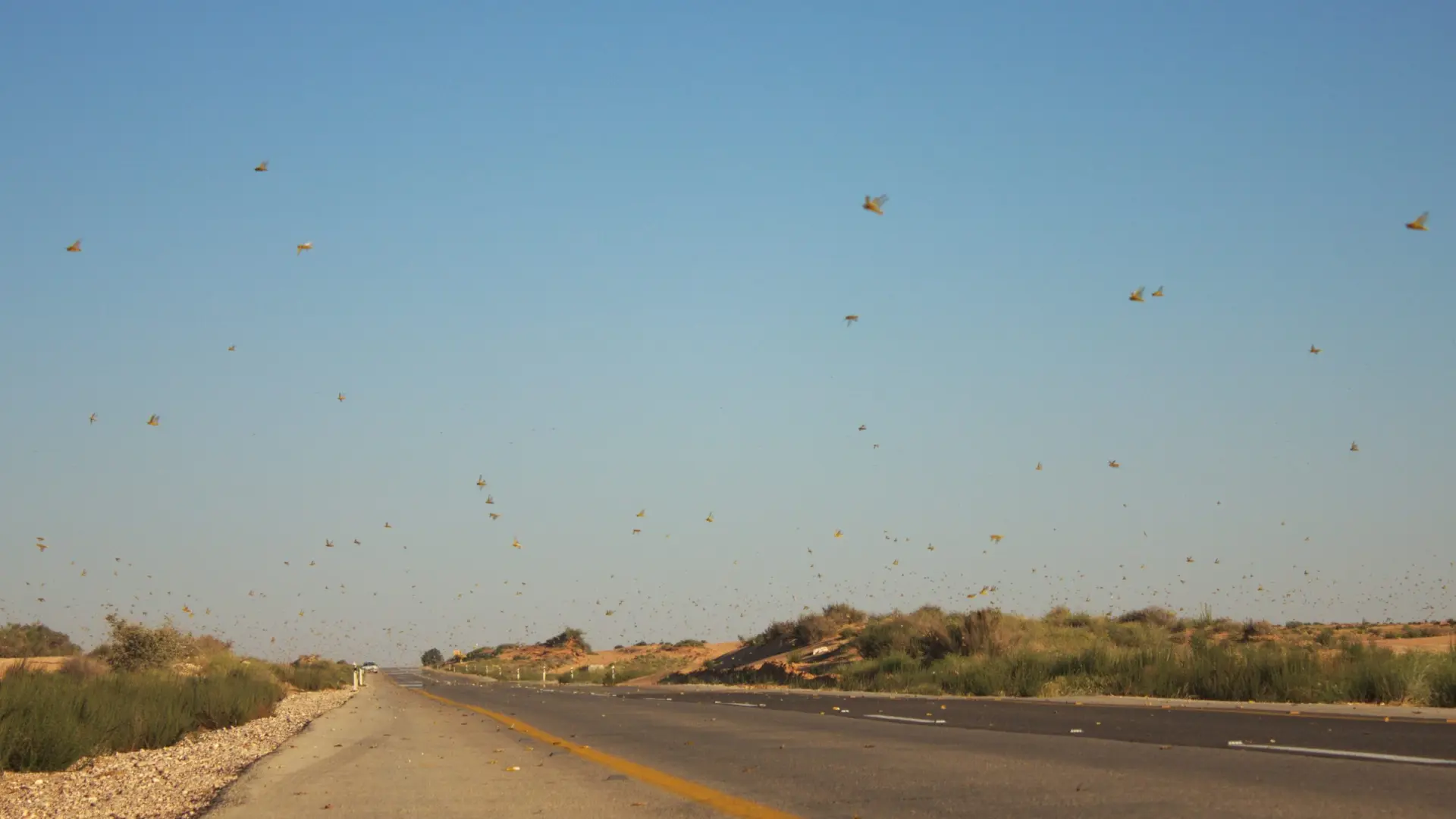
The new coronavirus outbreak and the spread of desert locusts have introduced fresh risks to the economic outlook at the start of 2020. Their effects are different, but both can disrupt livelihoods and place additional demands on governments already managing limited resources.
An outbreak affecting a major trading economy can reach distant countries through supply chains, travel and demand for exports. A locust swarm can destroy crops and pasture on which a rural household depends immediately. Treating both only as threats to headline growth would overlook those different mechanisms.
China’s disruption reaches trading partners
The outbreak first reported in Wuhan has led to restrictions and uncertainty around movement and production. On 30 January 2020, the World Health Organization declared a public health emergency of international concern.
China’s importance to manufacturing, trade and tourism means that disruption there can affect businesses elsewhere. A firm may face a delayed component, lose a customer or see a planned visit cancelled, even without a local outbreak.
African economies have differing exposure through commodity exports, imported equipment, tourism and infrastructure activity. The consequences will depend on the duration of the disruption and the alternatives available to businesses.
The January trade agreement between the United States and China had raised expectations of improved commercial relations. A health emergency introduces uncertainty that an agreement cannot remove. Announced purchasing commitments and forecasts should not be treated as assured outcomes under changed conditions.
The scale of the eventual economic effect remains uncertain at this stage. Assuming either that the disruption will be brief or that it will necessarily produce a specified global contraction would go beyond the available evidence.
Locusts put food and income at immediate risk
In the Horn of Africa, desert locusts threaten crops, pasture and household livelihoods. The Food and Agriculture Organization’s January 2020 appeal described the outbreak as the worst in more than 70 years in Kenya and more than 25 years in Ethiopia and Somalia.
Favourable breeding conditions can increase the threat where control is insufficient. Projections of a much larger locust population describe a risk under particular conditions, rather than a count already observed.
For farming and pastoral households, the damage can extend beyond one lost harvest. Lower food availability, reduced income and the loss of animal feed can weaken the resources needed for the next production cycle.
Surveillance and control require funding, coordination and appropriate technical capacity. Authorities must also consider the people affected by crop losses, rather than assess the response only through the area treated.
Responses need to reflect the source of the shock
Financial measures may help a viable business manage interrupted income. They cannot, on their own, stop an outbreak or replace the work of locating and controlling locust swarms.
Governments and development partners need reliable information about the affected sectors and households. Assistance can then address immediate needs while reducing the risk that a temporary shock causes lasting damage.
The two emergencies also show why economic planning needs room for events outside normal forecasts. Trade expectations, harvest prospects and public budgets can change quickly. The response must be based on the conditions being observed, with uncertainty made clear.



