Joseph Kony has been wanted by the International Criminal Court since 8 July 2005, when judges issued a warrant for his arrest that was unsealed on 13 October 2005. He has not been captured. His evasion is a failure of intelligence and operations, but it also exposes weaknesses in the regional security architecture across Central and East Africa, and in political calculations that have repeatedly put short-term stability ahead of the accountability his victims are still owed.
Kony formed the Lord’s Resistance Army in northern Uganda in 1987, from the remnants of Alice Auma Lakwena’s Holy Spirit Movement, and the group later operated in the Democratic Republic of the Congo, South Sudan and the Central African Republic. The ICC case against Kony charges him with crimes including abduction and enslavement, the conscription of children under 15, murder, rape, sexual slavery, pillaging and attacks on civilian populations. The warrant sets out allegations, not findings; he has never been tried. Of the four other LRA commanders named in the 2005 warrants, Vincent Otti, Raska Lukwiya and Okot Odhiambo have died, and Dominic Ongwen was tried and convicted in 2021.
The wider toll is larger than the charges. A UNICEF-funded survey in 2006 estimated that the LRA had abducted at least 66,000 children and young people in northern Uganda between 1986 and 2005. United Nations estimates covering 1987 to 2012 across four countries, cited by the Global Centre for the Responsibility to Protect, attribute more than 100,000 deaths, 60,000 to 100,000 child abductions and the displacement of up to 2.5 million people to the insurgency. Those estimates cover a longer period and a wider area than the ICC case.
A diminished group in remote borderlands
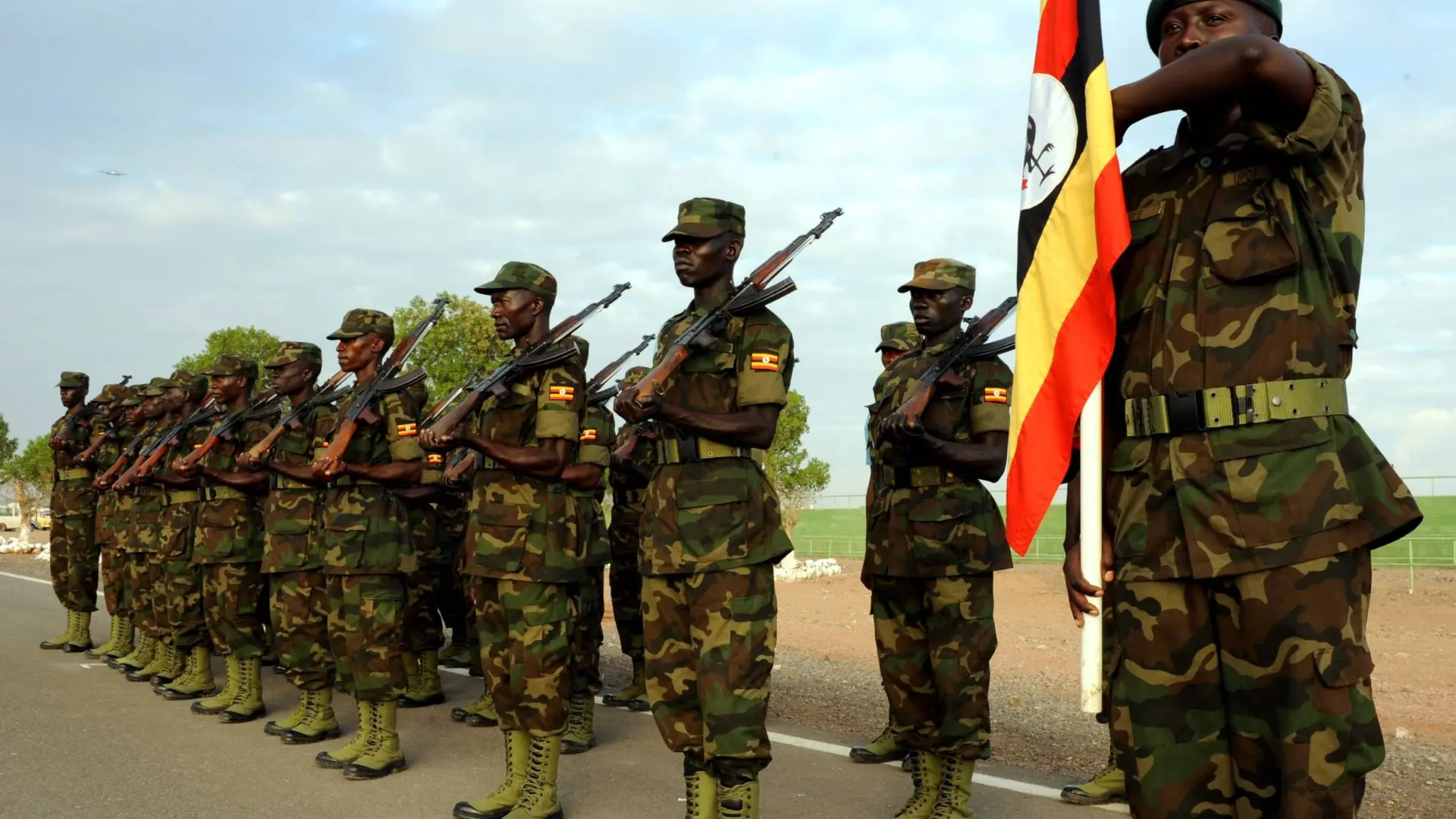
The LRA has shrunk far below its peak. Ugandan military operations, American advisers deployed from 2011 and the African Union’s Regional Cooperation Initiative for the Elimination of the LRA reduced its capacity to concentrate forces. The AU Peace and Security Council authorised that initiative in November 2011 and launched it in March 2012, and its Regional Task Force, with troops from Uganda, the DRC, the CAR and South Sudan, became operational in September 2012. By 2017 US assessments put the LRA at fewer than 100 to 150 fighters.
After being driven out of northern Uganda in the mid-2000s, Kony and his remaining followers moved through the borderlands of the DRC, South Sudan and the CAR. From the early 2010s, UN and US reporting placed his main sanctuary in Kafia Kingi, a disputed enclave between Sudan and South Sudan under Sudanese control. In 2024 the UN Panel of Experts on the Central African Republic reported that LRA elements had moved from Kafia Kingi into the mountainous Haute-Kotto and Vakaga prefectures of eastern CAR, near the Sudanese border, as Sudan’s civil war spilled over. That is a region long marked by violence, as our report on the CAR’s insurgencies described.
Weak state presence
Kony’s survival rests on geography and weak governance acting together. The terrain he occupies, dense forest, remote savanna and borderlands between states with limited mutual security cooperation and even more limited state presence, provides concealment that conventional military operations cannot penetrate for long. The communities within that terrain, which have experienced the LRA’s violence directly, have also learned that cooperation with government forces does not guarantee protection from retaliatory attack. The incentive for local people to provide intelligence, the foundation of any counter-insurgency strategy, is distorted by fear and by the knowledge that security forces depart and the LRA returns.
The border regions
The DRC’s northeastern border regions, where LRA remnants have operated alongside dozens of other armed groups, are among the most complex security environments on the continent. The Congolese state’s capacity to project authority there has been limited by decades of conflict, predatory governance and the difficulty of coordinating with neighbouring states whose interests in the region are not uniformly aligned with stability. South Sudan, an active conflict zone for much of its existence as an independent state, as the repeated attempts at a unity government show, has provided terrain for LRA movement without consistent counterforce.
Kony’s continued freedom is not solely a military failure. It reflects political calculations at multiple levels.
The failure to secure accountability
Kony’s continued freedom is not solely a military failure. It reflects political calculations at multiple levels. Peace talks between the Ugandan government and the LRA, mediated by Southern Sudan’s vice-president Riek Machar, opened in Juba in July 2006 and came closer than any earlier initiative to a settlement. Negotiators signed five agenda protocols by February 2008, but Kony failed to appear to sign the Final Peace Agreement in April, May and November 2008, demanding that the ICC warrants be lifted first, as Security Council Report recorded. Uganda had referred the situation to the court in December 2003 and could not withdraw the warrants on its own. Under Article 16 of the Rome Statute, only the UN Security Council, acting under Chapter VII, can defer an ICC investigation or prosecution, for a renewable period of 12 months. The tension between accountability and settlements that might end active violence is not unique to the LRA, but it has been particularly acute in this case.
On 14 October 2011 President Barack Obama notified Congress of the deployment of about 100 combat-equipped US military advisers to Uganda, South Sudan, the CAR and the DRC to help regional forces pursue Kony. In March and April 2017 US Africa Command announced the end of the mission, and the advisers had left by mid-2017, as Human Rights Watch set out. In April 2017 Uganda announced it would withdraw its roughly 2,000 to 2,500 troops from the CAR, where they formed the core of the AU task force. Kampala’s decision and Washington’s together brought active regional pursuit of Kony to an effective halt. The US judgement was defensible on narrow security grounds: the LRA has not attacked American interests, and its capacity is a fraction of its peak in the 2000s. It left aside the continuing threat to civilians in the affected region, and it raises questions about the durability of American security commitments in Africa.
Lessons for regional security
The persistence of the LRA across decades and several countries reveals weaknesses in the African security architecture that go beyond this group: the difficulty regional bodies have in sustaining coordinated operations across borders, a dependence on external partnerships that follow external priorities, and the gap between the ambitions of the African Peace and Security Architecture and the operational capacity to enforce them.
The LRA’s victims, the children abducted, the communities destroyed and the survivors carrying decades of trauma, are owed an accounting that African security institutions have not yet delivered. Preventing the next atrocity on this scale requires stronger regional security institutions, more consistent state presence in border regions, reliable intelligence, protection for witnesses, and the political will to put accountability ahead of short-term convenience.



