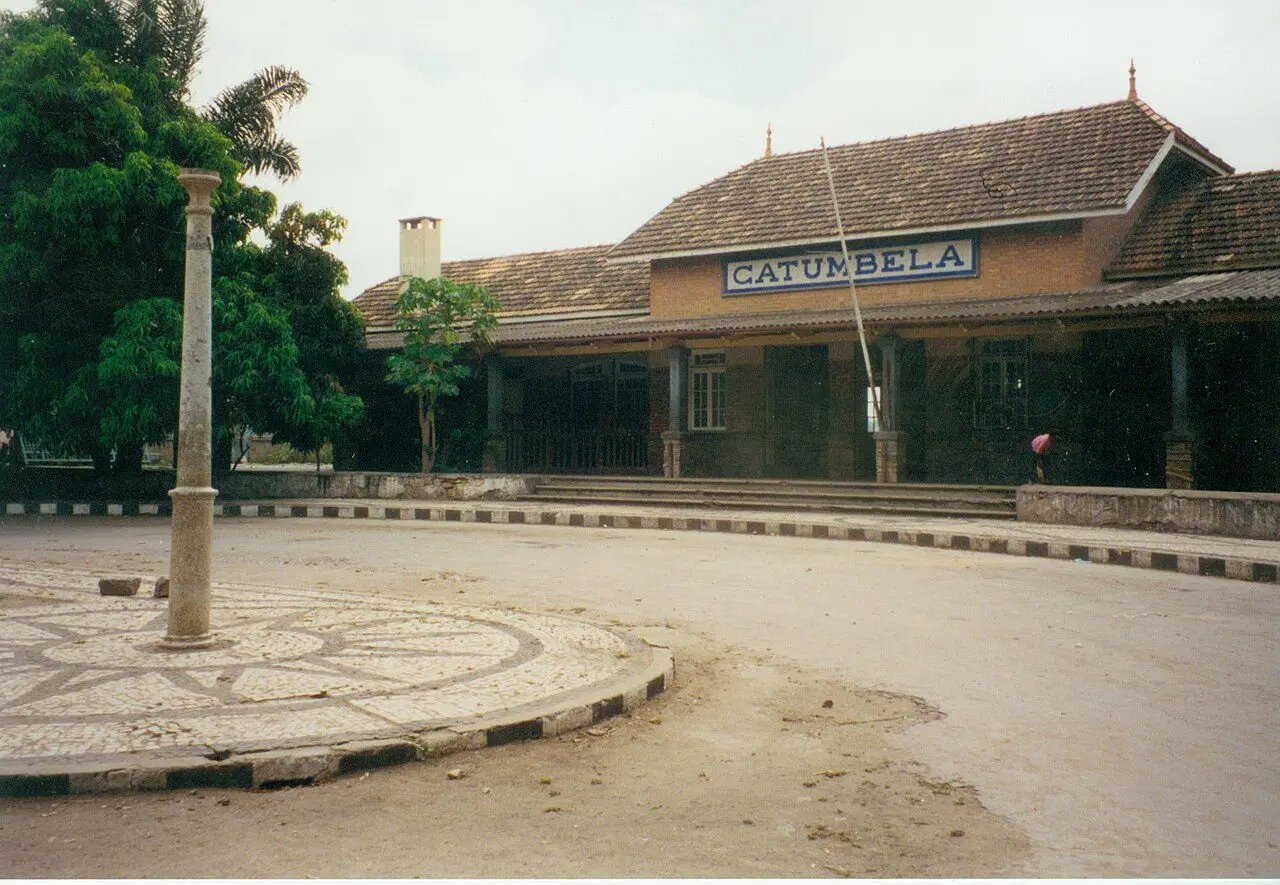
Angola wants the Lobito Corridor to reduce its exposure to oil-price swings. Whether it succeeds will depend less on train speed or port throughput than on what develops around the rails: local firms, reliable power and jobs. Without them, the corridor risks becoming a more efficient export pipeline for minerals rather than the start of a diversified economy.
After years of vulnerability tied to oil-price volatility, debt pressures and uneven post-war reconstruction, Angola is trying to redefine itself as a logistics and industrial gateway. World Bank-backed financing and reforms linked to the corridor reflect an effort to shift the economy away from narrow commodity dependence towards transport, digital systems, financial inclusion and regional commercial integration. The corridor, once discussed mainly as a railway rehabilitation, is now framed as a wider logistics system stretching from Angola’s Atlantic coast into the copper-producing regions of Zambia and the DRC, linking rail, ports, customs systems, digital infrastructure and financing.
The geographic opportunity is real. Lobito Port’s Atlantic position offers direct access to European and North American markets at a time when major powers are seeking alternative supply routes for copper, cobalt and other energy-transition minerals. That interest has helped attract financing and diplomatic attention. Angola’s challenge is not simply to build transport capacity. It is to prevent the infrastructure from becoming a more sophisticated form of extraction.
Faster rail movement, expanded port handling and better logistics can leave the industrial hierarchy unchanged if processing, manufacturing, financing and technology remain concentrated elsewhere. Connectivity without industrial absorption produces corridors that function mainly as export pipelines.
Infrastructure changes an economy when secondary systems emerge around it: warehousing, energy investment, manufacturing support industries, financial services, cross-border commercial activity. Faster mineral exports alone do not establish broader industrial development.
The government’s reform agenda suggests awareness of that risk. Work on digital systems, financial inclusion and logistics modernisation reflects a recognition that infrastructure rarely transforms an economy without institutional capacity and domestic commercial participation. The environment is also more complex than in earlier commodity cycles. External powers are now interested not only in resources but in the infrastructure that controls how they move, and they treat railways, ports and logistics systems as strategic assets. That attention does not necessarily come on terms that serve domestic industrial development.
Commodity-dependent states have often struggled to convert infrastructure-led growth into diversified industrial capacity. Large projects generate visibility, financing flows and political symbolism without necessarily shifting employment or productive depth. Extraction can modernise faster than transformation.
Angola now faces the test every African resource state must eventually confront: the difference between a country that ships its wealth and one that begins to build around it. Whether the corridor supports diversification will depend on local investment and jobs, reliable power and firms’ access to its services, not on how quickly the minerals leave.



