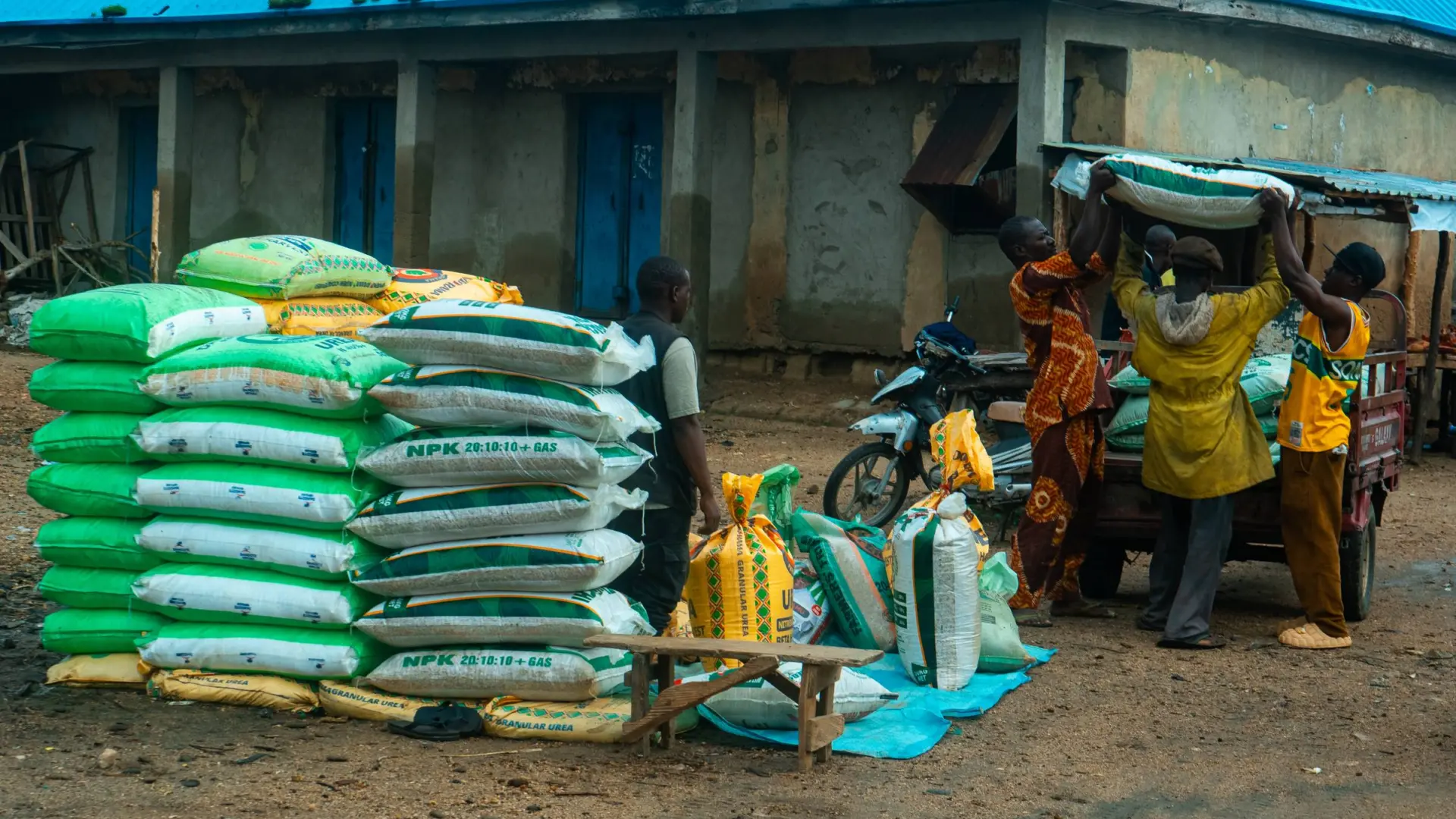
The Strait of Hormuz is a narrow channel at the mouth of the Gulf that no African country borders, and through which a large share of the world’s traded oil and much of its liquefied gas must pass. When that channel is disrupted, the headlines are about tankers, insurance premiums and the price of a barrel. The story that takes longer to surface, and matters more to the continent, is agricultural. A squeeze at Hormuz travels down a chain that ends in a field outside Kano or Nakuru, where the cost of the fuel that runs the pump and the fertiliser that feeds the soil rises. Africa does not sit on the strait. It sits at the far end of the supply line that runs through it, because it imports inputs it has the raw materials to make.
How energy shocks reach farms
The transmission mechanism is unglamorous and precise. A disruption at Hormuz raises the price and lowers the reliability of energy, and energy is the hidden input in the food system at every stage. Diesel moves the tractor, powers the irrigation pump and hauls the crop to market. More consequentially, natural gas is the feedstock and the fuel for synthetic nitrogen fertiliser. Gas costs influence nitrogen-fertiliser production alongside supply, trade and contract conditions. When the strait tightens, gas markets tighten, fertiliser tightens, and the cost of the most important yield-determining input on a modern farm climbs. A farmer who cannot afford the usual dose of fertiliser applies less, and less fertiliser means a smaller harvest months later. The chokepoint does not need to stop a single African ship to shrink an African crop. It only needs to move the price of the inputs.
The effect registers first in places already under stress. Sudan’s farmers are contending with war and displacement and a deepening food emergency. In a place with no margin left, any rise in the cost of the fuel and fertiliser a harvest requires lands hardest. A shock that a wealthy importer experiences as a line on a budget, a fragile one experiences as a thinner plate.
Exposure to imported inputs
The core of the problem is not the strait but the structure that makes the strait matter so much. Africa imports a very large share of the fertiliser it uses and much of the refined fuel it burns, despite sitting on large reserves of gas and holding some of the world’s most significant deposits of the phosphate and potash from which fertiliser is made. Several African countries export fertiliser while many others depend heavily on imports, which means much of the continent buys its most critical agricultural input on a world market whose price is set by events in the Gulf, in Eastern Europe and in the trading houses of consuming nations. The vulnerability is not geographic bad luck. It is the predictable result of importing the inputs to feed a continent that holds the raw materials to make them.
The vulnerability is not geographic bad luck. It is the predictable result of importing the inputs to feed a continent that holds the raw materials to make them.
The implications for resilience
The strategic lesson is not only that Hormuz must be watched, but that energy costs and food security are closely connected. A continent whose harvests can be squeezed by a chokepoint it does not control has tied the resilience of its food supply to the stability of a region on the other side of the Indian Ocean. The pandemic exposed this once, when supply chains seized and African importers discovered how little of their essential goods they made at home. The war in Eastern Europe exposed it again, when grain and fertiliser flows were interrupted and prices spiked across the continent. A vulnerability exposed by every global shock, wherever the shock originates, is a standing condition waiting for the next trigger.
The corrective is domestic capacity, and the continent already holds the raw materials for it. African gas can feed African fertiliser plants. African phosphate and potash can supply African blending. Nigeria’s investment in large-scale fertiliser production, Morocco’s position as a phosphate power and the slow build of regional manufacturing are the beginnings of an answer, and the answer is strategic before it is commercial. A fertiliser plant powered by domestic gas is insulation against the next disruption at the next chokepoint. The same logic extends to refining, to storage and to the regional trade in food that would let a surplus in one country cover a shortfall in another without waiting on an intercontinental shipment.
Production and regional trade
None of this argues that the continent can or should seal itself off from world markets, which would be neither possible nor wise. Self-sufficiency in inputs is not autarky. The argument is that a food system wired so that a disturbance at Hormuz reaches a Kenyan smallholder within a season has a design flaw, and that the flaw is fixable with the resources Africa already possesses. The strait will open and close according to a geopolitics the continent cannot steer. What the continent can steer is how much of its food security it leaves exposed to that geopolitics, and whether the fertiliser that lands in an African field was made from African gas on African ground.



