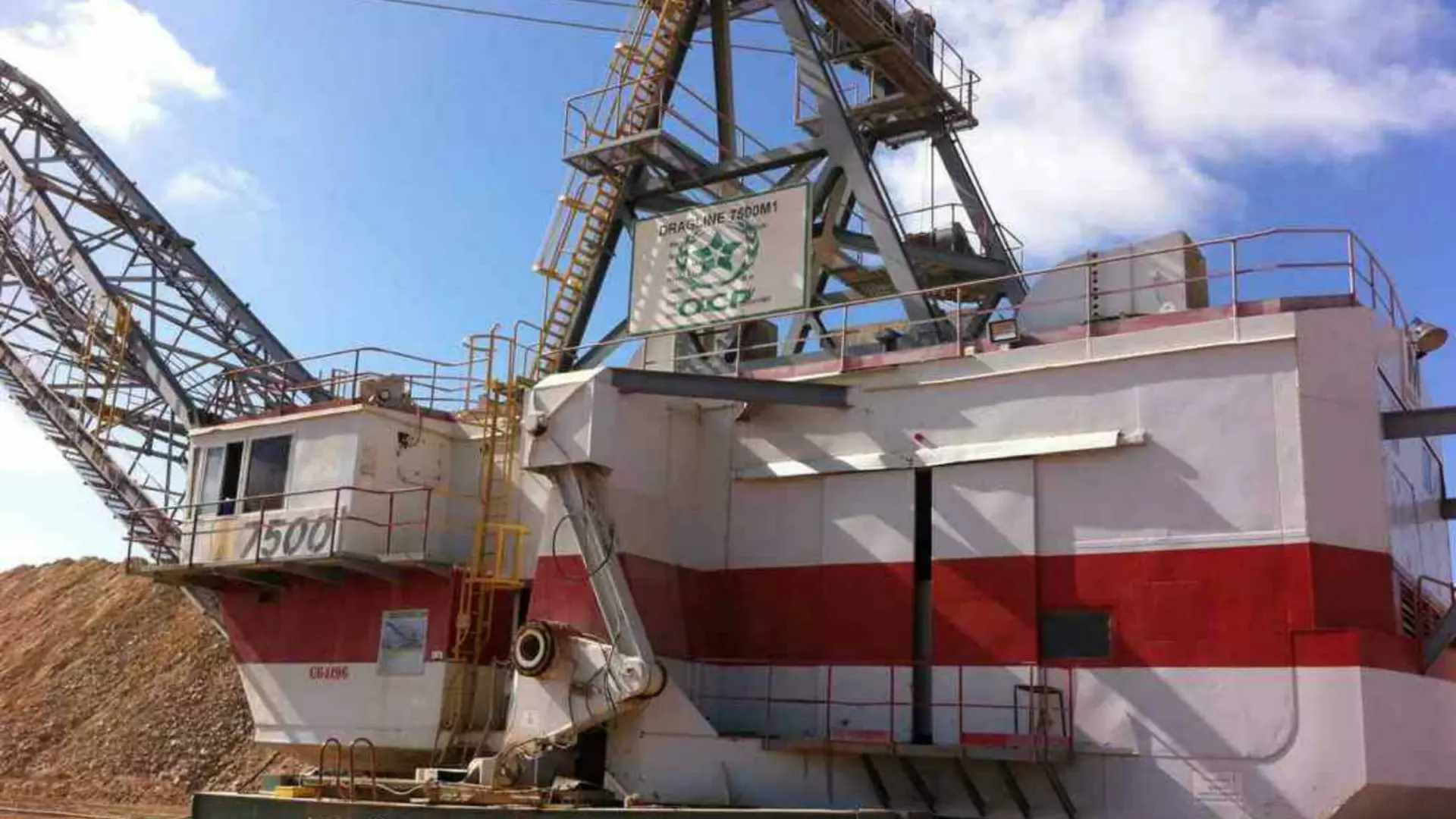
Global agriculture depends on three primary nutrients for synthetic fertiliser: nitrogen, potassium and phosphorus. Nitrogen can be manufactured industrially from air. Potassium and phosphorus cannot. They must be mined from finite geological deposits distributed unevenly around the world. Morocco, together with the disputed territory of Western Sahara that it administers, holds the majority of the world’s known phosphate rock reserves. Every country that grows food using phosphate fertiliser, which is to say nearly every country practising industrial agriculture, has some exposure to Moroccan phosphate supply, directly or through the global price it helps set. That concentration, and the processing industry Morocco has built on it, gives the country a quiet structural influence over global food production.
Phosphate and industrial strategy
OCP Group, Morocco’s state-controlled phosphate company, is one of the world’s largest exporters of phosphate and phosphate-derived fertilisers. The Moroccan state has pursued that position with deliberate industrial strategy over several decades, investing in downstream processing capacity that converts raw phosphate rock into higher-value fertiliser products rather than exporting ore alone. Several of the continent’s mineral-exporting states have struggled to replicate that value-capture strategy with cobalt or lithium. The distinction matters. Morocco did not simply have the geological luck of sitting on a large reserve. It built the processing capacity to convert that reserve into a strong position in mining and downstream processing.
Morocco did not simply have the geological luck of sitting on a large reserve. It built the capacity to convert that reserve into a strong position in mining and downstream processing.
What reserve estimates mean
Estimates from the United States Geological Survey and industry analysts have for years placed Morocco’s share of global phosphate rock reserves at well over half of the known total, with the next-largest holders (China and a scattering of other producers) controlling reserve bases an order of magnitude smaller. A large reserve share does not equal the same share of current production or exports. Other producers can supply phosphate, while the costs and speed of substitution matter during disruption. Nitrogen fertiliser production can, in principle, expand wherever natural gas is available. Phosphate is mined from a finite, geographically concentrated deposit, and Morocco holds most of what is left.
Fertiliser supply and food security
Phosphate lacks the geopolitical drama of oil, the climate salience of lithium, or the security anxiety of rare earths used in weapons systems, which is why its concentration receives comparatively little strategic analysis despite arguably higher stakes. A sustained disruption to phosphate supply does not raise fuel prices or delay a smartphone shipment. It threatens the fertiliser inputs global food production depends on, with consequences that show up in crop yields and food prices after a lag. When global fertiliser prices spiked sharply following the 2022 disruption to Russian and Belarusian potash and nitrogen exports, phosphate supply (concentrated in Morocco, China and a small number of other producers) was part of the same tightening squeeze on global agricultural inputs. That dimension of the crisis was discussed far less than the grain and energy angles that dominated coverage.
Morocco has, so far, used its position primarily as commercial leverage rather than overt political leverage, expanding OCP’s customer base across Africa, Latin America and Asia and positioning the country as an indispensable supplier to food-insecure regions rather than as a source of geopolitical pressure. That restraint is itself notable and could change. A country holding this degree of concentration in an input this essential possesses a form of structural power that does not require exercising it aggressively to matter. The African Union and African governments dependent on imported fertiliser have an interest in understanding phosphate concentration as clearly as they understand oil dependency. A continent still working to close its own food-security gap is, in this particular input, heavily reliant on a single African country’s reserves and processing capacity functioning smoothly. That reliance is worth naming even when it runs through African rather than foreign hands.
There is also a continental dimension that gets flattened when phosphate is discussed only as a Moroccan asset. A resource this concentrated, in a country willing to invest in the processing capacity that turns geology into leverage, demonstrates a pathway other African mineral exporters have talked about pursuing and rarely executed with the same discipline: build the downstream industry before the reserve is depleted or the market moves elsewhere. Whether that model gets studied seriously by the countries sitting on the continent’s cobalt, lithium and rare earth deposits, or dismissed as a one-off advantage of Moroccan geology, will say a great deal about how much of the current minerals rush changes who captures the value it generates.



