The world’s energy mix is changing, but unevenly, and Africa must navigate that unevenness rather than passively inherit it. Solar and wind continued to expand in 2025, and the IEA reports that global renewable generation virtually matched coal that year. Clean energy investment is rising, drawn by falling technology costs and energy security motives that operate independently of climate commitments, although costs and deployment still depend on markets and policy. Yet 2025 also confirmed that fossil fuels are far from finished. Global demand for natural gas rose, and oil-producing nations, including several in Africa, continued investing in new extraction, chasing short-term revenue certainty despite long-term demand risk.
For Africa, this dual reality poses a dilemma that cannot be resolved through the frame of either Western climate advocacy or fossil industry lobbying. Both, for different reasons and with different urgencies, ask African governments to make choices that serve external interests rather than continental ones. The energy transition Africa needs is not the energy transition that is being designed by European net-zero frameworks, which presuppose grid infrastructure, financial depth and an industrial base that do not exist uniformly across the continent. Nor is it the fossil-led development path that oil and gas revenue models implicitly propose, which leaves African economies exposed to stranded asset risk as global demand curves shift under the pressure of accelerating renewable deployment elsewhere. Africa’s energy choice is a sovereign industrial strategy question, and the analysis must start from African conditions rather than external frameworks.
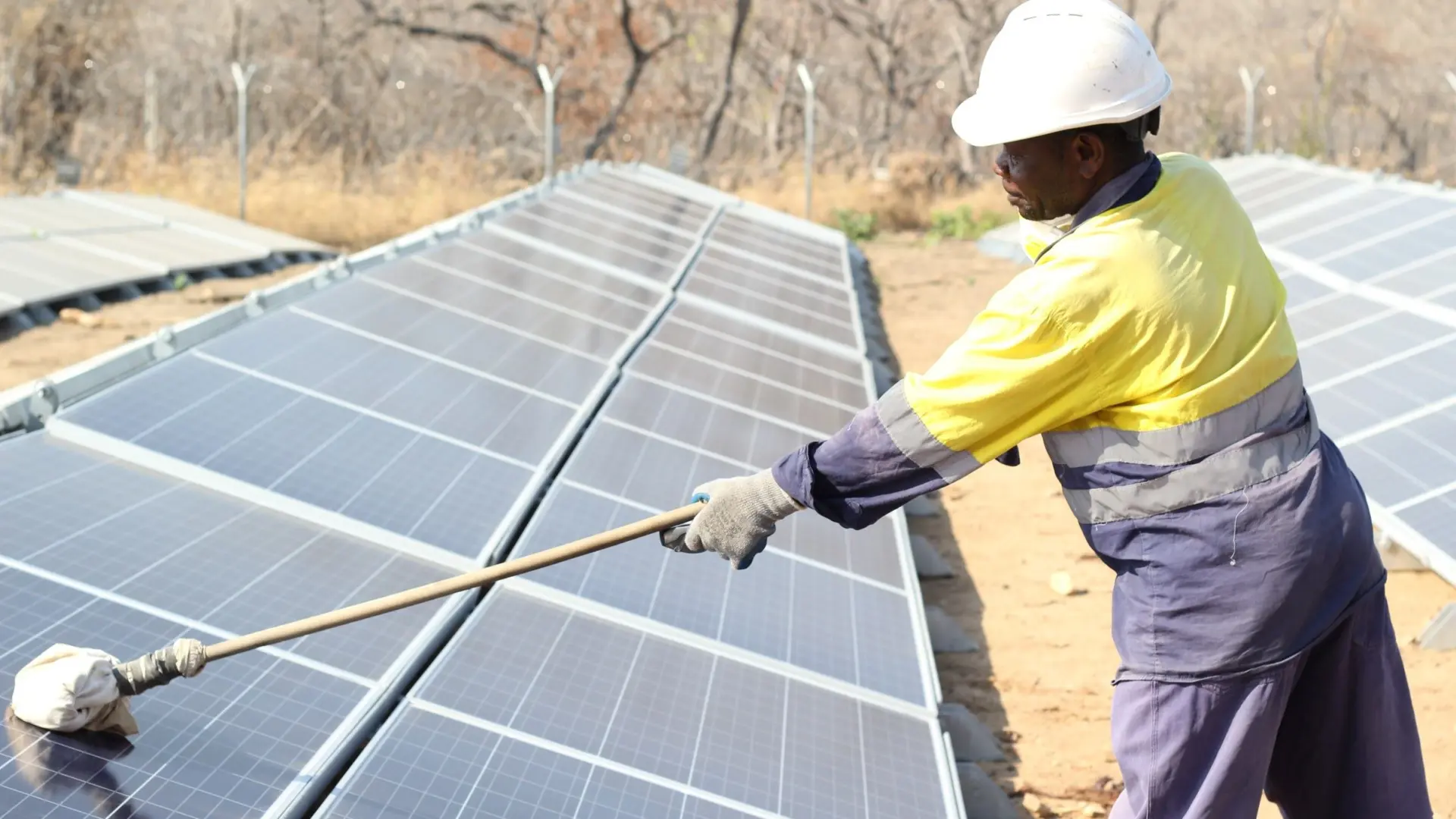
The renewable opportunity for Africa is not primarily about climate compliance. It is about energy sovereignty. A continent where hundreds of millions of people lack electricity access and many others face unreliable supply, where businesses run generators because grid power is unreliable, where hospitals operate critical equipment on diesel because the national grid cannot guarantee uptime, where manufacturing competitiveness is undermined by high energy costs, has a structural interest in the energy technology revolution that is independent of any climate commitment. Solar and wind can be competitive sources of new generation. Comparisons must include financing, grid integration, storage and the reliability required by customers. Financing costs, grid infrastructure, technology choices and policy stability are among the barriers to faster deployment. All are addressable with the right institutional architecture and the right negotiating posture in international capital markets.
Africa does not need the West’s energy transition. Africa needs its own, one designed for African grid conditions, African financing realities and African industrial development objectives. Those are not the same thing, and confusing them serves no one except those with a stake in Africa remaining a consumer of other people’s energy frameworks.
The fossil fuel dimension is more complex than either advocates or opponents acknowledge. Several African economies (Nigeria, Angola, Libya, Algeria, Mozambique and an expanding list of new and prospective producers) derive significant fiscal revenue from hydrocarbon extraction. That revenue currently finances public services, debt service and public investment that no alternative source is yet positioned to replace at equivalent scale. An abrupt energy transition that eliminates this revenue without building replacement fiscal architecture first would not decarbonise African economies. It would destabilise them. Several African producer governments have argued for a managed phase-down in climate negotiations. That pathway monetises existing hydrocarbon assets over a declining timeline while building the renewable infrastructure and diversified economic base that reduce dependence on extraction revenues. It is not a rejection of climate ambition. It is an assertion that Africa’s transition must be sequenced according to African social and fiscal realities, not the political timelines of European parliaments.
The bottlenecks constraining faster renewable deployment are precisely the terrain where international climate finance should be concentrated. They include weak transmission grids, financing cost premiums that make African solar projects more expensive than equivalent projects in Europe despite superior solar resources, and policy uncertainty that deters long-term private capital. Blended finance structures that reduce the risk premium for African renewable investment, transmission infrastructure financing that creates the grid backbone for distributed generation, and regional power trading arrangements that allow surplus renewable capacity in one country to serve deficit demand in its neighbours are the instruments that close the gap between Africa’s renewable potential and its renewable reality. These are not charity mechanisms. They are corrections for a market failure that has left African energy infrastructure underfinanced and its financing overpriced.
Africa’s energy crossroads is a moment for decision, not deference. The continent has the solar radiation, the wind resources, the geothermal capacity and the critical minerals that underpin every major economy’s net-zero technology stack. It also has the sovereign right to monetise its existing fossil assets on a managed timeline of its own determination. The energy transition Africa needs is one that expands electricity access, builds industrial capacity, generates fiscal space and reduces long-term climate vulnerability. It must do so simultaneously, not sequentially. That is a harder engineering problem than either the renewable transition advocates or the fossil defenders propose. It is also the only honest description of what Africa actually requires.



