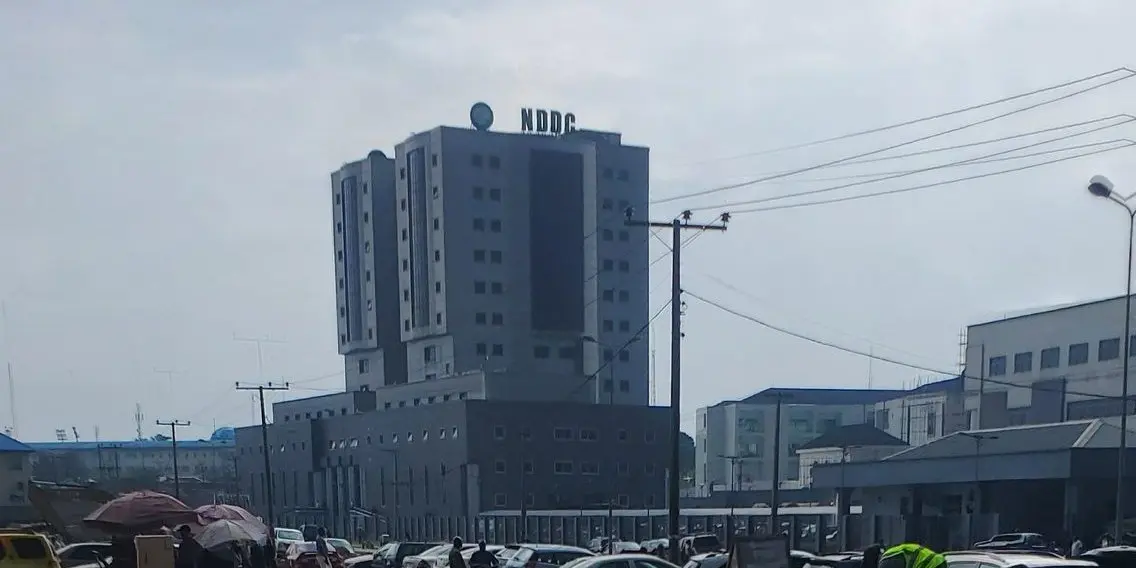
The Niger Delta produces the crude oil on which Nigeria’s export trade rests. Crude made up 74.45 per cent of the value of Nigeria’s exports in the first quarter of 2019, according to National Bureau of Statistics figures reported by Business Post. Yet almost 20 years after the Niger Delta Development Commission (NDDC) was set up to develop the region, the region remains poor, and the commission has lurched from one controversy to the next.
Many people blame the federal government and the multinational oil companies for the region’s underdevelopment, and they may not be far from the truth. This analysis argues that the agencies and the ministry created to develop the Niger Delta share the blame, because political interference and the misuse of contracts have turned the NDDC into a source of patronage rather than of development.
A commission built on failed predecessors
President Olusegun Obasanjo’s government created the NDDC in 2000. Its law names nine member states: the six states of Nigeria’s South-South, Akwa Ibom, Bayelsa, Cross River, Delta, Edo and Rivers, and three other oil-producing states, Abia, Imo and Ondo. Under section 7 of the NDDC Act, the commission is to formulate policies and guidelines for the development of the Niger Delta, have the region surveyed to establish what its physical and socio-economic development requires, and prepare master plans and schemes for that development, with estimates of what they will cost.
The NDDC replaced the Oil Mineral Producing Areas Development Commission (OMPADEC), which General Ibrahim Babangida’s government set up in 1992. In February 1996 OMPADEC’s senior management was dismissed amid allegations of corruption and mismanagement, and by the time of General Sani Abacha’s death in June 1998 the commission was moribund, Human Rights Watch recorded in its 1999 report The Price of Oil. A parallel body, the Petroleum Special Trust Fund (PTF), was given a mandate to fund projects in all parts of the federation, and members of the southern minority groups saw it as an effort to undermine OMPADEC’s share of oil wealth.
The derivation principle was meant to return more oil money to the producing states. The constitutional conference convened under Abacha wrote into its 1995 draft constitution that derivation should be “not less than 13 percent” of federation revenue from natural resources, and the 1999 Constitution, under which Obasanjo governed, kept 13 per cent as the minimum. In September 2008 President Umaru Yar’Adua added a Ministry of Niger Delta Affairs. Despite all these interventions, the region remains poor and undeveloped.
Abandoned projects and swollen contracts
By 2019 the commission’s own supervising minister was describing it as a failure. In an interview with the Nigerian Television Authority (NTA), Godswill Akpabio, then Minister of Niger Delta Affairs, said the NDDC had become known for abandoned projects and that political interference had stopped it from working as it should, TheCable reported on 28 October 2019.
“We have also had a lot of political interference, people have not allowed NDDC to work as it ought to, people coming with ideas not to move the region forward but to move their pockets forward. It has always been so,” he said. “We currently have about 12,000 abandoned projects across the nine states of the Niger Delta.”
He said no NDDC road could last even two years, and that people had been treating the commission “as an ATM, where you just walk in there to go and pluck money and go away”. He defined the problem broadly: “Even the idea of giving out a job to somebody who does not have the requisite skills is corruption on its own. The idea of bloating the contract is also corruption. Even collecting money and abandoning the site is also corruption.”
Independent monitoring had found the same pattern. An assessment of NDDC projects the previous year across the region by two civil society groups, ANEEJ and LITE-Africa, funded by the United States Agency for International Development, found that 89 per cent of the projects assessed were in bad shape and unusable, did not exist, deviated from their contract description or were unfinished, Business A.M. reported in November 2019.
Contract costs were also under question. In October 2019 the Senate Committee on Public Accounts, chaired by Matthew Urhoghide, summoned the commission’s acting managing director, Enyia Akwagaga, over water hyacinth clearing and desilting contracts awarded between 2017 and 2019. Mr Urhoghide said N2.5 billion had been budgeted for the work but that the committee had heard more than N65 billion had been spent, and that it wanted to establish whether due process had been followed, Sahara Reporters reported.
Where the money comes from
The sums at stake are large. Section 14 of the NDDC Act gives the commission the equivalent of 15 per cent of the total monthly statutory allocations due to its member states from the Federation Account, 3 per cent of the total annual budget of every oil-producing company operating onshore and offshore in the Niger Delta, including gas-processing companies, and half of the member states’ share of the Ecological Fund.
Budget Office figures compiled by The Nation in 2020 put federal budget allocations to the NDDC from 2004 to 2019 at N769 billion. In August 2016 Ibe Kachikwu, then Minister of State for Petroleum Resources, said there was nothing on the ground to justify the more than $40 billion that had accrued to the Niger Delta over the previous 12 years, mainly through the oil companies, the NDDC, 13 per cent derivation and other intervention funds, ThisDay reported. He called for an audit. The commission could not point to results on the ground to match these sums.
Even collecting the money became a business. In November 2019 Gbene Joi Nunieh, the acting managing director who headed a new interim management committee, said the commission had been paying a consulting firm N1 billion a month, a 3 per cent “agent fee”, to collect its dues from the international oil companies, which could instead pay directly into the NDDC’s account at the Central Bank of Nigeria. Another company took 3 per cent whenever the oil companies paid. She said the payments had been suspended, and that files were waiting on her desk for payment to companies belonging to one individual. “How can someone have 87 companies waiting for payment?” she asked, Business A.M. reported.
The forensic audit and the fight for control
In October 2019 President Muhammadu Buhari ordered an immediate forensic audit of the NDDC’s accounts. He said on Twitter that the step was needed for accountability and probity, and that Nigerians wanted to know how the billions of naira allocated to the commission between 2001 and 2019 had been used, Nairametrics reported.
Mr Akpabio appointed a three-member interim management team, with Ms Nunieh as acting managing director, to run the commission for six months and oversee the audit, according to The ICIR. Mr Buhari had also nominated a new 16-member governing board. On 5 November 2019 the Senate confirmed 15 of the nominees, with Pius Odubu as chairman and Bernard Okumagba as managing director, and declined to confirm the 16th, Ms Nunieh, because she had not appeared for screening, ThisDay reported. The commission was left with a confirmed board awaiting inauguration and a ministerial interim team in charge.
The minister’s own orders drew criticism. On his first official visit to the NDDC in Port Harcourt in September 2019, Mr Akpabio directed that “The N1.9 billion for water hyacinth job done by the youths of Niger Delta should be released by NDDC from Monday”, Vanguard reported. The Movement for the Survival of the Ijaw Ethnic Nationality in the Niger Delta (MOSIEND) called the directive a “misplaced priority” and asked him to withdraw it, Niger Delta Today reported on 28 September 2019.
A metaphor for the Nigerian problem
In the author’s view, the NDDC is a metaphor for the Nigerian problem. Its own minister and its acting managing director described an agency that politically connected people treated as a cash machine, a place to collect money for personal needs rather than to develop the region. The same doubts hang over other federal interventions in the delta, as Africa 360°’s analysis of the Ogoniland clean-up set out. The Niger Delta will remain poor and underdeveloped unless corruption in agencies such as the NDDC is tackled effectively and visionary leaders are put in charge.



