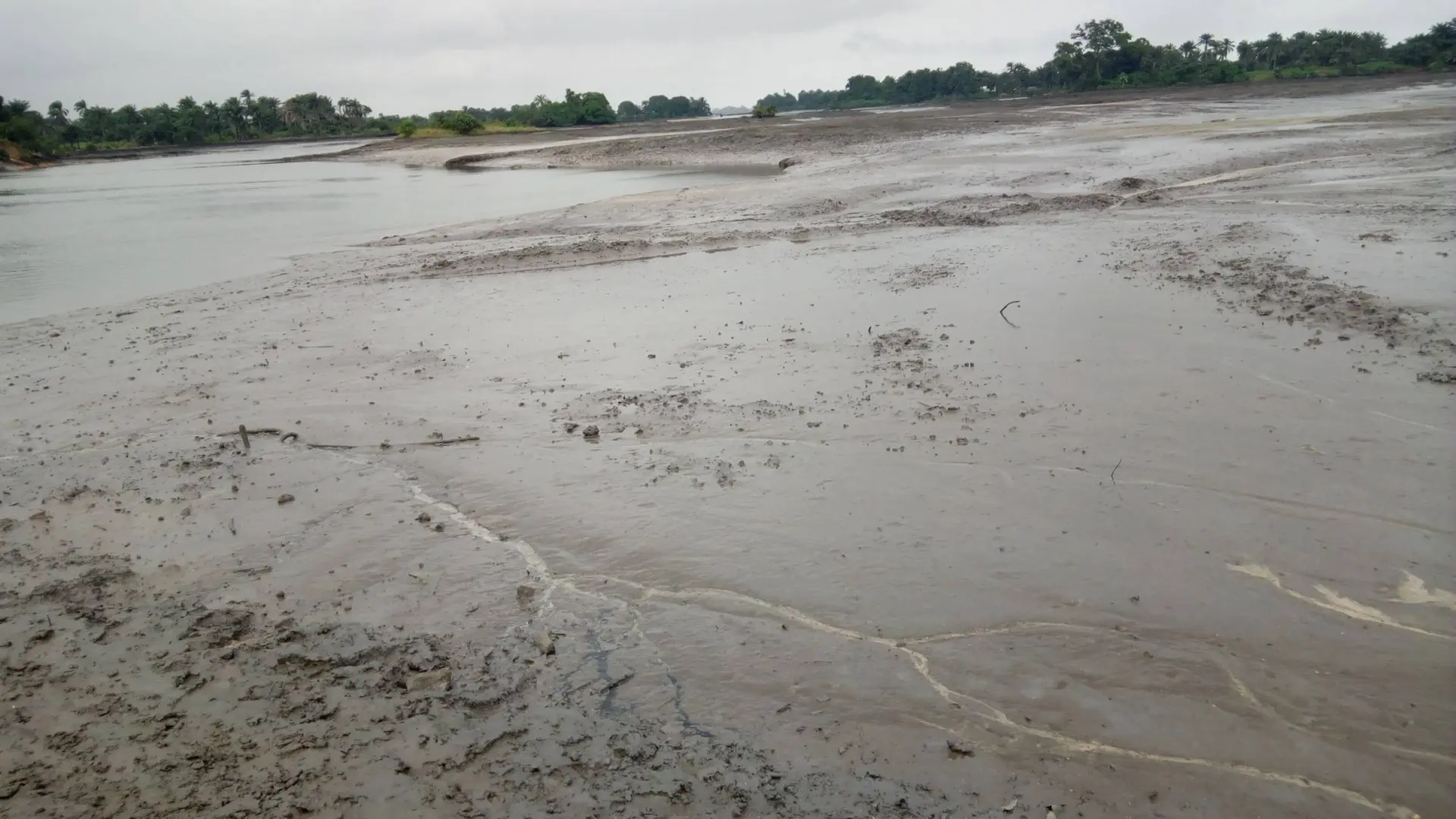
In August 2011 the United Nations Environment Programme (UNEP) told Nigeria that families in Ogoniland were drinking water laced with benzene, a known carcinogen, and that the land needed the largest clean-up of its kind. Eight years later, many of those families still buy their water elsewhere if they can afford it, and the first remediation contracts have gone to companies that were set up to farm poultry, sell cars and mill palm oil.
Between 1976 and 1991, some 2,976 oil spills released about 2.1 million barrels of oil in Ogoniland, where Shell was the operator. Oil extraction has stopped, but the land is still polluted by spills from pipelines that cross Ogoniland and by oil bunkering.
What UNEP found
In 2006 the federal government asked UNEP to carry out an environmental assessment of Ogoniland. The study was among the most thorough of its kind. UNEP’s team worked over a 14-month period at more than 200 locations. It surveyed 122 kilometres of pipeline, went through more than 5,000 medical records and held community meetings attended by over 23,000 people. It chose 69 sites for detailed soil and groundwater tests, ranging from 1,300 square metres at Barabeedom-K.dere in Gokana local government area (LGA) to 79 hectares at Ajeokpori-Akpajo in Eleme LGA. In all it analysed more than 4,000 samples, including water from 142 monitoring wells drilled for the study and soil from 780 boreholes.
UNEP handed its report to the federal government on 4 August 2011. It confirmed what the Ogoni people had been saying all along. Pollution from more than 50 years of oil operations had gone further and deeper than many had assumed, and it had devastated Ogoniland.
The report found extensive oil contamination in rivers, creeks and groundwater, and high concentrations of hydrocarbons, including benzene, in outdoor air and drinking water. In at least 10 Ogoni communities, contaminated drinking water posed a serious threat to public health. In Nisisioken Ogale, a town in Eleme LGA in western Ogoniland, families were drinking well water with benzene at levels over 900 times the World Health Organization guideline. Samples from seven wells were at least 1,000 times above the Nigerian drinking water standard of three micrograms per litre. The site is close to a Nigerian National Petroleum Company pipeline.
The findings were so alarming that UNEP told residents to stop using water from all their traditional sources at once. It said the government should begin a clean-up that could take 25 to 30 years and would be one of the biggest soil and water remediation exercises ever attempted.
UNEP said the contamination at Nisisioken Ogale called for emergency action ahead of all other remediation. It recommended an initial capital injection of $1 billion, to be paid by the Nigerian government and the oil companies, to fund the work.
Successive governments ignored that urgency, as Premium Times later put it, while millions of lives were at risk. A first version of the Hydrocarbon Pollution Remediation Project (HYPREP) was set up under President Goodluck Jonathan, but no clean-up began. Only on 2 June 2016, in President Buhari’s first term, was the exercise revived. Vice-President Yemi Osinbajo, standing in for Mr Buhari, flagged off the Ogoniland clean-up at Bodo, and HYPREP was relaunched to coordinate the work. Nothing significant followed until February 2019, when HYPREP said it had handed sites to 16 contractors.
Violations of the UNEP report
UNEP listed emergency measures to be taken before anything else. All drinking water wells where hydrocarbons were found should be marked, and people told of the danger. Households whose drinking water was affected should get an adequate alternative supply. People in Nsisioken Ogale who had been drinking water with benzene should be entered on a medical registry and their health assessed and followed up.
The other measures were a survey of all drinking water wells near those where hydrocarbons had been found; signs warning people not to fish, swim or bathe where hydrocarbons were seen on surface water; advice to families whose rainwater tested positive for hydrocarbons not to drink it; and a public awareness campaign warning artisanal refiners that their work was damaging their health.
Despite these recommendations, many people still drink, bathe and fish in contaminated water. Those who can afford it buy drinking water far from their community.
HYPREP’s project coordinator, Dr Marvin Dekil, insisted the agency had followed the emergency measures. It had run medical outreach in 2017 and 2018 in Gokana, Tai, Khana and Eleme local councils, where patients with various conditions were treated and some had surgery. By the federal government’s own count, the outreach treated more than 20,000 cases and carried out over 400 surgeries. Safe drinking water was another matter.
The federal government promised that the report would be implemented holistically and with “transparency and accountability”. Yet HYPREP moved on to clean up some contaminated sites without first dealing with these emergencies.
Who got the contracts
In February 2019, HYPREP announced that 16 companies had won contracts for the first phase of remediation in Ogoni after what it called a competitive bidding process. The 16 companies were:
- Louizont Ferretti Enterprises Ltd
- Environmental Resources Managers Limited
- Asonic Associates Limited
- Mosvinny Nigeria Limited
- Rey & Reina International Limited
- Pacrim Engineering Ltd
- Basic (Nigeria) Technology Limited
- Newpal Nigeria Ltd
- Amazing Environmental Solutions International Limited
- Earthpro Unique Integrated Ltd
- Nautilus (Nigeria) Engineering and Construction Limited
- Tiptree Intertrade Nigeria Limited
- Navante Oil & Gas Company Limited
- Secura Investments Limited
- Shamsa Resources and Services Ltd
- Odun Environmental Limited, formerly Global Environmental Management Limited
A Premium Times investigation published on 5 May 2019 found that almost all 16 had no experience whatsoever in cleaning up oil spills. Their registration papers at the Corporate Affairs Commission showed most had been set up for poultry farming, car sales, textiles and fashion, palm oil production, building design or construction. Only one had anything remotely to do with oil spill remediation, and none appeared to meet HYPREP’s own requirement of at least five years’ experience in hydrocarbon remediation.
The paper gave examples. Basic Nigeria Technology Limited, hired for the Oboolo site, was registered to mill and refine palm oil and other edible oils. Mosvinny Nigeria Limited, given a site in Debon, was registered for farming, poultry, livestock and animal husbandry. Louizont Ferretti Enterprises Ltd, contracted for Buemene Korokoro, listed oil field equipment supply alongside car dealing, a fashion house, textiles and general trading. Rey & Reina International Limited, given another section of Debon, was set up to sell and distribute general goods. Shamsa Resources and Services Ltd, a Maiduguri-based management training and development consultancy, was also given work at Debon.
Pacrim Engineering Ltd, allocated a site at Nkeleokan Alode, seemed to be the only company set up for oil spill recovery and clean-up. But it was incorporated only on 25 June 2018, more than two months after HYPREP advertised the tender.
Premium Times also learnt that the Ministry of Environment had given contracts for project management, communication and public relations, and monitoring and evaluation to Associates Ltd and A.G. Partnership Ltd, Alliance Boots Limited, and Foxtrot O & G Company Nigeria Limited respectively. HYPREP did not answer the paper’s questions about why it chose the firms.
After the investigation, the Movement for the Survival of the Ogoni People (MOSOP) called for the governing body of HYPREP to be dissolved. MOSOP’s president, Fegalo Nsuke, reacting to the Premium Times revelations, urged President Buhari to dissolve the governing council to save the clean-up.
The state of the Ogoniland cleanup
Dr Dekil told Premium Times that HYPREP had received $180 million of the $1 billion UNEP recommended, and that N714.45 million, a 15% advance on the remediation work, had been paid to the companies.
HYPREP later said the project had started in earnest, with 21 contractors at work on sites across the four local government areas of Ogoni.
Other reports tell a different story. Many locals are frustrated with how the exercise has been run, and distrust runs deep. “Everyone is angry because we are being treated as pawns on the chessboards of politicians,” Yamaabana Legborsi, president-general of the Ogoni Youth Federation, told Premium Times. Another youth leader, Stanley Kpee, told the paper that locals no longer saw visitors as sympathisers but as people using them to gain global attention, and that a tour of an affected community would usually cost “good cash” before it was granted.
Recent actions by the federal government have not helped either. Instead of focusing on repairing the ecological disaster and replacing the livelihoods people have lost, it has ordered the Nigerian National Petroleum Corporation and its subsidiary to take over the operation of the Ogoni oilfield, OML 11, from Shell. It is worrying that the government wants to resume oil extraction in Ogoniland when the tonnes of pollution on the land have yet to be cleaned up.
For all the fanfare of the 2016 flag-off, Ogoniland remains a wrecked environment and a disaster zone. Whatever efforts have been made, the clean-up has been marred by controversy over how its contracts were awarded. Many people cannot farm or fish, and research has linked nearby oil spills to higher newborn death rates in the Niger Delta, decades after the execution of Ken Saro-Wiwa and the eight others.
In the author’s view, a clean-up run this way makes a mockery of the struggle the Ogoni people fought and are still fighting.
What happened next
By mid-2026, ten years after the flag-off, HYPREP’s coordinator, Prof Nenibarini Zabbey, said the agency had closed out 30 of the 65 sites UNEP investigated and recommended for remediation, with 17 medium-risk sites under remediation and 18 high-risk sites still being characterised. He said 49 communities had been connected to water schemes, ThisDay reported in June 2026. HYPREP also said in July 2026 that it had restored 560 hectares of mangroves. These are the agency’s own figures, and ThisDay did not report independent checks of them.



