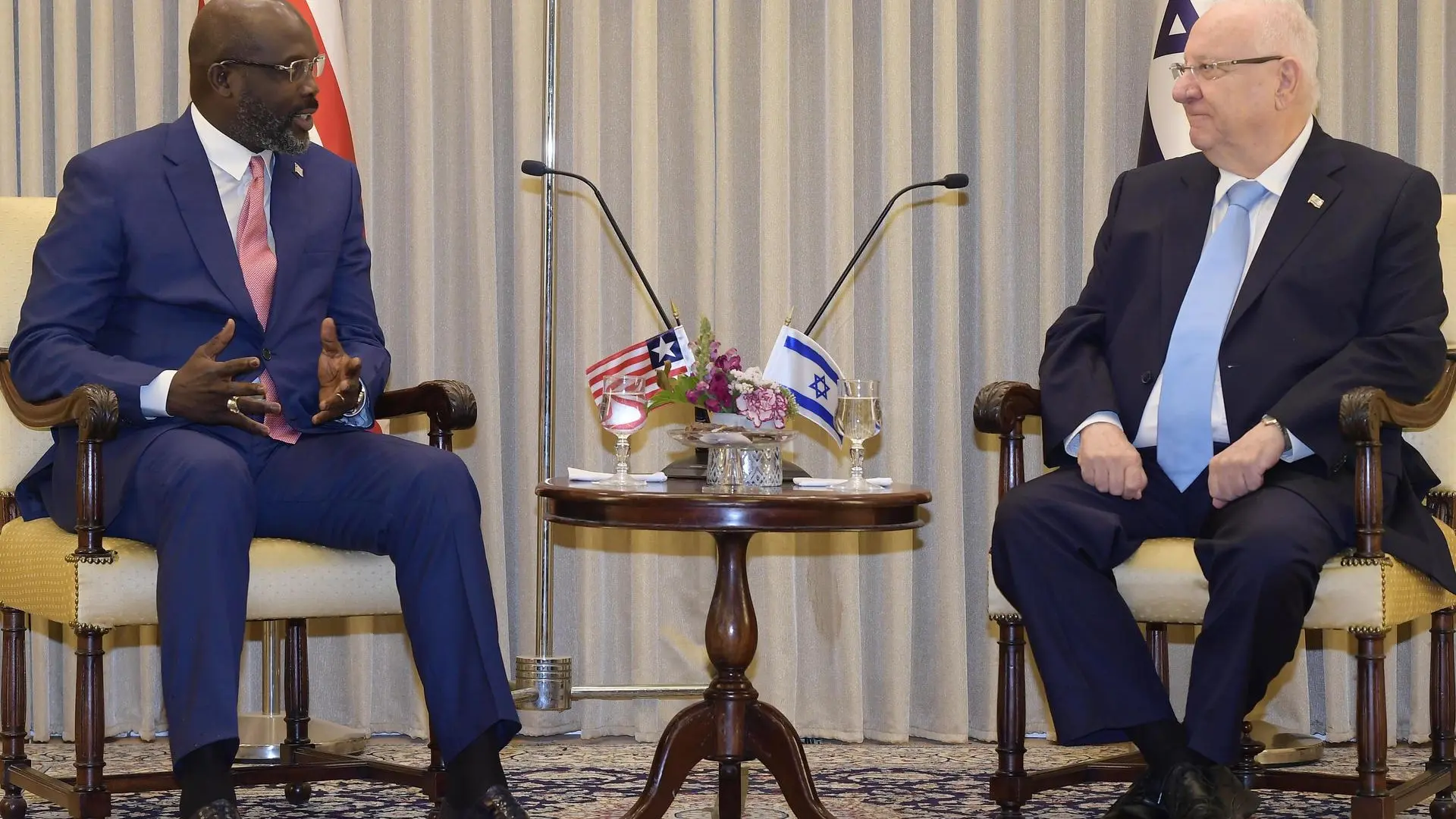
George Weah arrived at the presidency of Liberia with something no other head of state possessed, a Ballon d’Or, and a country still recovering from war. His presidency tested whether sporting fame could translate into the ability to govern that country.
Weah was born on 1 October 1966 in Clara Town, one of Monrovia’s poorest districts. From street football in Clara Town he went on to AC Milan, Paris Saint-Germain and Chelsea, and in 1995 he was named FIFA World Player of the Year and became Africa’s first and, to date, only winner of the Ballon d’Or. He was not simply Liberia’s greatest athlete. For a generation of Africans he was proof that belonging to the continent did not rule out reaching the summit of the world game.
When he was inaugurated as Liberia’s 25th President in January 2018, the weight of expectation was disproportionate and entirely understandable. Liberians had survived two civil wars, an Ebola outbreak and decades of institutional collapse. They wanted from Weah not merely competent government but restoration.
The distance between the pitch and the palace
The distance between sporting genius and executive competence is not a gap in personal character. It is a gap in institutional context. Football rewards individual brilliance within a team system. Governance rewards the capacity to build, sustain and direct institutions that function independently of any individual’s brilliance. Presidential leadership demanded tools (legislative negotiation, technocratic management, fiscal discipline and the construction of a functioning civil service) that no football career could have provided.
His administration faced Liberia’s structural realities without the institutional resources to address them. Public finances were fragile, the civil service had been hollowed out by years of conflict and underfunding, and the country’s infrastructure was among the least developed in West Africa.
Football rewards individual brilliance within a team system. Governance rewards the capacity to build institutional systems that function independently of any individual’s brilliance.
What his presidency meant for Liberia
Weah’s presidency produced real achievements: free tuition for public university students, investment in roads, and civilian government that maintained Liberia’s hard-won democratic stability. A country that had spent fourteen years at war needed an administration that did not become another source of political crisis. On that measure, the preservation of constitutional order, Weah’s government delivered.
The criticisms were also real. Corruption allegations against members of his administration undermined his anti-corruption commitments. Economic growth was too weak to reduce the poverty that defined daily life for most Liberians. Questions about his government’s management of the economy, including a controversy over missing central bank currency shipments, generated donor concern and political turbulence.
The larger pattern his story illustrates
Weah’s journey carries unusual cultural weight because of his Ballon d’Or and his standing across the continent. It raises a broader question about popular figures from outside professional politics who reach the executive: whether democratic systems that reward celebrity are serving citizens or performing sentiment.
His presidency also shows the mismatch between the scale of popular expectation placed on individual leaders and the conditions in which they must govern. Liberia’s difficulties are not a Weah problem. They are an institutional inheritance. He governed a country whose public systems were decades behind the ambitions of its people, with limited fiscal space, dependence on foreign aid and a population whose experience of the state had been overwhelmingly violent.
When Liberians voted him out of office in 2023, handing the presidency to his rival Joseph Boakai, they were not rejecting the man who had given them so much pride. They were exercising the democratic right to demand more from their government. The handover was proof that Liberia’s democratic institutions could transfer power peacefully, and that the country he loved was capable of more than any single leader could deliver.



