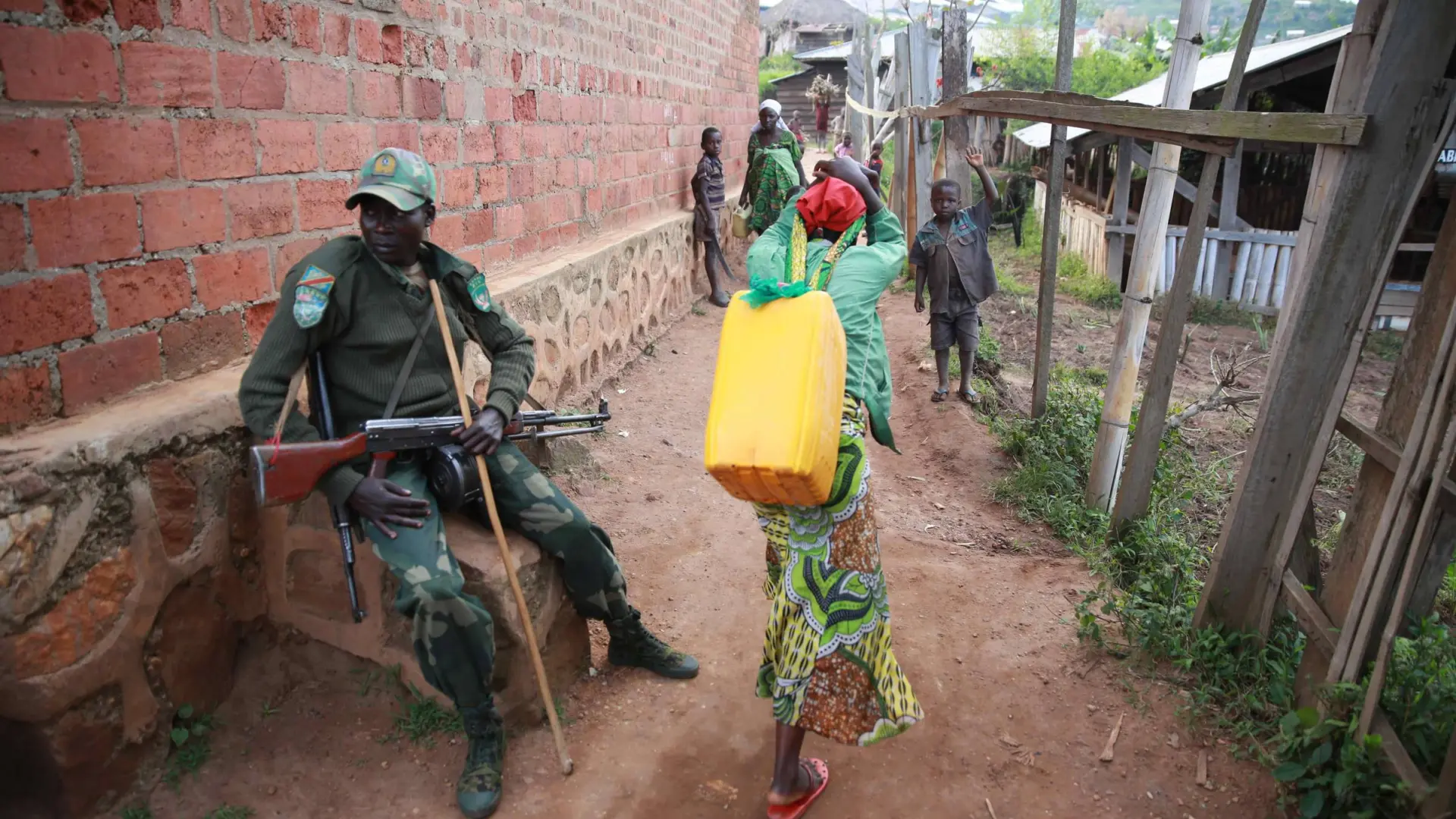
The Democratic Republic of Congo intends to raise a paramilitary force whose job is to guard its mines, the one thing the country cannot afford to lose control of. Reported this month, the plan would have the General Inspectorate of Mines build a unit to protect mine sites, ore-transport routes, processors and border corridors, at a projected cost of up to 100 million dollars, with the possibility of deploying as many as 20,000 personnel over two years. It is being organised under a strategic partnership that includes the United States and the United Arab Emirates. On paper it reads as an internal security measure. In structure it is something more consequential, a demonstration of how the terms of Africa’s mineral wealth are now being set.
The Congolese plan does not stand alone. It is the operational edge of a broader arrangement agreed with Washington in December 2025, whose joint steering committee has begun designating strategic assets for preferential access. Across the continent the same template is spreading. In the Sahel, Washington has floated counter-terrorism support to the military governments of Mali, Burkina Faso and Niger in exchange for access to gold, lithium and uranium, terrain where Russia’s Africa Corps already trades protection for mining concessions. China, the incumbent buyer across much of the cobalt and copper belt, holds the value chains that convert the raw ore into batteries and magnets. Three external powers make one recurring offer. They provide security in return for minerals.
What makes the bargain distinct from ordinary foreign investment is what sits on each side of the exchange. The state offers access to the assets that anchor its future revenue. In return it receives help securing those same assets, help it accepts because it cannot supply the security itself. The arrangement therefore does two things at once. It stabilises extraction, and it makes the party most interested in the minerals a stakeholder in who holds force around them. Protection and extraction stop being separate functions and fuse into a single system, one increasingly designed by the buyer rather than the seller.
A state’s control over legitimate force is part of its authority over its territory. Mineral-for-security agreements can erode that control when commercial access is tied to the financing or command of protective forces. External support need not transfer sovereign authority, but its terms matter: who directs the units, what powers they hold, and how national institutions can hold them to account.
Congo’s own conditions show why the demand for such deals is real rather than abstract. In the east, the Rwanda-backed M23 still holds towns and mining assets, and fighting has continued through July, with drones and heavy artillery used in civilian areas of South Kivu. A government facing an armed movement that finances itself from the same minerals the state wants to sell has an obvious incentive to accept outside help securing them. Insecurity also weakens the bargaining position that large critical-mineral deposits would otherwise give it. The incentive is genuine. So is the cost of meeting it this way.
The asymmetry is sharpest where the value is actually captured. The ore that leaves Congo, the Sahel or the copper belt is refined, alloyed and turned into cathodes, magnets and battery cells far from the pits it came from, and the margin sits at those downstream stages, not at the mine gate. A security guarantee that locks in access to the raw material without committing the partner to build processing on African ground therefore secures the least valuable link in the chain for the seller and the most valuable one for the buyer. The protection is real. The industrial development it is nominally traded for often is not.
Governments signing these deals still bear responsibility for oversight, security and the use of public revenue. Conflict and institutional weakness limit their options, but that makes scrutiny of the terms more necessary, not less.
There is a version of these arrangements that strengthens African states, one where security support is time-bound, where the paramilitary units answer to national command rather than partner interest, and where preferential access is paid for in processing capacity built on African soil rather than ore shipped out for value to be added elsewhere. Whether the deals now being signed resemble that version or its opposite is the question that will define the next decade of the continent’s mineral economy. The metals will be extracted either way. What is being decided in the fine print is who commands the ground they come from, and on whose terms the protection is provided.



