Burkina Faso’s claims to sovereignty, from renegotiating mining contracts to replacing French troops with Russian-linked partners, rest on a state that cannot administer large parts of its own territory. The visible drama of coup and counter-coup, of expelled ambassadors and banned French-language media, masks structural tensions that have been building for decades. The deepest test of sovereignty lies not in foreign partnerships but in the gap between the state on paper and the state in practice.
Gold and resource nationalism
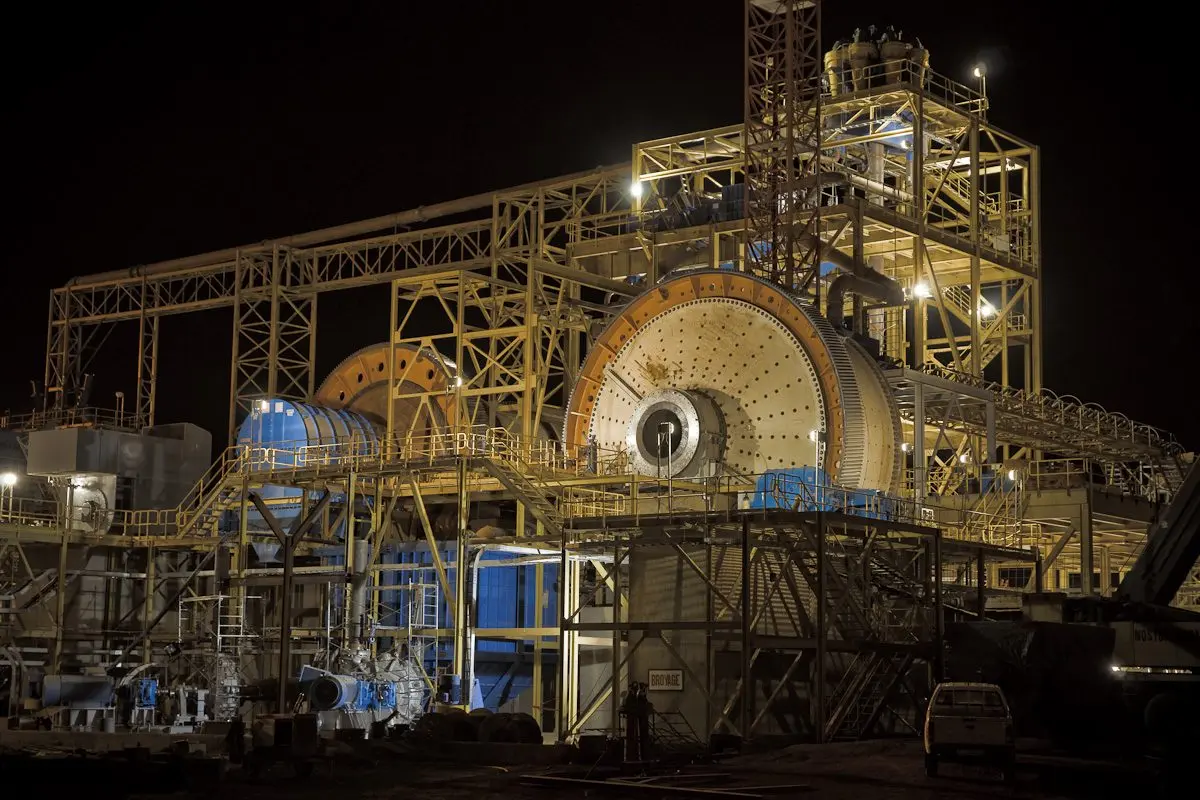
Burkina Faso sits on some of West Africa’s most significant gold deposits. Between 2016 and 2023, its gold exports grew from approximately $1.4 billion to nearly $5 billion annually, making the sector the country’s single largest source of export revenue. That wealth has not, historically, remained in Burkinabè hands. Industrial mining rights were predominantly held by Canadian, Australian and European companies operating under concession arrangements whose taxes, royalties and distribution of profits require scrutiny. The grievance this generated, the spectacle of gold leaving Burkina Faso while its citizens remain among the poorest in the world, was a ready-made political instrument for any government capable of picking it up. Traoré’s government picked it up. But the instrument cuts both ways.
The nationalisation and renegotiation of mining contracts, announced in 2023 and 2024, reflects a real impulse to recapture resource revenue for national development. It also reflects a geopolitical calculation. With Russian-aligned security partners replacing French troops, Burkina Faso needed to demonstrate economic sovereignty to match its diplomatic posture. Resource nationalisation, however, requires technical capacity, financing and security to produce lasting public benefits. Several mining operations have slowed or halted as the security situation has deteriorated, and artisanal miners and jihadist-affiliated groups operate in production zones that the state cannot secure.
The Russian relationship
The relationship with Russia is the most consequential strategic choice the current government has made, and the most fraught. Russia’s engagement in Burkina Faso, through the Africa Corps and other Russian-linked arrangements, resembles its engagement in Mali, the Central African Republic and Sudan. Traoré’s government frames this as the exercise of genuine sovereignty, choosing partners without colonial strings attached. Moscow frames it as African self-determination. Neither framing fully captures what is occurring.
Any exchange of security support for mining access would need to be shown in the agreements, payments and deployment patterns. It should not be assumed that every Russian-linked operation follows the same contract or protects only extraction sites. Changing security partners does not by itself build accountable domestic institutions, and the terms of Russian cooperation, with their effects on civilian protection and resource governance, should be assessed separately from the rhetoric of either government.
The reach of public institutions
The deepest challenge facing any Burkinabè government, military or civilian, is not the presence of foreign powers but the absence of state institutions capable of providing security, justice and basic services across the country’s territory. Large parts of the northern and eastern regions have been beyond the state’s reach for years. Jihadist groups affiliated with JNIM and ISGS have built parallel administrative structures in those zones, collecting taxes, settling disputes and providing rudimentary services where the state apparatus was too weak to do so.
Expelling French troops and inviting Russian operatives does not address this structural deficit. It changes the security partnership without changing the security architecture. The forces shaping Burkina Faso’s sovereignty struggle are not primarily external. They lie in the gap between the state on paper and the state in practice, and until that gap closes, the rhetoric of sovereignty will remain rhetoric. A flag raised over ministries with limited reach in some regions is a claim, not a fact, and the jihadist tax collector in the north has already filed the counter-claim. Sovereignty is settled in the territory a state can actually administer, not in the speeches it can broadcast, and on that measure Burkina Faso’s struggle has barely begun.



