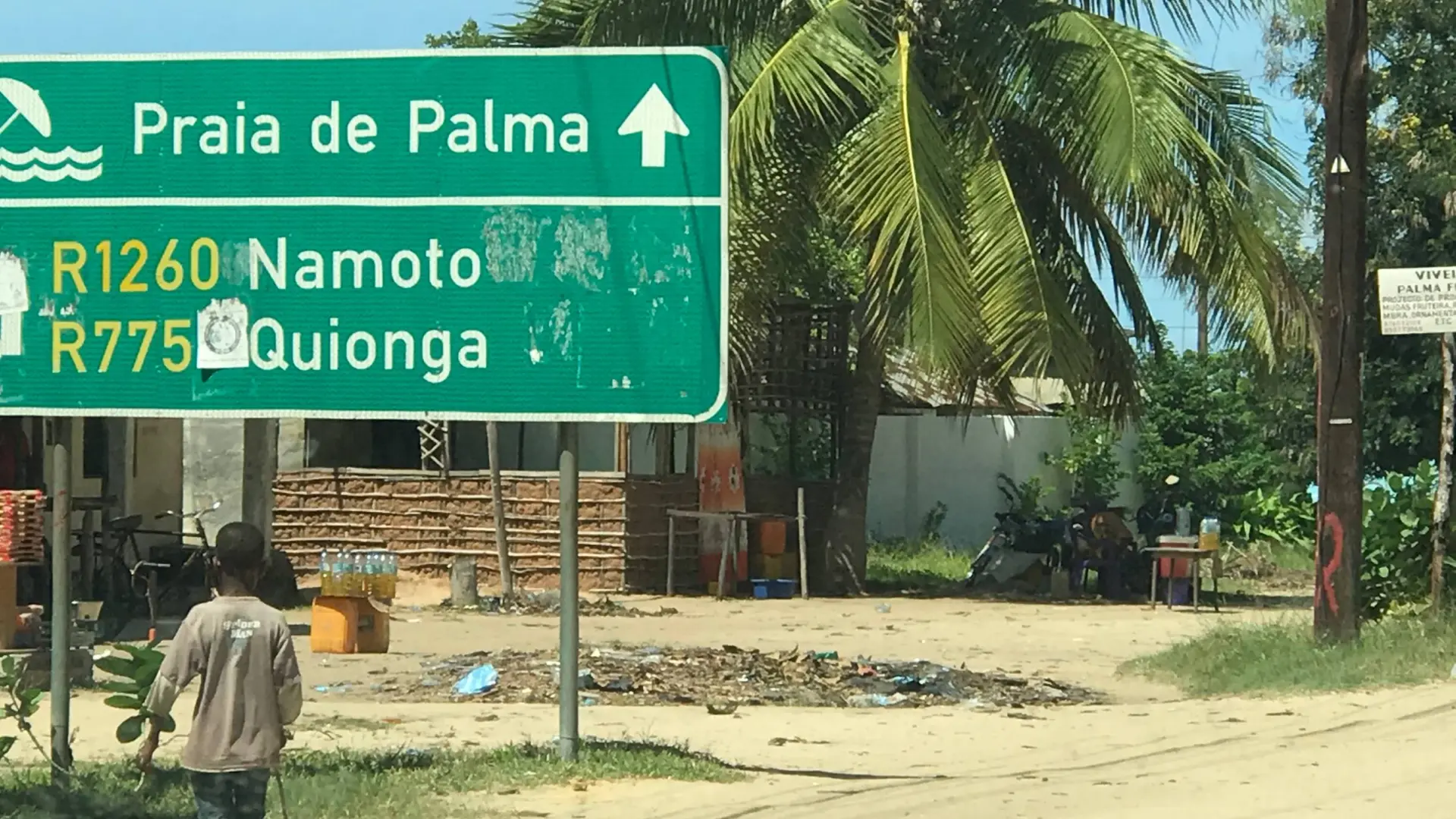
The word stabilising is doing a great deal of quiet work in northern Mozambique. As the multibillion-dollar liquefied natural gas projects on the Cabo Delgado coast move towards restarting, the province is increasingly described as having turned a corner, the insurgency contained, the security situation improved enough for the gas to flow. The record of attacks tells a less reassuring story. Attacks continue in districts such as Macomia, coastal insecurity persists, and insurgents have shown the reach to hijack boats and strike where they are not expected. Cabo Delgado is not returning to peace. It is settling into a pattern, and the pattern is being mistaken for a recovery.
The temptation is to narrate this as either war returning or war ending, and both framings fail. The insurgency that erupted in 2017, an Islamist militancy that drove hundreds of thousands from their homes and forced the suspension of the gas megaproject, was never fully defeated by the Rwandan and southern African forces that pushed it back from the project site. It was displaced, dispersed, and degraded, and it adapted. What exists now is not a finished conflict or a renewed one but a durable, lower-intensity insurgency that the state and its partners can suppress around the assets that matter to them and cannot eliminate from the territory as a whole.
That gap is the story. For investors and the government, stabilisation means a perimeter secure enough to operate within. For civilians outside it, the question is who controls the road and when it is safe to return to a village. The same word describes two incompatible realities, and the distance between them is where the next phase of this conflict will be decided.
Two definitions of stability
For the gas consortium and the Mozambican state, the metric of stabilisation is operational. Can the project site be secured, can workers and equipment move safely along defined corridors, can financing and insurance be obtained on the basis that the security risk is now manageable. By that metric, conditions have genuinely improved around the projects, which is why the restart is proceeding. A perimeter can be held, a corridor can be patrolled, and the revenue that Mozambique has staked its economic future on can begin to flow. This is a real achievement on its own narrow terms, and it is the version of stabilisation that reaches international headlines because it is the version that moves capital.
Stability for whom?
For the population of Cabo Delgado, stabilisation has a different and harder meaning. It is measured not in secured perimeters but in whether a family can stay in its village without a night-time raid, whether the road to the market is passable, whether a displaced household can return without walking back into the path of an insurgency that has merely moved rather than disappeared. By that metric, the picture is far more provisional. People continue to be displaced and to return and to be displaced again, reading the security environment week by week, adapting their movements to a threat that recedes in one district and surfaces in another. They have not been stabilised. They have become expert at surviving instability, which is not the same thing and should never be reported as if it were.
A perimeter that lets the gas flow is one definition of stable. A road a family can walk to market is another. When the same word covers both, it is the second meaning that quietly disappears.
Control of movement
The defining feature of this phase is contested mobility, and it explains why the insurgency persists without seizing territory in the conventional sense. The militants no longer need to hold ground to remain a strategic force. By striking along the coast, hijacking boats, ambushing roads, and raiding districts the security forces cannot permanently garrison, they impose a tax of fear on all movement outside the protected zones. Control of movement, of who can travel where and at what risk, is the real terrain of this conflict, and it is a terrain on which a dispersed insurgency can compete cheaply against a state that cannot afford to garrison every road. The security forces hold the points that matter to the gas. The insurgents contest the spaces in between, and the spaces in between are where most people actually live.
The conflict has become a semi-permanent condition of life in the province. The patterns of return and re-flight, and the informal networks people use to judge when a route is safe, are adaptations to a conflict expected to persist. When a population builds durable coping mechanisms around violence, the violence has stopped being an emergency and become part of the structure, and declaring victory over it confuses the absence of headlines with the absence of war.
Risks surrounding the restart
The danger of the stabilisation narrative is not that it is false but that it is partial in a way that shapes decisions. If the gas restart proceeds on the premise that Cabo Delgado has stabilised, while the underlying grievances that fed the insurgency, marginalisation of the province, youth without prospects, communities watching enormous wealth extracted from their land while they remain poor and displaced, go unaddressed, then the perimeter security buys time without buying peace. The conditions that produced the insurgency in 2017 are not resolved by securing a corridor in 2026. A project that generates vast revenue behind a guarded fence while the surrounding population remains poor, displaced, and unprotected is not a recovery. It is a fault line being deepened under the appearance of repair.
Mozambique faces a choice. It can treat stabilisation as a security perimeter sufficient to protect an asset, or as the far harder project of restoring the safety, livelihoods, and political inclusion of an entire province. The first is achievable and is being achieved. The second is the only version that ends the conflict rather than managing it indefinitely. The more accurate reading is that Cabo Delgado has learnt to live with a war that was contained but not concluded, and that a peace measured only by the security of the things outsiders came to extract is a peace the people who live there have not been invited to share.



